

Why Choose a River Gold Dredger for Placer Gold Extraction?
2026-03-02
In the competitive landscape of mineral processing, selecting the right equipment is not just about moving material—it's about capturing value. Qingzhou Jinqi Mining Machinery Co., Ltd., a leader in the industry, understands that the efficiency of your dredging operation directly impacts your bottom line. This article explores why these machines are indispensable, how they work, and what makes them a superior choice for placer recovery.
The Core Advantage: Integration and Mobility
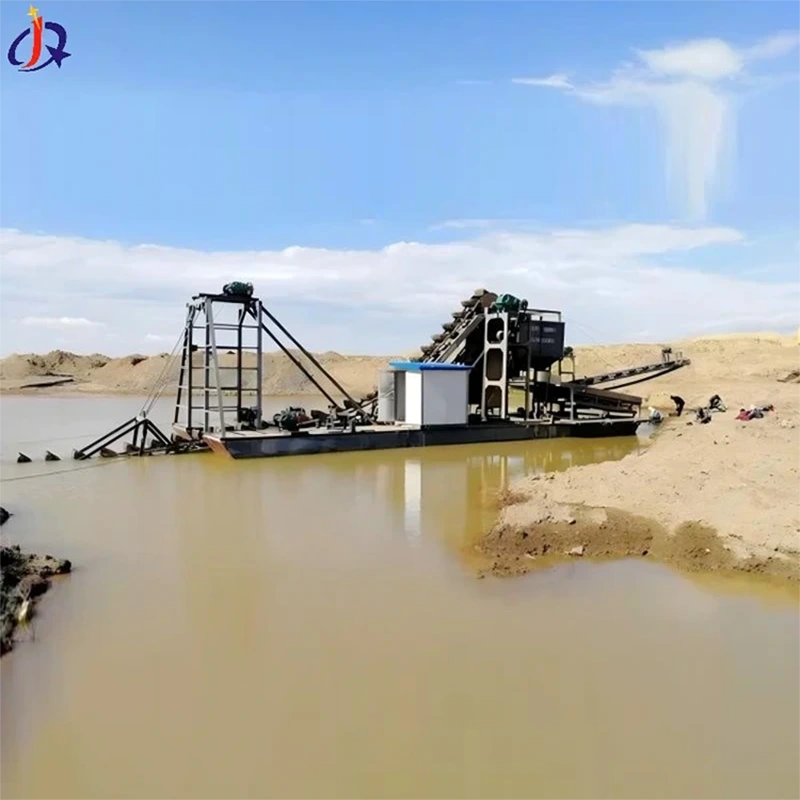
Traditional mining methods often require separate machines for digging, transporting, and processing. A river gold dredger collapses these steps into one continuous flow. Floating directly on the water source, it digs material from the riverbed, transfers it through a processing circuit, and discharges waste tailings—all in real-time.
This integration offers two primary economic benefits:
-
Low Operating Costs: No need for truck fleets or extensive earth-moving logistics.
-
Small Footprint: A small team of 2-5 personnel can operate a dredger effectively, processing large volumes with minimal manpower .
Types of River Gold Dredgers: Choosing the Right Mechanism
Not all placer deposits are the same. The size of the material, the depth of the water, and the specific gravity of the gold dictate which dredger is most effective. Generally, they fall into two main categories: Mechanical (Bucket Chain) and Hydraulic (Cutter/Suction).
To clarify the selection process, here is a comparison of the primary types used in the field:
| Dredger Type | Ideal Application | Mechanism | Recovery Context |
|---|---|---|---|
| Chain Bucket Dredge | High clay content, deep digging (up to 30m) | Continuous buckets excavate material and dump it into a rotating trommel screen. | Suitable for areas with large stones; high durability and consistent feed rate . |
| Cutter Suction Dredge | Loose sand and gravel, high slurry handling | Rotating cutter head loosens material; powerful pump suctions the slurry to onboard processing. | Excellent for projects requiring long-distance discharge of tailings . |
| Suction Dredge (Portable) | Shallow rivers, small-scale or hobby mining | Vacuum-like hose sucks up riverbed material into a floating sluice box. | Lightweight and easy to transport; ideal for remote or mini river channels . |
The "Qingzhou Jinqi" Efficiency Factor
Why do operators turn to Qingzhou Jinqi Mining Machinery Co., Ltd.? Because a dredger is only as good as its recovery system. It's not enough to simply excavate; you must capture the fine gold that often escapes less sophisticated machines. Modern dredgers employ a multi-stage process to ensure the highest yield.
1. Washing and Screening
Material excavated from the riverbed is fed into a rotating trommel screen. High-pressure water jets break down clay and wash away soil. The trommel separates oversize rocks (which are discharged directly back into the water via conveyors) from the valuable finer material .
2. Gravity Concentration
This is where the science of extraction meets engineering. The screened material is distributed to sluice boxes or centrifugal concentrators.
-
Sluice Boxes: Utilize riffles and matting (often specialized rubber or carpet) to trap heavy gold particles as slurry flows across them. The design of these boxes—the angle, the water flow, the riffle height—is critical for preventing "packing" where gold could wash away .
-
Vibrating Screens/Chutes: Advanced dredgers incorporate vibrating mechanisms or "drum chutes" that agitate the bed, preventing sedimentation and ensuring that even fine gold particles settle into the recovery mat .
3. High Recovery Rates
When configured correctly, a well-designed dredge can achieve recovery rates of up to 98% . This is achieved through a combination of primary and secondary concentration stages (like jigs or centrifuges) that capture both coarse nuggets and fine dust.
Tangible Use and Effectiveness
Implementing a River Gold Dredger transforms a mining operation from speculative digging to systematic extraction.
-
Continuous Operation: Dredgers are designed for 24/7 operation. Once positioned, the mining is constant.
-
Environmental Consideration: Modern dredging focuses on minimal chemical use. Since it relies purely on mechanical and gravity separation, it avoids the environmental risks associated with mercury or cyanide, making it a more sustainable choice for river systems .
-
Adaptability: Whether you are working in a narrow mountain stream or a wide river delta, Qingzhou Jinqi Mining Machinery Co., Ltd. offers customizable solutions—from mini dredges with Honda engines for portability to massive bucket-line dredges for high-volume production .
The Importance of Customization
The "one-size-fits-all" approach does not work in alluvial mining. The depth of the water, the size distribution of the gravel, and the presence of boulders all influence the final design. This is why working with an experienced manufacturer is vital. They analyze your material to determine the correct bucket size, screen aperture, and concentrator configuration.
For instance, if your riverbed has a high concentration of large stones (over 30cm), a standard suction dredge might struggle, whereas a chain bucket dredge is specifically designed to handle this environment .
Conclusion
Investing in a River Gold Dredger for Placer Gold Extraction is a strategic decision to increase efficiency and profitability. By combining excavation and processing into one floating platform, miners can significantly reduce operational costs while maximizing the recovery of precious metals.
At Qingzhou Jinqi Mining Machinery Co., Ltd. , we specialize in designing and manufacturing dredging solutions tailored to your specific site conditions. Whether you need a high-production bucket dredger or a flexible cutter-suction system, our engineering team is ready to help you optimize your recovery.
Ready to improve your placer gold recovery rates? Contact us today at Qingzhou Jinqi Mining Machinery Co., Ltd. for a professional consultation and equipment quote. Let us help you turn riverbed potential into profitable production.