

What Plastic Standard Type Water Mold Temperature Controller Can Do for Precision Injection Molding?
2026-02-09
In modern plastic processing, temperature stability directly determines product quality, cycle efficiency, and operational cost. Manufacturers working in injection molding, extrusion, or die casting increasingly rely on the Plastic Standard Type Water Mold Temperature Controller to maintain optimal mold temperatures and ensure repeatable production outcomes. By circulating temperature-controlled water through molds, this equipment stabilizes heat transfer, reduces deformation, and shortens cycle time. As industries push toward automation and quality consistency, adopting reliable thermal control solutions has become not just beneficial but essential. Companies such as Ningbo Ao Kai Precision Temperature Control Technology Co., Ltd. provide advanced solutions engineered to support precise industrial temperature regulation while enhancing productivity and reducing downtime.
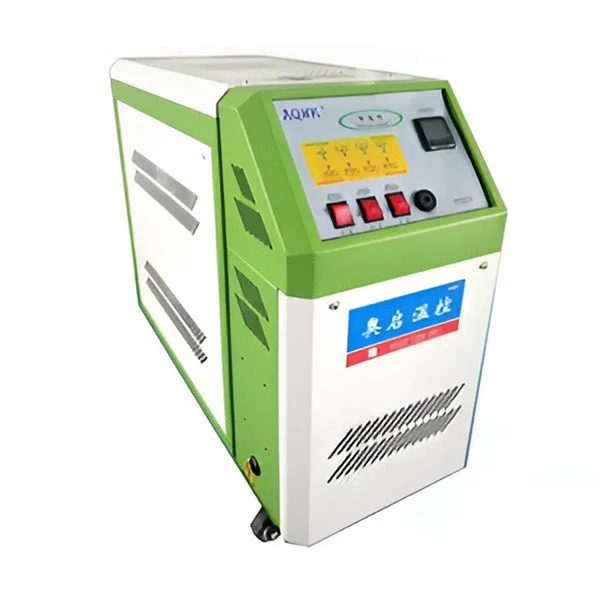
Understanding the Role of Plastic Standard Type Water Mold Temperature Controller
The Plastic Standard Type Water Mold Temperature Controller is a specialized industrial device designed to heat or cool molds using water as the heat transfer medium. Its primary objective is to keep mold temperatures within a predefined range to ensure consistent part quality.
Core Functions
-
Maintain stable mold temperature
-
Improve product surface finish and dimensional accuracy
-
Reduce internal stress and defects
-
Shorten molding cycle times
-
Increase overall equipment efficiency
By precisely regulating heat exchange, manufacturers can achieve reliable process repeatability across multiple production runs.
Why Temperature Control Matters in Plastic Manufacturing
Temperature inconsistencies often result in defects such as warping, shrinkage, or surface imperfections. Using a Plastic Standard Type Water Mold Temperature Controller ensures:
-
Uniform Heat Distribution – Prevents localized overheating or cooling
-
Higher Product Quality – Enhances structural and visual consistency
-
Energy Optimization – Minimizes excessive heating or cooling usage
-
Extended Mold Lifespan – Reduces thermal stress on equipment
For high-volume production environments, these advantages translate directly into cost savings and brand reliability.
Key Features of Standard Water Mold Temperature Controllers
Below is a simplified overview of typical functional characteristics provided by industry-grade solutions from Ningbo Ao Kai Precision Temperature Control Technology Co., Ltd.:
| Feature | Description | Industrial Benefit |
|---|---|---|
| Precise Temperature Regulation | Accurate heating and cooling control | Consistent product quality |
| Efficient Circulation Pump | Stable water flow through molds | Improved heat exchange |
| Safety Protection System | Overheat and pressure safeguards | Safe operation |
| User-Friendly Interface | Digital monitoring and adjustment | Easy management |
| Durable Construction | Industrial-grade components | Long service life |
Applications Across Industries
The Plastic Standard Type Water Mold Temperature Controller is widely used in diverse manufacturing sectors:
-
Injection molding for automotive components
-
Consumer electronics housings
-
Packaging production
-
Household appliance parts
-
Medical plastic manufacturing
Its adaptability makes it a standard solution for industries demanding precision and scalability.
Performance Advantages in Real Production Environments
Improved Production Efficiency
Maintaining stable mold temperature reduces cooling time and shortens processing cycles. This enables factories to increase throughput without sacrificing quality.
Enhanced Product Consistency
Stable temperature control ensures uniform polymer solidification, resulting in fewer rejected parts and stronger brand reputation.
Operational Reliability
High-quality systems from Ningbo Ao Kai Precision Temperature Control Technology Co., Ltd. are engineered for continuous industrial operation, reducing downtime and maintenance costs.
Best Practices for Using Plastic Standard Type Water Mold Temperature Controller
To maximize benefits, manufacturers should consider:
-
Setting appropriate temperature parameters for each material type
-
Regular inspection of circulation pipelines
-
Monitoring pressure and flow rates
-
Performing routine system cleaning and maintenance
These steps ensure long-term performance and stability.
Comparing Water vs Oil Mold Temperature Control
| Factor | Water Controller | Oil Controller |
|---|---|---|
| Heat Transfer Efficiency | High | Moderate |
| Operating Temperature Range | Lower | Higher |
| Maintenance | Easier | More complex |
| Environmental Impact | Cleaner | Requires oil handling |
For many standard plastic molding applications, water-based systems offer cost-effective and efficient thermal management.
Strategic Value for Manufacturers
Investing in a Plastic Standard Type Water Mold Temperature Controller is not just a technical decision — it is a strategic step toward smarter manufacturing. The benefits include:
-
Reduced operational costs
-
Increased automation compatibility
-
Better production scalability
-
Stronger competitive positioning
Working with a trusted provider like Ningbo Ao Kai Precision Temperature Control Technology Co., Ltd. ensures access to professional engineering support, reliable equipment design, and tailored solutions aligned with industry needs.
Conclusion
The Plastic Standard Type Water Mold Temperature Controller plays a fundamental role in ensuring accuracy, efficiency, and reliability in plastic manufacturing processes. By stabilizing mold temperatures, manufacturers can produce higher-quality parts, reduce waste, and improve operational output. With advanced engineering expertise and industrial experience, Ningbo Ao Kai Precision Temperature Control Technology Co., Ltd. delivers dependable temperature control solutions designed to support evolving production demands.
If you are seeking to optimize molding performance, enhance product consistency, and improve manufacturing efficiency, contact us today to explore how our temperature control technologies can support your business growth and operational success.