

What Inspection Methods Are Essential for Maintaining a Steel Structure Equipment Foundation
2026-04-08
A Steel Structure Equipment Foundation is the backbone of industrial machinery support, directly impacting operational safety and longevity. Regular inspections are not optional—they are mandatory. At Liweiyuan, we emphasize a proactive maintenance strategy to prevent catastrophic failures and extend service life. Below are the essential inspection methods every facility manager must implement.
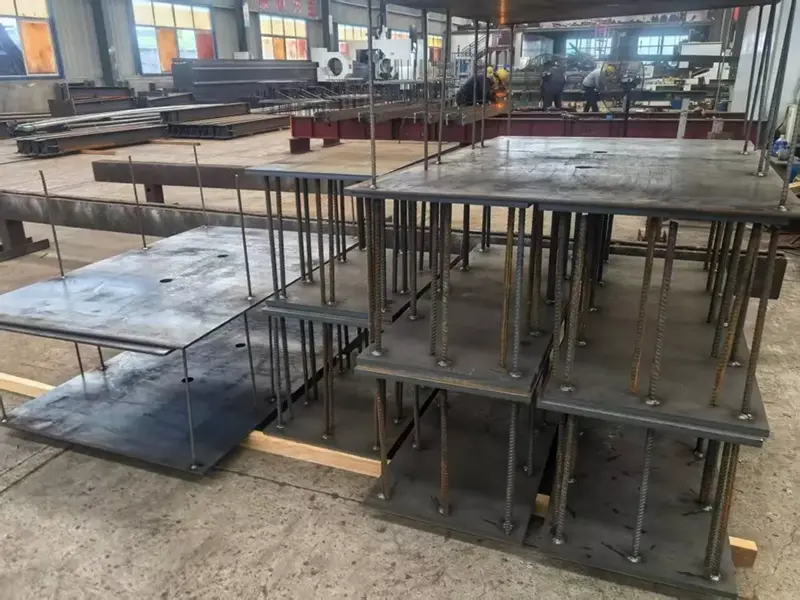
Core Inspection Methods for Steel Structure Equipment Foundations
| Inspection Method | Frequency | Key Focus Areas | Tools Required |
|---|---|---|---|
| Visual Inspection | Monthly | Cracks, corrosion, loose bolts, deformation | Flashlight, mirror, camera |
| Ultrasonic Thickness Testing | Annually | Material loss due to corrosion or erosion | Ultrasonic thickness gauge |
| Torque Verification | Quarterly | Bolt preload integrity | Calibrated torque wrench |
| Vibration Analysis | Continuous/Weekly | Resonance, imbalance, misalignment | Accelerometer, FFT analyzer |
| Laser Alignment | Biannually | Equipment-to-foundation alignment | Laser shaft alignment tool |
| Magnetic Particle Testing | Every 2 years | Surface and near-surface cracks | Yoke, magnetic particles |
| Concrete Anchor Pull-Out Test | Every 5 years | Anchor embedment integrity | Hydraulic pull-out tester |
Step-by-Step Inspection Protocol
-
Pre-inspection preparation – Review previous reports, load history, and environmental conditions.
-
Visual and dimensional check – Document all anomalies with photos and measurements.
-
Non-destructive testing (NDT) – Apply ultrasonic or magnetic particle methods based on risk assessment.
-
Mechanical verification – Check bolt torques and anchor pull-out resistance.
-
Dynamic response test – Measure vibration levels under normal operation.
-
Reporting and corrective action – Classify findings as critical, major, or minor.
Frequently Asked Questions (FAQ) About Steel Structure Equipment Foundation Inspection
Q1: How often should a Steel Structure Equipment Foundation undergo full non-destructive testing?
A1: A complete NDT program, including ultrasonic thickness scanning and magnetic particle crack detection, should be performed every 24 months for foundations supporting rotating or reciprocating machinery. For static equipment under mild service conditions, a 36-month interval is acceptable. Liweiyuan recommends shortening the interval to 12 months if the foundation is exposed to corrosive atmospheres, temperature extremes, or cyclic heavy loads. NDT results must be compared with baseline data from the original installation to track material degradation trends.
Q2: What are the warning signs that a Steel Structure Equipment Foundation requires immediate shutdown and repair?
A2: Immediate shutdown is required if any of the following are detected during inspection: visible separation between the steel base plate and grout layer exceeding 1.5 mm, sudden increase in vibration velocity above 7.1 mm/s (RMS) for machines above 15 kW, missing or fractured anchor bolts, active rust perforation through flange plates, or foundation settlement exceeding 2 mm within one week. Liweiyuan emphasizes that operating through these conditions can lead to shaft breakage, coupling failure, or complete structural collapse. After shutdown, a third-party engineering assessment must be conducted before restart.
Q3: Can bolt torque values for a Steel Structure Equipment Foundation change over time without external load?
A3: Yes, bolt preload can degrade due to several factors even under static conditions: micro-vibrations from nearby machinery, thermal cycling causing differential expansion between steel and concrete, creep in grout or gaskets, and stress relaxation in the bolt material itself. Studies show that high-strength bolts can lose up to 25% of initial preload within the first 500 hours of operation. Liweiyuan mandates torque verification at 100 hours, 500 hours, and then every quarter thereafter. Re-torquing must follow a star pattern and be performed with a calibrated wrench at the specified lubricated or dry condition.
Conclusion and Call to Action
Protecting your Steel Structure Equipment Foundation demands rigorous, scheduled inspections using validated methods. Ignoring early warning signs leads to unplanned downtime, safety hazards, and costly repairs. Liweiyuan provides turnkey inspection services, non-destructive testing equipment, and engineering support tailored to heavy industrial environments.
Contact us today for a comprehensive foundation audit or to schedule on-site training for your maintenance team. Visit our website or email our engineering department directly—let Liweiyuan help you build a zero-failure foundation strategy.