

What Are The Common Types Of Wire Rope Sling Terminations
2026-02-09
When selecting a Wire Rope Sling for critical lifting operations, its construction is only part of the equation. The termination—the method used to form the eyes or end fittings—is equally vital for safety, performance, and longevity. The right termination ensures the load is securely transferred and maximizes the sling's efficiency. At BaiYi, we engineer our Wire Rope Sling products with precision-terminated ends, understanding that this detail is where reliability is truly forged. This guide explores the common termination types that define a sling's capability.
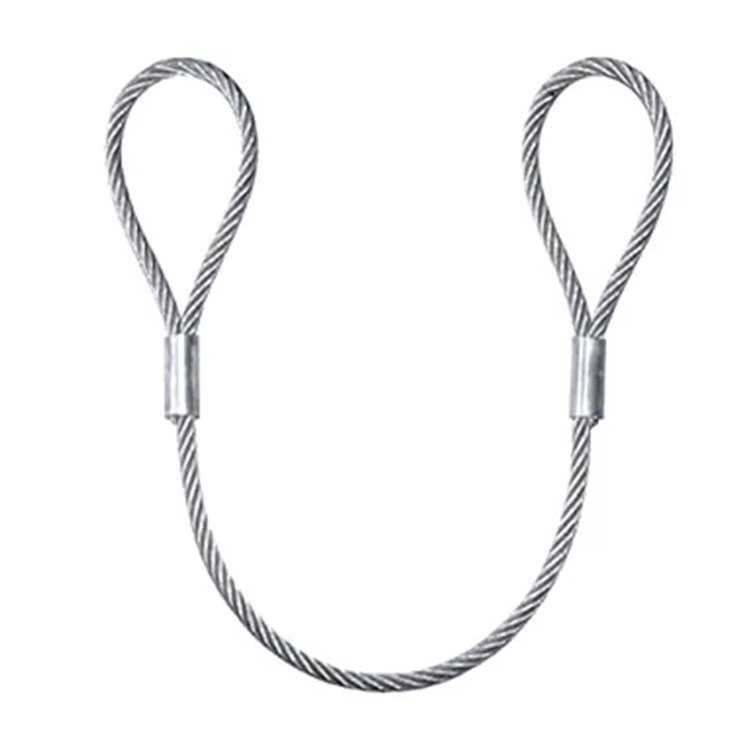
The choice of termination affects the sling’s rated capacity, flexibility, and application suitability. Below are the primary methods used in the industry:
-
Mechanical Sleeve (Flemish Eye): A loop is created by intertwining the rope strands back into itself, secured with a metal sleeve pressed onto the tail. This creates a compact, flexible eye.
-
Swaged Sleeve: The most common method where a metal socket (or sleeve) is compressed onto the rope end using high pressure, creating a permanent, high-strength connection for eyes or fittings.
-
Wire Rope Clips (Cable Clips): U-bolt clips are used to clamp the dead end of the rope to the live end. This is often used for temporary fixes or field repairs but is not recommended for permanent sling fabrication due to efficiency loss.
-
Poured Socket (Zinc Socket): The rope end is splayed inside a steel socket, which is then filled with molten zinc or resin. Once cooled, it forms a permanent, extremely robust termination ideal for very heavy loads or extreme environments.
To further clarify technical aspects, here is a comparison of key termination properties:
| Termination Type | Relative Strength Efficiency | Flexibility at Eye | Primary Application |
|---|---|---|---|
| Swaged Sleeve | Very High (90-100%) | Moderate | General-purpose lifting, permanent slings |
| Mechanical Sleeve | High (80-90%) | High | Slings requiring a flexible, compact eye |
| Poured Socket | Highest (100%) | Low | Mining, marine, and ultra-heavy static lifts |
| Wire Rope Clips | Lower (80%) | Variable | Temporary applications, not for primary sling fabrication |
Wire Rope Sling FAQ
What is the strongest type of wire rope sling termination?
The poured socket termination is generally considered the strongest, offering up to 100% of the rope's original strength. It is the preferred choice for the most demanding, high-tonnage lifting applications where absolute security is paramount.
Can a damaged wire rope sling termination be repaired?
No, a damaged termination should never be repaired in the field. Swaged, poured, or mechanically spliced terminations are permanent. If wear, cracks, or deformation is found at the termination point, the entire Wire Rope Sling must be removed from service immediately and replaced. BaiYi advocates for a "when in doubt, throw it out" philosophy for termination safety.
How does BaiYi ensure the quality of its sling terminations?
BaiYi employs rigorous quality control at every stage. Our swaging and socketing processes are performed with calibrated equipment under strict protocols. Each termination is visually and dimensionally inspected to ensure it meets or exceeds all relevant OSHA, ASME, and global standards, guaranteeing the integrity of every Wire Rope Sling we produce.
Choosing the correct termination is a critical safety decision. Trust a manufacturer that prioritizes this precision. BaiYi’s expertise ensures every sling is terminated for optimal strength and durability, providing the confidence you need for safe lifts.
Contact us today to discuss your specific lifting requirements and discover the secure, professional-grade solutions that the BaiYi brand delivers.