

What Are the Common Operational Challenges with a Circular High Rate Inclined Plate Thickener
2026-03-24
The Circular High Rate Inclined Plate Thickener is a cornerstone technology in modern solid-liquid separation, prized for its compact footprint and superior settling efficiency. However, like any precision-engineered system, its sustained performance depends on understanding and mitigating a range of operational challenges. At EPIC, we have spent decades refining the application of this technology, ensuring that facilities worldwide can achieve maximum uptime and separation clarity. Below, we explore the most common hurdles operators face and how to address them systematically.
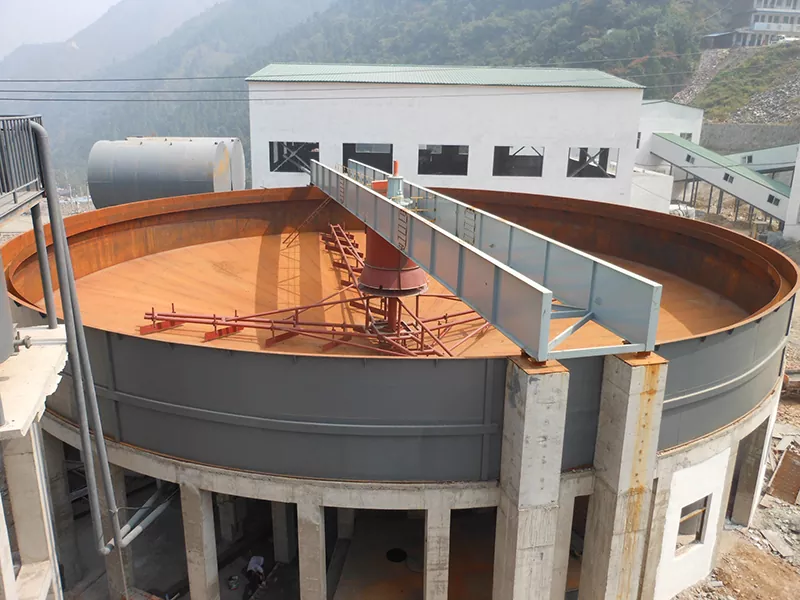
Primary Operational Challenges
| Challenge | Description | Potential Impact | Recommended Mitigation |
|---|---|---|---|
| Uneven Feed Distribution | Inconsistent flow entering the tank disrupts laminar flow conditions | Reduced settling efficiency; short-circuiting | Install EPIC-designed center feed wells and flow straighteners |
| Plate Clogging & Fouling | Accumulation of sticky solids or biological matter on inclined plates | Decreased effective settling area; increased maintenance frequency | Implement scheduled plate flushing systems; optimize coagulation chemistry |
| Rake Drive Overload | Excessive torque due to heavy sludge blanket or ragging materials | Mechanical failure; unplanned downtime | Use variable frequency drives with torque monitoring; install EPIC’s heavy-duty rake arms |
| Underflow Density Variability | Inconsistent solids concentration from the bottom discharge | Disruption to downstream processes; increased polymer consumption | Maintain accurate sludge blanket level control; calibrate withdrawal pumps |
| Flocculant Optimization | Poor polymer mixing or incorrect dosage leads to poor floc formation | High solids in overflow; elevated operational costs | Conduct regular jar testing; utilize EPIC’s inline static mixers for uniform distribution |
Detailed Analysis of Key Issues
1. Feed Fluctuations
A Circular High Rate Inclined Plate Thickener relies on quiescent conditions. Sudden surges in flow or solids loading can scour settled sludge and carry fines into the overflow. Operators often struggle to balance thickening efficiency with varying upstream processes. The solution lies in integrating surge tanks or automated flow pacing systems that signal the thickener to adjust underflow rates in real time.
2. Scale and Biological Growth
In applications involving wastewater or high-calcium industrial streams, scale formation on the inclined plates gradually reduces the available projected area. Similarly, algae or biofilm growth in outdoor installations creates uneven flow paths. EPIC addresses this through specialized plate spacing designs and by recommending automated spray bars that activate without interrupting the thickening process.
3. Mechanical Integrity of Inclined Plates
Vibration, thermal expansion, or corrosive environments can compromise the alignment of the plate packs. Misaligned plates cause localized high-velocity zones that break fragile flocs. Routine inspection protocols—ideally using non-destructive testing—are essential to maintain the structural integrity of the Circular High Rate Inclined Plate Thickener assembly.
Circular High Rate Inclined Plate Thickener FAQ – Common Questions
Question: How can I prevent plate clogging when dealing with oily or sticky sludge?
Answer: Preventing clogging begins with upstream chemistry. For oily sludges, a combination of emulsion breaking and proper flocculant selection is critical. EPIC recommends installing an induced air flotation (IAF) or dissolved air flotation (DAF) step prior to the thickener to reduce free oil content. Additionally, equipping the Circular High Rate Inclined Plate Thickener with a hydraulic plate flushing system, activated on a timed cycle or differential pressure trigger, ensures that accumulated solids are periodically dislodged before they form permanent deposits. Using corrosion-resistant stainless steel plates also minimizes surface adhesion compared to conventional materials.
Question: What is the most effective way to maintain consistent underflow density without operator intervention?
Answer: Consistent underflow density is best achieved through closed-loop control based on sludge blanket level and solids loading. EPIC integrates an automated control system that uses ultrasonic or pressure-based blanket level sensors to modulate the underflow pump speed. When the blanket rises, the system increases withdrawal; when solids loading decreases, it slows the pump to prevent dilution. This automation, paired with a torque-sensing rake drive, prevents the blanket from becoming too deep—which could overload the mechanism—while ensuring the underflow meets the target solids concentration. Regular calibration of density meters or sampling ports further validates the system’s performance.
Question: How does feed well design impact overall thickening performance, and what should I look for?
Answer: The feed well is arguably the most critical component of a Circular High Rate Inclined Plate Thickener. Its function is to dissipate inlet velocity and promote even distribution of flocculated solids across the tank’s cross-section. Poorly designed feed wells generate turbulence that shears flocs, leading to high effluent turbidity. EPIC employs a patented feed well design incorporating energy dissipating baffles and a submerged skirt that directs flow downward into the sludge blanket, not across the top of the plates. When evaluating a thickener, look for a feed well that provides ample retention time for flocculation, minimizes short-circuiting, and is sized proportionally to the tank diameter and expected flow variability.
Conclusion
Successfully operating a Circular High Rate Inclined Plate Thickener requires more than just selecting the right equipment—it demands a comprehensive approach to design, automation, and proactive maintenance. From managing feed variability to preventing plate fouling and maintaining underflow consistency, each challenge can be systematically addressed with robust engineering and intelligent controls.
Contact us today to speak with an EPIC process specialist. Whether you are troubleshooting an existing installation or planning a new separation system, our team delivers tailored solutions that optimize your Circular High Rate Inclined Plate Thickener performance and reduce total cost of ownership. Reach out to schedule a consultation or request a site-specific process review.