

How Does a Dry Screw Vacuum Pump Solve Industrial Vacuum Challenges?
2026-02-05
Article Abstract
A dry screw vacuum pump is widely used in modern industrial processes where clean, stable, and oil-free vacuum conditions are required. Many manufacturers face challenges such as contamination, frequent maintenance, unstable vacuum levels, and high operating costs when using traditional vacuum technologies. This article explains how a dry screw vacuum pump works, what problems it solves, and how it supports efficient, reliable, and environmentally responsible production. By understanding its structure, performance advantages, and application value, decision-makers can determine whether this technology is suitable for their specific operational needs.
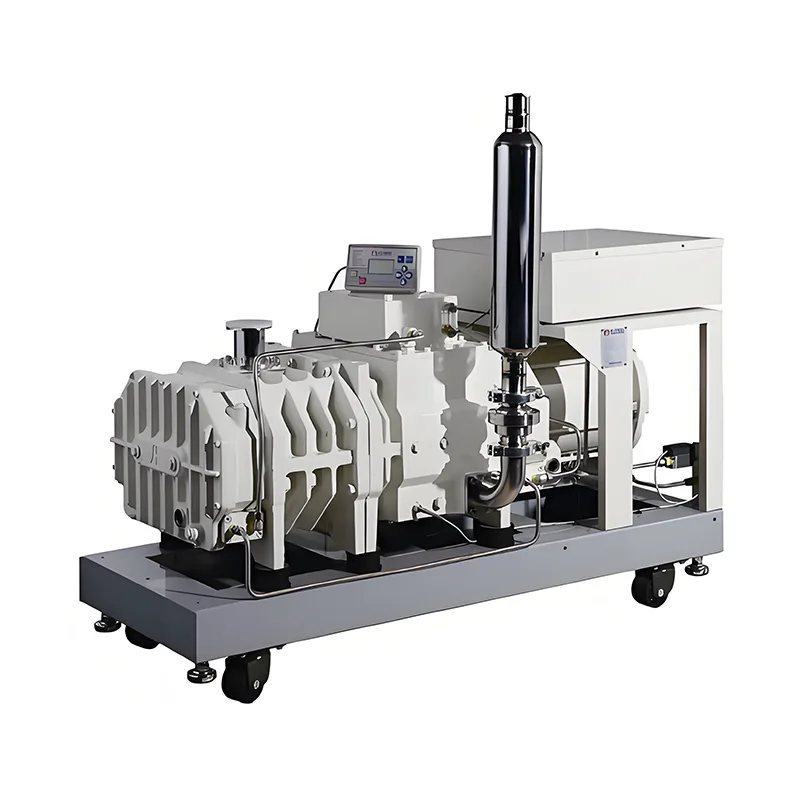
Table of Contents
- Introduction to Dry Screw Vacuum Pump Technology
- Common Industrial Vacuum Pain Points
- How a Dry Screw Vacuum Pump Works
- Key Advantages of Dry Screw Vacuum Pumps
- Comparison with Traditional Vacuum Pump Types
- Main Industrial Applications
- Selection Considerations for Long-Term Operation
- Frequently Asked Questions
- Conclusion and Contact Information
Introduction to Dry Screw Vacuum Pump Technology
A dry screw vacuum pump is a positive displacement vacuum pump that operates without any sealing oil or liquid inside the compression chamber. Two precisely machined screw rotors rotate in opposite directions, compressing and transporting gas from the inlet to the exhaust. Because the compression process is completely dry, the pumped gas remains uncontaminated, making this solution highly suitable for clean, corrosive, or sensitive industrial processes.
In industries that prioritize product purity, environmental compliance, and long service intervals, dry screw vacuum pumps have become a preferred alternative to oil-sealed or liquid ring systems.
Common Industrial Vacuum Pain Points
Before selecting a vacuum solution, many facilities encounter recurring operational challenges:
- Oil backstreaming contaminating products or processes
- Frequent oil changes and disposal costs
- Unstable vacuum levels under variable loads
- Reduced efficiency when handling condensable or corrosive gases
- High downtime due to maintenance requirements
These issues not only affect production quality but also increase total cost of ownership over time.
How a Dry Screw Vacuum Pump Works
The operating principle of a dry screw vacuum pump is based on synchronized screw rotors housed within a precision casing. As the rotors turn:
- Gas is drawn into the inlet chamber
- The gas is trapped between the screw threads and casing
- Progressive compression occurs as the gas moves axially
- Compressed gas is discharged through the exhaust port
Because there is no contact between the rotors and no lubricants in the compression chamber, internal wear is minimized and gas purity is preserved.
Key Advantages of Dry Screw Vacuum Pumps
Dry screw vacuum pumps deliver multiple operational benefits that directly address industrial pain points:
| Advantage | Practical Benefit |
|---|---|
| Oil-free operation | Eliminates risk of process contamination |
| Wide pressure range | Stable vacuum performance across different loads |
| Low maintenance | Reduced downtime and lower servicing costs |
| Corrosion resistance | Suitable for aggressive and reactive gases |
| Energy efficiency | Optimized compression reduces power consumption |
Comparison with Traditional Vacuum Pump Types
Understanding the differences between vacuum technologies helps clarify why dry screw systems are increasingly adopted:
- Oil-sealed rotary vane pumps rely on oil for sealing and cooling, increasing contamination risk
- Liquid ring pumps consume large volumes of water and struggle with high vacuum levels
- Dry screw vacuum pumps maintain clean operation without consumables in the compression chamber
This makes dry screw designs more suitable for continuous-duty and high-purity applications.
Main Industrial Applications
Dry screw vacuum pumps are widely used across multiple sectors:
- Chemical processing and petrochemical plants
- Pharmaceutical manufacturing and sterilization systems
- Semiconductor and electronics production
- Vacuum coating and surface treatment
- Battery manufacturing and material drying
Their adaptability to harsh process conditions allows stable performance even when handling vapors, particulates, or corrosive gases.
Selection Considerations for Long-Term Operation
When evaluating a dry screw vacuum pump, several factors should be reviewed:
- Required ultimate vacuum level and pumping speed
- Gas composition and chemical compatibility
- Cooling method and ambient operating conditions
- Control system integration and energy management
- Availability of technical support and service
A properly selected system ensures stable operation, extended service life, and predictable operating costs.
Frequently Asked Questions
Is a dry screw vacuum pump suitable for continuous operation?
Yes. The non-contact rotor design supports continuous industrial use with minimal wear.
Can it handle corrosive or condensable gases?
With appropriate material selection and temperature control, it performs reliably in demanding gas environments.
Does oil-free mean zero maintenance?
While oil changes are eliminated, routine inspections and filter maintenance are still recommended.
Conclusion and Contact Information
A dry screw vacuum pump provides a reliable solution for industries seeking clean vacuum generation, reduced maintenance, and consistent performance. By eliminating oil from the compression chamber, this technology addresses many long-standing operational challenges associated with traditional vacuum systems.
Manufacturers such as Yuzhen continue to develop dry screw vacuum pump solutions designed for demanding industrial environments, focusing on efficiency, durability, and process safety. For tailored solutions and technical support, businesses are encouraged to contact us to discuss specific application requirements and long-term operational goals.