

How to Design a Hydraulic Valve Block?
2026-02-06
Abstract
A hydraulic valve block is a core component in modern hydraulic systems, directly influencing system efficiency, stability, and maintenance cost. Poor design choices often lead to leakage, pressure loss, overheating, or difficult servicing, which are common pain points for equipment manufacturers and end users. This article provides a structured and practical guide on how to design a hydraulic valve block that meets real-world operational demands. It explains functional principles, design considerations, material selection, machining accuracy, and testing requirements, helping decision-makers reduce risk and improve long-term performance.
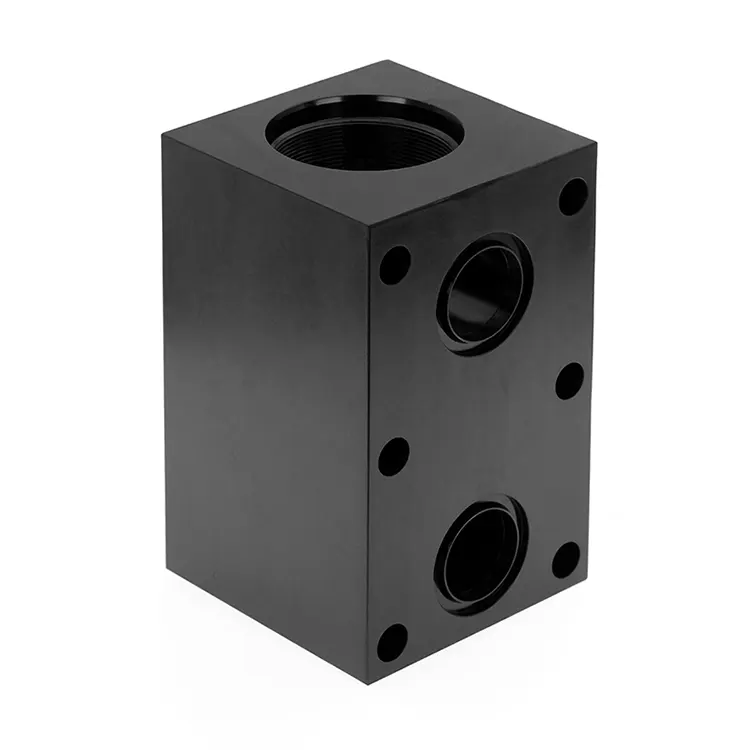
Table of Contents
- Article Outline
- Understanding Hydraulic Valve Blocks
- Common Customer Pain Points
- Key Design Considerations
- Material and Manufacturing Choices
- Quality Control and Testing
- Integrated vs Traditional Piping Systems
- Typical Application Scenarios
- Frequently Asked Questions
- Conclusion and Contact
Article Outline
- Definition and functional role of hydraulic valve blocks
- Main technical challenges faced by buyers and engineers
- Design logic for flow paths, pressure control, and sealing
- Material, machining, and surface treatment considerations
- Inspection standards and performance validation
- Industry applications and selection guidance
Understanding Hydraulic Valve Blocks
A hydraulic valve block, also known as a hydraulic manifold, is a solid block—typically metal—containing drilled internal channels that route hydraulic fluid between valves, pumps, actuators, and other system components. Instead of connecting individual valves with external pipes or hoses, the valve block integrates multiple functions into a compact structure.
This integration reduces system size, minimizes leakage points, improves response time, and enhances overall reliability. For complex hydraulic systems, especially those operating under high pressure, the valve block becomes the structural and functional center of the system.
Common Customer Pain Points
Customers sourcing or customizing hydraulic valve blocks often encounter recurring issues that affect equipment performance and lifecycle cost.
- Internal leakage: Poor sealing design or rough internal surfaces can cause pressure loss.
- Unstable flow: Incorrect channel layout leads to turbulence and uneven flow distribution.
- Difficult maintenance: Overly complex designs make troubleshooting and valve replacement time-consuming.
- Material mismatch: Inappropriate material selection results in corrosion or fatigue failure.
- Inconsistent machining accuracy: Dimensional deviations can cause valve sticking or premature wear.
Key Design Considerations
Designing an effective hydraulic valve block requires a systematic approach that balances performance, manufacturability, and serviceability.
| Design Aspect | Key Focus | Impact on System |
|---|---|---|
| Flow Path Layout | Short, smooth, and logical channels | Reduces pressure drop and heat generation |
| Port Positioning | Accessible and standardized interfaces | Simplifies installation and maintenance |
| Sealing Design | Proper O-ring grooves and tolerances | Prevents leakage and improves reliability |
| Modularity | Allowance for future expansion | Improves system flexibility |
Early-stage simulation and pressure analysis are strongly recommended to validate flow behavior before machining begins. This reduces costly design revisions later in the project.
Material and Manufacturing Choices
Material selection directly affects strength, durability, and compatibility with hydraulic fluids. Common materials include:
- Carbon steel: Suitable for high-pressure industrial systems.
- Aluminum alloy: Lightweight option for mobile or aerospace equipment.
- Stainless steel: Ideal for corrosive or hygienic environments.
Precision CNC machining is essential to ensure accurate channel geometry and surface finish. Additional processes such as deburring, surface polishing, and cleaning are critical to prevent contamination inside the hydraulic circuit.
Quality Control and Testing
A well-designed hydraulic valve block must pass strict inspection and testing procedures before delivery.
- Dimensional inspection using coordinate measuring equipment
- Pressure testing to verify structural integrity
- Leak testing under operating pressure
- Surface cleanliness verification
Consistent testing ensures that each valve block performs reliably under real working conditions, reducing downtime and warranty risks for customers.
Integrated vs Traditional Piping Systems
| Item | Hydraulic Valve Block | Traditional Piping |
|---|---|---|
| System Size | Compact | Bulky |
| Leak Risk | Low | High |
| Response Time | Fast | Slower |
| Maintenance | Simplified | Complex |
Typical Application Scenarios
Hydraulic valve blocks are widely used across industries where precision and reliability are essential.
- Construction and earthmoving machinery
- Injection molding and industrial presses
- Agricultural equipment
- Automation and robotics systems
- Energy and offshore equipment
Frequently Asked Questions
What determines the lifespan of a hydraulic valve block?
The lifespan depends on material quality, machining accuracy, sealing design, and operating conditions such as pressure, temperature, and fluid cleanliness.
Can a hydraulic valve block be customized for specific systems?
Yes. Customized valve blocks are commonly designed based on circuit diagrams, functional requirements, and installation constraints.
How can internal leakage be minimized?
Internal leakage can be reduced through optimized channel design, correct tolerance control, high-quality seals, and proper surface finishing.
Conclusion and Contact
Designing a reliable hydraulic valve block requires more than basic machining—it demands a deep understanding of hydraulic logic, materials, and real operating conditions. By focusing on proper design principles and quality control, system failures and maintenance costs can be significantly reduced.
Difon specializes in precision-machined hydraulic valve blocks tailored to demanding industrial applications. For project consultation, technical discussion, or custom solutions, contact us to explore how Difon can support your hydraulic system requirements with reliable and efficient valve block manufacturing.