

How Does the Design of a Scissor Mechanism Affect Lifting Stability and Performance
2026-03-06
When evaluating material handling equipment, the engineering behind the scissor mechanism directly determines both operational safety and efficiency. At FORTRAN, we recognize that the geometry, material quality, and pivot points of the Scissor Type Hydraulic Lifting Table Series are not merely structural details—they are the foundation of reliable performance. A well-designed mechanism ensures lifting, minimal lateral movement, and consistent force distribution under varying loads.
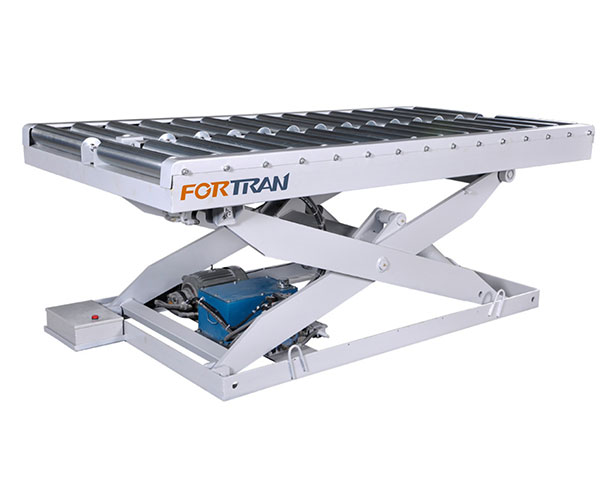
Core Design Elements Influencing Performance
The stability of any Scissor Type Hydraulic Lifting Table Series hinges on three critical engineering factors. Below is a breakdown of how each element contributes to overall functionality.
| Design Element | Impact on Stability | Impact on Performance |
|---|---|---|
| Arm Length & Ratio | Determines platform height range and lateral forces | Affects lifting speed and hydraulic cylinder efficiency |
| Pivot Point Location | Controls load balance and reduces tipping risks | Influences mechanical advantage and power consumption |
| Base & Platform Width | Provides foundation stability at maximum height | Allows for larger load capacities and safer operation |
Material Selection and Structural Integrity
The choice of high-grade steel and precision welding in the scissor arms prevents flexing and twisting during operation. FORTRAN engineers utilize finite element analysis to optimize the frame, ensuring that every Scissor Type Hydraulic Lifting Table Series unit withstands repetitive stress without deformation. This attention to material science translates directly to longer equipment life and predictable movement patterns.
Synchronization Mechanisms for Enhanced Control
For multi-stage lifts, synchronization is paramount. If one set of arms moves faster than the other, the load becomes unstable. Modern designs incorporate:
-
Torsion bars connecting both sides of the mechanism
-
Flow divider valves in the hydraulic system
-
Heavy-duty bushings at pivot points to reduce play
These features ensure that the platform remains level throughout the ascent, which is essential for worker safety and protecting sensitive materials.
Scissor Type Hydraulic Lifting Table Series FAQ
Q: How does the scissor arm thickness impact the overall lifting capacity of the table?
A: The thickness and cross-sectional profile of the scissor arms are directly proportional to the unit's load-bearing capacity. Thicker arms, typically manufactured from reinforced steel, resist buckling under compressive forces. In the Scissor Type Hydraulic Lifting Table Series, the arm dimensions are calculated based on the maximum rated load and the desired lifting height. Using inadequately thin arms would lead to structural fatigue, dangerous swaying, and potential failure over time. FORTRAN specifies arms that exceed standard safety margins to ensure consistent performance even during eccentric loading.
Q: Can the design of the scissor mechanism prevent the table from drifting downward when holding a load?
A: Yes, absolutely. A critical component of the scissor mechanism design is its integration with the hydraulic system. While the arms provide the structural geometry, the holding stability is achieved through high-quality hydraulic cylinders equipped with pilot-operated check valves. These valves lock the hydraulic fluid in the cylinder when the pump is not active, preventing any descent. However, the mechanism itself contributes by minimizing internal friction and maintaining perfect alignment, which reduces the stress on the hydraulic seals and ensures the lock works effectively without mechanical binding.
Q: Why do some scissor lift tables wobble at full height while others remain solid?
A: Wobble at extended heights is often a result of excessive clearance in the pivot joints or insufficient base-to-platform width ratio. In a premium Scissor Type Hydraulic Lifting Table Series, the pivot points utilize precision-machined pins and lubricated bushings with very tight tolerances. This eliminates "play" in the joints. Furthermore, the geometric spread of the arms at full height must maintain a stable footprint. FORTRAN designs incorporate wide stance bases and often include optional outriggers for high-height applications, ensuring that the center of gravity remains safely within the support perimeter, thus eliminating the wobble associated with poorly designed mechanisms.
Optimizing for Specific Applications
Different work environments demand specific design adaptations. For instance, a Scissor Type Hydraulic Lifting Table Series used in manufacturing might prioritize speed, while one used in warehousing might need maximum stability at height. Features like travel guides and non-marking castors can be integrated into the mechanism design to suit particular workflows without compromising the core mechanical integrity.
The interplay between hydraulic power and mechanical design defines the user experience. When the scissor geometry is optimized, the hydraulic system requires less energy to move the load, resulting in smoother operation and reduced heat generation.
Conclusion and Contact Information
The design of the scissor mechanism is the heartbeat of any lifting table, dictating not only how high and how much it can lift, but how safely and reliably it performs that task every single day. By focusing on advanced geometry, robust materials, and precise manufacturing, FORTRAN ensures that every unit in our Scissor Type Hydraulic Lifting Table Series delivers exceptional stability and peak performance for your operations.
If you are looking to enhance your material handling processes with equipment engineered for durability and safety, we invite you to reach out. Contact us today to discuss your specific requirements and discover how FORTRAN can provide the perfect lifting solution for your facility.