

How Does Regenerative Braking Technology Benefit Electrically-Driven Steel Ladle Car Efficiency
2026-01-30
In the demanding environment of a modern steel mill, maximizing efficiency and minimizing operational costs are paramount. For the crucial transport of molten steel, the Electrically-Driven Steel Ladle Car has become a cornerstone of streamlined logistics. At Yuexin, we engineer these vital machines with advanced technologies that push the boundaries of performance. One such innovation is regenerative braking, a system that transforms a simple braking action into a significant source of energy savings and operational enhancement.
Unlike traditional braking systems that dissipate kinetic energy as wasted heat, regenerative braking captures this energy during deceleration. The electric motor that drives the Yuexin Electrically-Driven Steel Ladle Car essentially reverses its function, acting as a generator to convert the vehicle's momentum back into electrical energy, which is then fed back into the system's batteries or power supply.
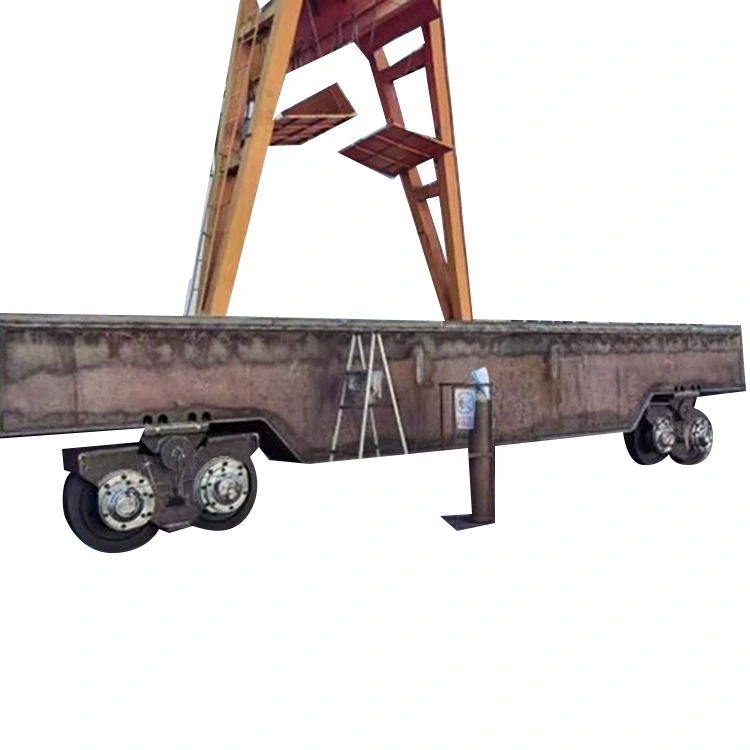
The benefits of integrating this technology are substantial and multi-faceted:
-
Enhanced Energy Efficiency: By recapturing and reusing energy, regenerative braking significantly reduces net power consumption per journey, leading to direct cost savings on electricity.
-
Reduced Component Wear: It decreases reliance on mechanical friction brakes, minimizing wear on brake pads and linings. This translates to lower maintenance frequency, reduced spare parts costs, and increased uptime.
-
Improved Operational Stability: The braking process is smoother and more controllable, which is critical for the safe and stable transport of high-temperature molten steel, minimizing spillage risks.
-
Extended Range/Battery Life: For battery-powered models, the regenerated energy contributes to longer operational periods between charges and can contribute to prolonged battery health by optimizing charge cycles.
The following table quantifies the typical impact areas:
| Performance Metric | Without Regenerative Braking | With Regenerative Braking (as in Yuexin Design) |
|---|---|---|
| Energy Consumption | Higher; all braking energy wasted | Reduced by 15-25% via energy recovery |
| Mechanical Brake Maintenance | More frequent replacements required | Drastically reduced intervals |
| Braking Smoothness | Can be abrupt, depending on friction | Consistently smooth and controlled |
Electrically-Driven Steel Ladle Car FAQ
What is the primary power source for a Yuexin Electrically-Driven Ladle Car?
Our ladle cars are highly flexible and can be configured to operate via onboard battery packs, a low-voltage DC rail system (such as 36V or 48V safety voltage), or a cable reel assembly, chosen based on specific mill layout and operational requirements.
How does regenerative braking contribute to safety in steel mill operations?
Beyond saving energy, it provides a primary and exceptionally smooth braking force. This ensures stable, jerk-free deceleration of the ladle, which is vital for preventing dangerous molten steel sloshing, thereby enhancing overall plant safety significantly.
Can regenerative braking handle the full braking needs of a fully loaded ladle car?
Regenerative braking serves as the primary braking system for normal operational deceleration. It is intelligently integrated with a redundant, failsafe mechanical friction braking system that automatically engages for emergency stops or holding the car stationary, guaranteeing absolute safety under all conditions.
Implementing intelligent technologies like regenerative braking is at the core of Yuexin's mission to provide not just equipment, but comprehensive efficiency solutions for the steel industry. Our Electrically-Driven Steel Ladle Car systems are designed to deliver tangible ROI through energy savings, reduced maintenance, and unparalleled reliability. To discover how our engineered solutions can optimize your molten metal logistics, contact us today for a detailed consultation.