

How Does an All-In-One Air Compressor Improve Efficiency and Reduce Operating Costs?
2026-06-01
An All-In-One Air Compressor combines the compressor, air tank, dryer, filtration system, and intelligent controls into a single compact unit. This integrated design simplifies installation, improves air quality, reduces energy consumption, minimizes maintenance requirements, and saves valuable floor space. In this guide, we explore how an All-In-One Air Compressor works, its advantages, applications, selection criteria, and why it has become a preferred compressed air solution for modern industries.
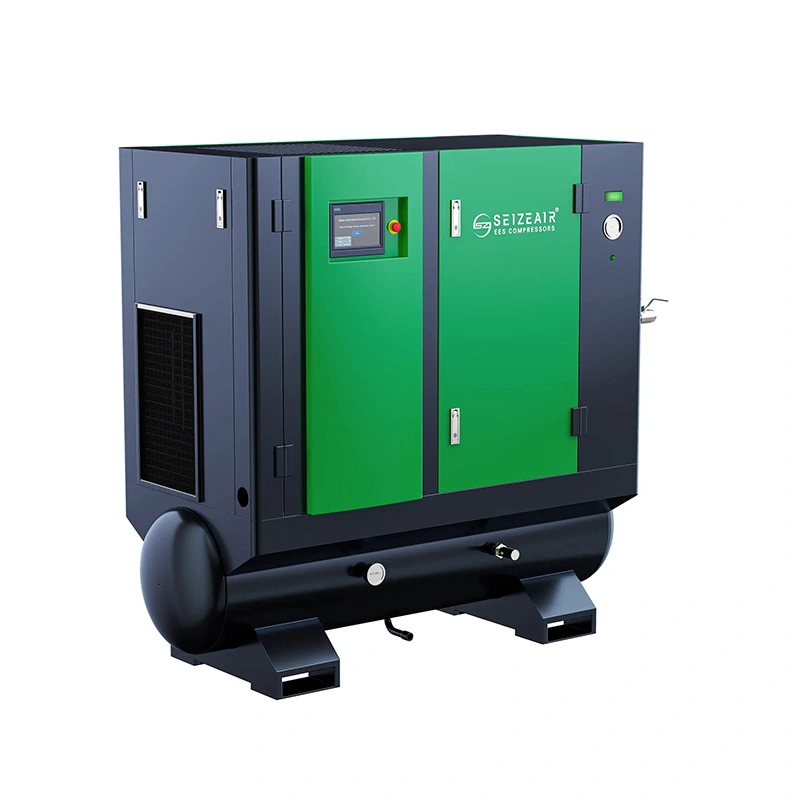
Table of Contents
- What Is an All-In-One Air Compressor?
- How Does an All-In-One Air Compressor Work?
- Key Benefits of an All-In-One Air Compressor
- Comparison with Traditional Air Compressor Systems
- Industries That Benefit Most
- How to Choose the Right All-In-One Air Compressor
- Maintenance Best Practices
- Future Trends in Integrated Air Systems
- Frequently Asked Questions
- Conclusion
What Is an All-In-One Air Compressor?
An All-In-One Air Compressor is a fully integrated compressed air solution designed to combine several essential components into a single machine. Instead of purchasing and installing separate equipment such as an air compressor, air receiver tank, refrigerated dryer, filtration unit, and control system, users can obtain all these functions within one compact package.
Traditional compressed air systems often require extensive piping, multiple installation points, and additional engineering work. An all-in-one system simplifies the entire process by delivering clean, dry, and stable compressed air directly from a unified platform.
This design is particularly attractive for manufacturing facilities, automotive workshops, laser cutting operations, food processing plants, electronics production lines, and businesses seeking a space-saving solution.
How Does an All-In-One Air Compressor Work?
The operation of an All-In-One Air Compressor follows the same basic principle as conventional air compression systems but integrates multiple stages into a streamlined process.
- Ambient air enters the compressor inlet.
- The compression element increases air pressure.
- Compressed air is transferred into the integrated air receiver tank.
- The built-in dryer removes moisture from the air stream.
- Filters eliminate oil particles, dust, and contaminants.
- The intelligent controller regulates pressure and system performance.
- Clean and dry compressed air is delivered to end-use equipment.
- Air Compressor Unit
- Air Receiver Tank
- Refrigerated Air Dryer
- Precision Filters
- Electronic Control System
- Safety Protection Devices
By integrating these elements, the system reduces installation complexity and ensures optimal compatibility among all components.
Key Benefits of an All-In-One Air Compressor
Businesses increasingly adopt integrated compressor systems because they address several common operational challenges.
| Benefit | Business Impact |
|---|---|
| Compact Design | Reduces floor space requirements |
| Easy Installation | Shortens setup time and labor costs |
| Energy Efficiency | Lowers electricity consumption |
| Clean Air Output | Protects pneumatic equipment |
| Lower Maintenance | Reduces downtime and service expenses |
| Improved Reliability | Ensures stable production operations |
For many small and medium-sized enterprises, reducing installation complexity alone can lead to significant cost savings. Integrated systems also reduce the risk of compatibility issues between separately purchased components.
Comparison with Traditional Air Compressor Systems
| Feature | Traditional System | All-In-One System |
|---|---|---|
| Installation Time | Long | Short |
| Floor Space | Large | Compact |
| System Integration | Separate Components | Integrated Design |
| Maintenance Complexity | Higher | Lower |
| Initial Setup Cost | Higher | More Cost-Effective |
While both systems can provide reliable compressed air, integrated solutions often deliver greater convenience and operational efficiency, especially for facilities with limited space or rapid deployment requirements.
Industries That Benefit Most
The versatility of an All-In-One Air Compressor makes it suitable for numerous industries.
- Metal Fabrication: Supports laser cutting and CNC machinery.
- Automotive Service Centers: Powers pneumatic tools and painting systems.
- Electronics Manufacturing: Provides clean compressed air for sensitive production environments.
- Food Processing: Helps maintain product quality through clean air supply.
- Packaging Operations: Ensures reliable pneumatic automation.
- Textile Manufacturing: Supports automated machinery and equipment.
- Medical Equipment Production: Requires consistent air quality and reliability.
These industries often require dependable compressed air around the clock, making integrated systems an attractive solution for maintaining productivity.
How to Choose the Right All-In-One Air Compressor
Selecting the right system requires a thorough understanding of operational requirements.
| Selection Factor | Consideration |
|---|---|
| Air Demand | Required flow rate and pressure |
| Duty Cycle | Continuous or intermittent operation |
| Air Quality | Dryness and filtration requirements |
| Available Space | Installation area limitations |
| Energy Costs | Long-term operating efficiency |
Buyers should also evaluate noise levels, maintenance accessibility, control features, and after-sales support before making a final investment decision.
Maintenance Best Practices
Although integrated compressors are designed for simplified operation, regular maintenance remains essential.
- Inspect air filters regularly.
- Monitor oil levels where applicable.
- Check dryer performance and condensate drainage.
- Review system pressure settings.
- Clean cooling components periodically.
- Follow manufacturer-recommended service intervals.
- Monitor controller alarms and diagnostic reports.
Preventive maintenance helps maximize equipment lifespan while ensuring stable air quality and energy-efficient operation.
Future Trends in Integrated Air Systems
As industrial facilities continue pursuing greater efficiency and automation, all-in-one compressor technology is evolving rapidly.
- Smart monitoring through remote connectivity.
- Advanced energy-saving variable speed drives.
- Predictive maintenance analytics.
- Improved heat recovery systems.
- Enhanced air purification technologies.
- Compact designs with higher output capacity.
These innovations will continue helping businesses reduce operating expenses while improving productivity and environmental performance.
Frequently Asked Questions
Q1: Is an All-In-One Air Compressor suitable for continuous industrial operation?
Yes. Many industrial-grade models are specifically engineered for continuous-duty applications and can operate reliably under demanding production conditions.
Q2: Does an integrated compressor require less installation work?
Absolutely. Because the tank, dryer, filtration, and control systems are already integrated, installation is significantly simplified.
Q3: Can an All-In-One Air Compressor improve air quality?
Yes. Built-in dryers and filtration systems help remove moisture, oil, and contaminants before compressed air reaches production equipment.
Q4: Are these systems energy efficient?
Modern all-in-one units often feature advanced control technologies and optimized system integration, helping reduce energy consumption.
Q5: Which industries benefit most from integrated compressor systems?
Manufacturing, automotive, electronics, packaging, food processing, medical equipment production, and laser cutting operations commonly benefit from these solutions.
Conclusion
An All-In-One Air Compressor offers a practical and efficient solution for businesses seeking reliable compressed air while minimizing installation complexity, maintenance requirements, and operating costs. By integrating the compressor, air tank, dryer, filtration system, and intelligent controls into a single compact unit, these systems deliver consistent performance, improved air quality, and valuable space savings.
Whether you operate a manufacturing facility, automotive workshop, laser cutting plant, electronics factory, or packaging line, investing in an integrated compressed air solution can significantly enhance productivity and long-term operational efficiency.