

Summary: Air-cooled screw chillers are widely used in commercial, industrial, and manufacturing applications for efficient cooling. They combine the simplicity of air-cooled systems with the efficiency of screw compressors. This article explores their working principles, benefits, installation tips, and maintenance practices, helping customers choose the right solution for their needs.
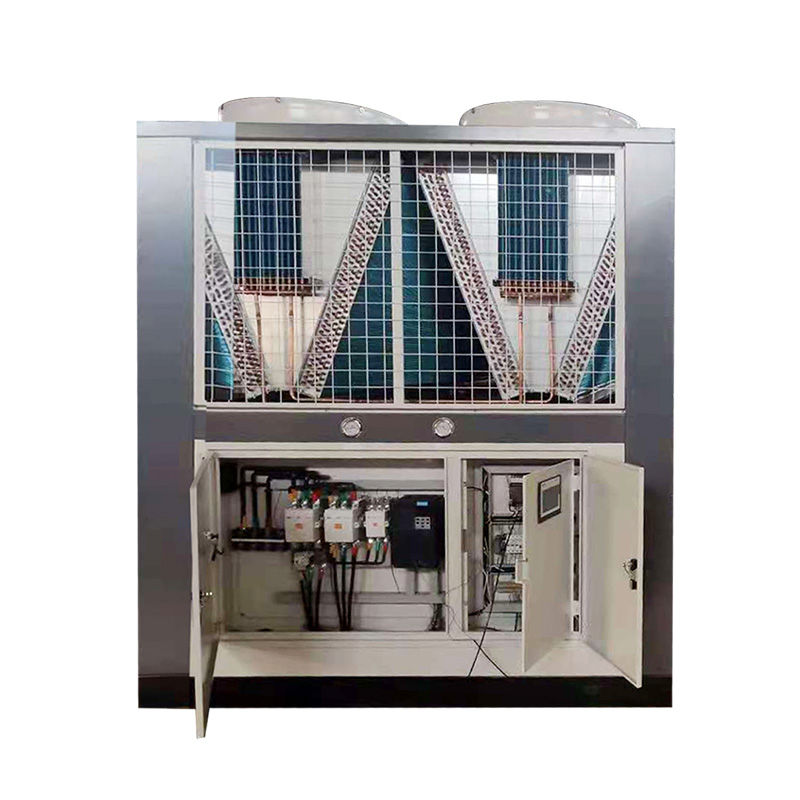
Table of Contents
- Introduction to Air-cooled Screw Chillers
- Working Principle
- Key Advantages
- How to Select the Right Chiller
- Maintenance Tips
- Frequently Asked Questions (FAQ)
Introduction to Air-cooled Screw Chillers
An air-cooled screw chiller is a type of refrigeration system that uses a screw compressor and air as the cooling medium. Unlike water-cooled systems, these chillers do not require a cooling tower or large water infrastructure, making them ideal for locations where water resources are limited or maintenance simplicity is desired.
Dongguan Jiusheng Machinery Co., Ltd. provides a variety of air-cooled screw chillers tailored to meet industrial and commercial cooling demands. Their designs emphasize reliability, energy efficiency, and ease of installation.
Working Principle
The air-cooled screw chiller operates through a closed-loop refrigeration cycle. Here’s a step-by-step overview:
- Compressor Stage: The screw compressor compresses the refrigerant gas, raising its pressure and temperature.
- Condensation Stage: The hot, high-pressure refrigerant flows through the condenser coils, where air blown by fans removes heat, converting the refrigerant into a liquid state.
- Expansion Stage: The refrigerant passes through an expansion valve, reducing its pressure and temperature.
- Evaporation Stage: The low-pressure refrigerant absorbs heat from the water circulating in the evaporator, cooling the water to the desired temperature.
Below is a simplified diagram of the process:
| Stage | Function |
|---|---|
| Compression | Compress refrigerant to increase pressure and temperature |
| Condensation | Air-cooled condenser removes heat, converting refrigerant to liquid |
| Expansion | Reduce refrigerant pressure and temperature for heat absorption |
| Evaporation | Chilled water absorbs heat from the refrigerant |
Key Advantages
Choosing an air-cooled screw chiller from Dongguan Jiusheng Machinery Co., Ltd. offers several benefits:
- Energy Efficiency: Advanced screw compressors consume less power while maintaining stable cooling performance.
- Compact Design: Air-cooled systems eliminate the need for cooling towers, saving installation space.
- Low Maintenance: Air-cooled condensers are easier to maintain compared to water-cooled alternatives.
- Environmentally Friendly: Modern refrigerants and optimized cycles reduce environmental impact.
- Flexible Installation: Can be installed on rooftops, parking lots, or industrial areas without significant infrastructure changes.
How to Select the Right Chiller
Selecting the proper air-cooled screw chiller involves evaluating several factors:
- Cooling Capacity: Match the chiller’s cooling output (kW or RT) to your facility’s requirements.
- Energy Efficiency: Check the Coefficient of Performance (COP) or Energy Efficiency Ratio (EER).
- Environmental Conditions: Ensure the unit is rated for the ambient temperature range of the installation site.
- Water Flow Rate: Confirm compatibility with the existing chilled water system.
- Noise Levels: Consider sound-dampening options if the chiller is near sensitive areas.
Here’s a quick selection table:
| Parameter | Recommendation |
|---|---|
| Cooling Capacity | Match facility heat load |
| Compressor Type | Screw compressor for medium to large loads |
| Energy Efficiency | COP ≥ 5.0 recommended |
| Installation Site | Outdoor, well-ventilated areas |
Maintenance Tips
Regular maintenance ensures optimal performance and long service life of air-cooled screw chillers:
- Inspect Air Filters: Clean or replace monthly to maintain airflow efficiency.
- Check Refrigerant Levels: Prevent energy loss and ensure proper cooling.
- Monitor Compressor Health: Watch for unusual vibrations or noise.
- Clean Condenser Coils: Remove debris and dust to improve heat transfer.
- Regular Water Treatment: Prevent scaling and corrosion in the evaporator.
Frequently Asked Questions (FAQ)
Q1: Can an air-cooled screw chiller operate in extreme temperatures?
A: Yes, most units are designed to operate efficiently in a wide range of ambient temperatures, though extreme heat may require derating or special configurations.
Q2: How long does a screw chiller typically last?
A: With proper maintenance, an air-cooled screw chiller can operate reliably for 15–20 years.
Q3: Is it suitable for industrial applications?
A: Absolutely. Screw chillers are ideal for factories, data centers, and large commercial buildings due to their robust design and high efficiency.
Q4: How noisy are air-cooled screw chillers?
A: Noise levels vary by model, but Dongguan Jiusheng Machinery Co., Ltd. offers low-noise options suitable for sensitive areas.