

How Does an Adsorption Air Dryer Improve Industrial Compressed Air Systems?
2026-04-01
Summary: An adsorption air dryer is essential in modern industrial settings where clean, dry compressed air is crucial. This article explores its working principle, types, maintenance, and the benefits it brings to your operations, helping you make informed choices for optimal system efficiency.
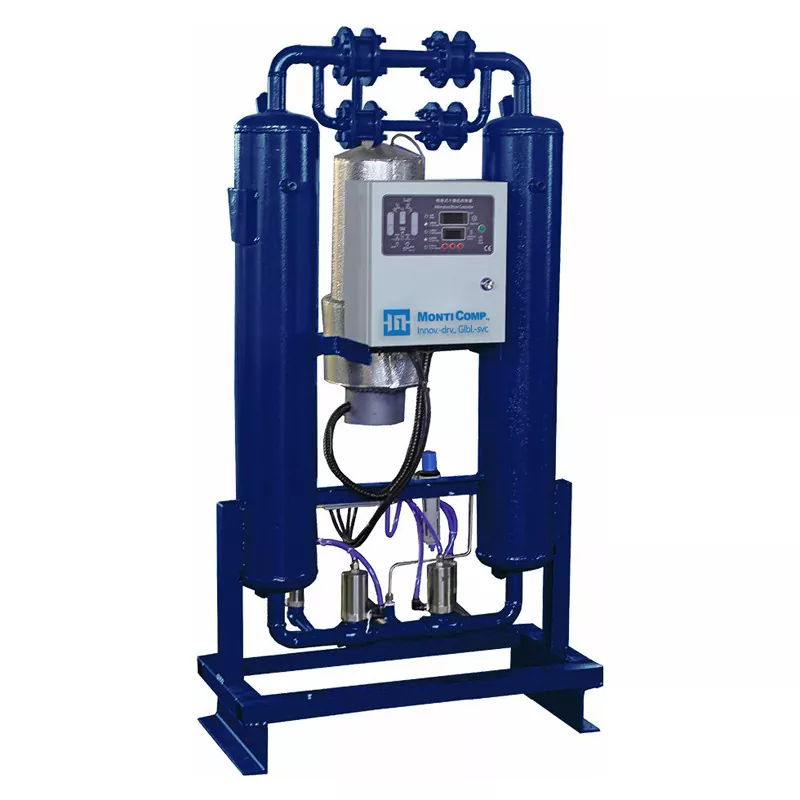
Table of Contents
- Introduction
- Working Principle of Adsorption Air Dryers
- Types of Adsorption Air Dryers
- Advantages for Industrial Applications
- Maintenance Tips
- FAQ
Introduction
Compressed air is widely used in industries ranging from food processing to automotive manufacturing. Moisture in compressed air can cause corrosion, equipment malfunction, and product contamination. Adsorption air dryers, such as those provided by Dream (Shanghai) Compression Machinery Co., Ltd., efficiently remove moisture, ensuring consistent air quality and system longevity.
Working Principle of Adsorption Air Dryers
Adsorption air dryers operate by passing compressed air through a desiccant material, which attracts and traps water vapor. The desiccant, commonly activated alumina, silica gel, or molecular sieves, absorbs moisture while allowing dry air to continue to the system.
The process typically involves:
- Adsorption Phase: Moist compressed air enters the dryer and moisture is absorbed by the desiccant.
- Regeneration Phase: The desiccant is dried using either heat or a portion of dry air, preparing it for the next cycle.
| Desiccant Type | Moisture Capacity | Typical Applications |
|---|---|---|
| Activated Alumina | High | General industrial use |
| Silica Gel | Moderate | Low-temperature air systems |
| Molecular Sieve | Very High | Critical medical and electronics applications |
Types of Adsorption Air Dryers
Industries can choose from several types based on their specific requirements:
- Heatless Desiccant Dryers: Use a portion of dry air for regeneration, energy-efficient, suitable for small to medium applications.
- Heated Desiccant Dryers: Apply external heat for regeneration, ideal for large systems with continuous operation.
- Blower Purge Dryers: Utilize a blower to supply heated air, offering high efficiency for demanding industrial setups.
Advantages for Industrial Applications
- Prevents corrosion in piping and machinery
- Reduces production downtime due to air-related failures
- Enhances product quality in sensitive industries
- Energy-efficient with long-lasting desiccants
- Compatible with various industrial air compressors
Maintenance Tips
Proper maintenance extends the life of adsorption air dryers:
- Regularly check pressure dew point to ensure optimal drying
- Inspect valves, filters, and desiccant condition
- Follow manufacturer schedules for desiccant replacement or regeneration cycles
- Monitor system for unusual pressure drops or leaks
FAQ
-
Q1: How often should the desiccant be replaced?
A: Typically every 2-3 years, depending on usage and air quality. -
Q2: Can adsorption dryers handle very high humidity air?
A: Yes, but proper sizing and desiccant selection are essential. -
Q3: Are they suitable for all industries?
A: They are versatile and used across automotive, electronics, food, and pharmaceutical sectors. -
Q4: How do I choose the right dryer capacity?
A: Consider airflow, pressure, ambient conditions, and moisture removal requirements.
For reliable adsorption air dryers and professional support, trust Dream (Shanghai) Compression Machinery Co., Ltd.. Visit our product page and contact us to enhance your compressed air system today.