

Summary: Telescopic hydraulic cylinders are essential components in industries ranging from construction to transportation. They provide compact yet powerful linear motion, offering extended reach with minimal installation space. This article explores their design, operation, types, maintenance tips, and common challenges, helping engineers and operators maximize efficiency and longevity.
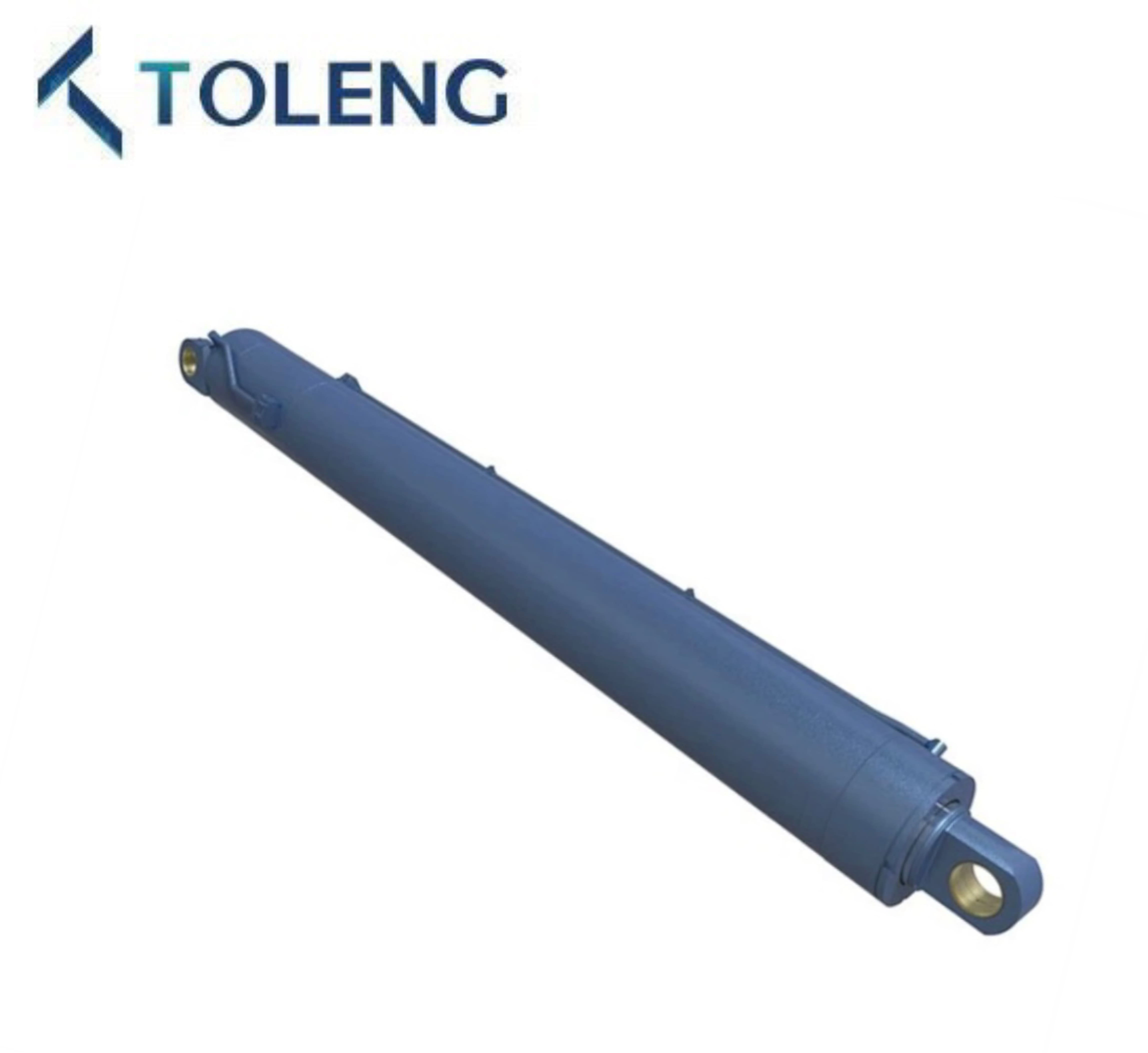
Table of Contents
- Introduction to Telescopic Hydraulic Cylinders
- Working Principle
- Types of Telescopic Hydraulic Cylinders
- Applications in Various Industries
- Advantages and Limitations
- Selection and Maintenance Tips
- FAQ
Introduction to Telescopic Hydraulic Cylinders
Telescopic hydraulic cylinders, sometimes referred to as multi-stage cylinders, are designed to provide long stroke lengths from a compact retracted size. Unlike conventional single-stage cylinders, telescopic cylinders consist of multiple nested sleeves that extend sequentially. This unique design allows machinery to achieve greater reach without requiring extensive installation space.
- Compact design for space-saving installation
- High force output for lifting and pushing applications
- Durable construction to handle heavy-duty operations
TOLENG specializes in manufacturing telescopic hydraulic cylinders that meet diverse industrial requirements. By providing robust and reliable solutions, TOLENG ensures operational efficiency and safety for heavy machinery.
Working Principle
The operation of a telescopic hydraulic cylinder is based on hydraulic fluid pressure. When fluid is pumped into the cylinder, it pushes the stages sequentially from the innermost to the outermost, allowing a compact cylinder to achieve an extended stroke.
| Component | Function |
|---|---|
| Barrel | Houses all stages and guides hydraulic fluid |
| Piston | Transfers fluid pressure into linear motion |
| Seals | Prevent fluid leakage and maintain pressure |
| Rod | Extends and retracts stages to perform work |
Hydraulic pressure is distributed through the internal channels, allowing each stage to extend in a controlled sequence. Retraction occurs when the fluid is released or pumped back, often assisted by the weight of the load or an external force.
Types of Telescopic Hydraulic Cylinders
Telescopic cylinders are categorized based on stage design, operation, and mounting style. Understanding these types helps in selecting the right cylinder for specific tasks.
- Single-Acting Cylinders: Extend using hydraulic pressure but rely on load or gravity for retraction.
- Double-Acting Cylinders: Use hydraulic pressure for both extension and retraction, providing precise control.
- Custom Mounting Cylinders: Designed for applications with unique space constraints or operational requirements.
TOLENG offers all types with customization options, ensuring a perfect fit for various machinery, from dump trucks to hydraulic lifts.
Applications in Various Industries
Telescopic hydraulic cylinders are indispensable in industries requiring compact but long-reaching linear motion. Key applications include:
- Construction Machinery: Dump trucks, excavators, and cranes utilize telescopic cylinders for lifting and tilting.
- Industrial Automation: Material handling systems employ cylinders to save space while achieving extended reach.
- Marine and Transportation: Telescopic cylinders provide robust lifting solutions for marine hatches and vehicle platforms.
By integrating TOLENG telescopic hydraulic cylinders, companies can enhance productivity, reduce maintenance downtime, and improve operational safety.
Advantages and Limitations
Advantages:
- Compact design allows installation in tight spaces
- High lifting capacity relative to size
- Durable and suitable for heavy-duty operations
Limitations:
- Higher initial cost compared to single-stage cylinders
- Maintenance is more complex due to multiple stages
- Susceptible to stage misalignment if not installed correctly
Selection and Maintenance Tips
Choosing the correct telescopic hydraulic cylinder requires consideration of several factors:
- Load Requirements: Calculate maximum load to ensure the cylinder can handle stress without deformation.
- Stroke Length: Determine the required extension to match application needs.
- Mounting Constraints: Consider space and orientation to prevent interference during operation.
Regular maintenance extends cylinder life:
- Inspect seals and pistons for wear and leaks
- Lubricate stages according to manufacturer guidelines
- Check hydraulic fluid levels and quality frequently
TOLENG provides detailed manuals and technical support to ensure safe installation and optimal performance.
FAQ
Q1: How long do telescopic hydraulic cylinders typically last?
A1: With proper maintenance, high-quality telescopic cylinders can last 10–15 years or more, depending on usage intensity.
Q2: Can telescopic cylinders be repaired if a stage is damaged?
A2: Yes, individual stages can often be replaced or serviced, but it depends on the design and manufacturer recommendations. TOLENG provides replacement parts and repair guidance.
Q3: Are telescopic cylinders suitable for vertical lifting applications?
A3: Yes, but single-acting cylinders may require load balancing or external support to prevent uncontrolled retraction.
Q4: How do I select the right cylinder for my machine?
A4: Evaluate load, stroke length, mounting type, and environment. Consult TOLENG engineers for tailored recommendations.
In conclusion, telescopic hydraulic cylinders offer an efficient solution for applications requiring compact yet long-reaching linear motion. Choosing the right type, performing regular maintenance, and understanding operational limitations ensures reliability and safety. For premium quality and expert support, explore TOLENG's range of telescopic hydraulic cylinders and contact us today to find the perfect solution for your machinery.