

How Does a Stud Welding Machine Improve Fastener Installation Efficiency?
2026-03-06
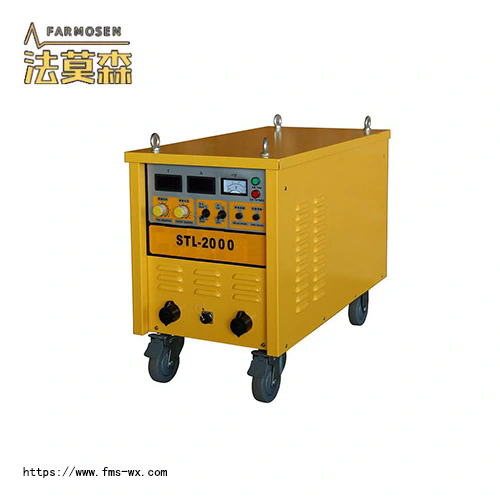
Stud welding technology has become an essential solution for modern metal fabrication, construction, and manufacturing industries. Traditional fastening methods such as drilling, bolting, or manual welding often require multiple steps, additional hardware, and significant labor time. A Stud Welding Machine simplifies this process by creating a permanent bond between a metal stud and a base material within milliseconds.
The process uses an electric arc to melt the end of a stud and the surface of the base metal, allowing the stud to fuse directly into the molten pool. Once the metal cools, the connection becomes extremely strong and reliable. This one-step joining process eliminates drilling, tapping, or backside access, significantly improving production efficiency.
Article Summary
This article explains how a stud welding machine works, the key components involved, common welding methods, and the major advantages it provides for industrial production. It also addresses common problems customers encounter when selecting or using stud welding equipment, helping manufacturers choose the right solution for their projects.
Table of Contents
- Introduction to Stud Welding Machines
- How Stud Welding Machines Work
- Main Components of a Stud Welding System
- Types of Stud Welding Processes
- Key Advantages of Stud Welding Machines
- Typical Industrial Applications
- How to Choose the Right Stud Welding Machine
- Common Operational Challenges and Solutions
- Frequently Asked Questions
Introduction to Stud Welding Machines
A Stud Welding Machine is a specialized welding device used to attach metal fasteners such as threaded studs, pins, or bolts onto a metal surface. Instead of using screws, rivets, or traditional welding techniques, stud welding creates a direct metallurgical bond between the stud and the base material.
The welding process is extremely fast and efficient. In most cases, the entire welding cycle takes less than one second. During this short time, an electric arc melts both the stud tip and the metal surface, after which the stud is pressed into the molten pool and solidifies to form a high-strength joint. :contentReference[oaicite:1]{index=1}
Because the process requires access from only one side of the workpiece and does not require drilling holes, it has become widely used in industries such as construction, automotive manufacturing, shipbuilding, and industrial equipment fabrication.
How Stud Welding Machines Work
Although the process occurs very quickly, the stud welding operation follows a precise sequence to ensure consistent weld quality.
-
Stud Loading
A weld stud is inserted into the welding gun chuck and positioned perpendicular to the workpiece surface. -
Positioning
The welding gun presses the stud against the metal surface to ensure correct alignment. -
Arc Generation
When the trigger is activated, the stud lifts slightly and an electric arc forms between the stud tip and the base metal. -
Melting Phase
The arc heat melts the end of the stud and the base material, creating a molten weld pool. -
Plunge and Fusion
The welding gun pushes the stud into the molten metal, where it solidifies and forms a permanent bond.
This automated sequence produces consistent, high-strength welds while minimizing heat distortion and surface damage.
Main Components of a Stud Welding System
A complete stud welding system typically consists of several key components that work together to achieve precise and reliable welds.
| Component | Function |
|---|---|
| Power Supply | Generates the electrical energy required to create the welding arc. |
| Stud Welding Gun | Holds and positions the stud while controlling the welding sequence. |
| Control Unit | Regulates welding parameters such as current, time, and lift distance. |
| Ground Clamp | Completes the electrical circuit between the workpiece and the machine. |
| Ceramic Ferrule | Contains the molten metal and protects the weld zone from oxidation. |
Types of Stud Welding Processes
Different welding methods are used depending on the material thickness, stud size, and application requirements.
-
Capacitor Discharge Stud Welding
Ideal for thin sheet metals and small diameter studs. It provides extremely fast welding cycles with minimal heat impact. -
Drawn Arc Stud Welding
Used for thicker materials and larger studs. This method produces strong structural connections commonly used in construction and heavy equipment. -
Short Cycle Stud Welding
A hybrid technique designed to provide high productivity for automated manufacturing environments.
Selecting the correct welding process ensures optimal weld strength, efficiency, and production performance. :contentReference[oaicite:2]{index=2}
Key Advantages of Stud Welding Machines
Compared with conventional fastening methods, stud welding machines provide several operational and economic advantages.
- High Production Speed – Each weld takes only milliseconds, enabling rapid installation of large numbers of fasteners.
- Strong and Reliable Joints – The fused metal bond often matches or exceeds the strength of the parent material.
- No Need for Drilling or Tapping – Eliminates weakening of the base material and reduces processing time.
- Clean Surface Finish – No visible marks appear on the opposite side of the material.
- Reduced Labor Costs – The automated process simplifies installation and increases productivity.
These benefits make stud welding machines a preferred fastening solution in many industrial applications. :contentReference[oaicite:3]{index=3}
Typical Industrial Applications
Stud welding technology is widely used across multiple industries that require secure and efficient metal fastening solutions.
- Steel structure construction
- Automotive manufacturing
- Shipbuilding and marine engineering
- Electrical cabinets and equipment
- Industrial machinery fabrication
- Elevator manufacturing
- Insulation installation systems
In these industries, stud welding machines significantly reduce assembly time while ensuring strong mechanical connections.
How to Choose the Right Stud Welding Machine
When selecting a stud welding machine, several technical factors should be considered to ensure optimal performance.
- Stud diameter range required
- Material thickness of the workpiece
- Production volume and welding frequency
- Automation requirements
- Power supply capacity
High-quality equipment should also offer stable arc control, precise parameter adjustment, and durable components to ensure long-term reliability.
Manufacturers such as Famosen focus on providing advanced stud welding equipment designed for consistent weld quality, efficient production, and reliable operation in demanding industrial environments.
Common Operational Challenges and Solutions
| Problem | Possible Cause | Solution |
|---|---|---|
| Weak weld strength | Incorrect welding parameters | Adjust current and weld time settings |
| Stud misalignment | Improper gun positioning | Ensure vertical placement before triggering |
| Excessive spatter | Contaminated surface | Clean the workpiece before welding |
| Incomplete fusion | Insufficient arc energy | Increase welding current or duration |
Frequently Asked Questions
Q1: What materials can be welded using a stud welding machine?
Stud welding machines are commonly used with carbon steel, stainless steel, aluminum, and certain alloy metals, depending on the welding method and equipment capacity.
Q2: Is stud welding stronger than bolting?
Yes. When performed correctly, the welded joint forms a metallurgical bond that can be as strong as or stronger than the base metal.
Q3: Does stud welding damage the back side of the material?
No. One of the key advantages of stud welding is that it does not leave marks on the reverse side of the workpiece.
Q4: Can stud welding machines be automated?
Yes. Many industrial systems integrate stud welding machines into automated production lines or robotic welding systems for high-volume manufacturing.
Conclusion
Stud welding machines provide an efficient and reliable solution for attaching metal fasteners in a wide range of industrial applications. By combining speed, strength, and ease of operation, this technology significantly improves productivity while maintaining high weld quality.
For manufacturers seeking reliable stud welding equipment, Famosen offers advanced welding solutions designed to meet the demanding requirements of modern fabrication and industrial production.
If you would like to learn more about our stud welding machines or receive professional guidance for your application, contact us today. Our technical team is ready to help you find the most suitable welding solution for your project.