

How Does a Sheet Winder Improve Sheet Handling Efficiency?
2026-03-02
Article Summary
A sheet winder is a critical piece of equipment in sheet material processing lines, designed to collect, align, and wind flat sheets into orderly rolls for downstream handling, storage, or transportation. This article provides a comprehensive explanation of how a sheet winder works, the common operational challenges customers face, and how to select the right solution for stable, efficient, and scalable production. By understanding structural design, control systems, and application scenarios, manufacturers can significantly reduce material waste, labor intensity, and downtime.
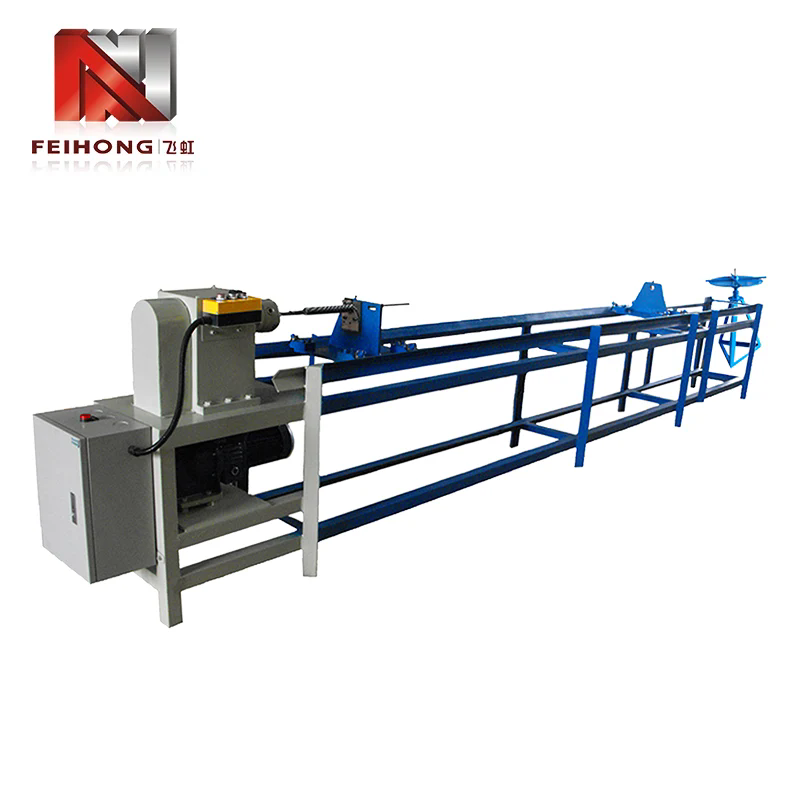
Table of Contents
- Sheet Winder Overview
- Customer Pain Points in Sheet Winding
- Working Principle of a Sheet Winder
- Key Components and Structure
- How to Choose the Right Sheet Winder
- Sheet Winder Configuration Comparison
- Automation and Control Advantages
- Typical Application Scenarios
- Frequently Asked Questions
- Conclusion and Contact Us
Sheet Winder Overview
A sheet winder is a mechanical system used to wind flat sheet materials—such as paper, plastic sheets, nonwoven fabrics, films, or composite materials—into compact and uniform rolls. Unlike traditional winding systems designed for continuous web materials, a sheet winder focuses on precise sheet alignment, tension control, and edge consistency.
In modern production environments, sheet winders are integrated into extrusion lines, cutting systems, laminating machines, and finishing processes. Feihong designs sheet winder equipment to meet industrial demands for accuracy, durability, and operational stability.
Customer Pain Points in Sheet Winding
Many manufacturers experience recurring problems during sheet winding, especially when production speed increases or material specifications change.
- Uneven winding leading to roll deformation
- Sheet misalignment and edge damage
- Inconsistent tension causing wrinkles or slippage
- Frequent manual intervention and labor dependency
- Low adaptability to different sheet thicknesses
- Excessive downtime during roll changeover
These issues not only affect product quality but also increase operational costs and reduce overall production efficiency.
Working Principle of a Sheet Winder
The basic function of a sheet winder is to receive flat sheets from an upstream process and wind them into rolls under controlled conditions. The system synchronizes sheet feeding speed, winding torque, and roll diameter growth.
Advanced sheet winders use motor-driven winding shafts, tension feedback systems, and programmable controllers to ensure stable winding from the first layer to the final roll. This precise coordination minimizes defects and ensures consistent roll geometry.
Key Components and Structure
A well-designed sheet winder consists of several core components that work together to ensure performance and reliability.
- Winding shaft or mandrel system
- Tension control mechanism
- Edge alignment and guiding unit
- Drive motor and transmission system
- Control panel and automation interface
- Safety protection and emergency stop devices
Feihong sheet winders emphasize modular design, making maintenance and future upgrades more efficient.
How to Choose the Right Sheet Winder
Selecting the correct sheet winder requires a clear understanding of production requirements and material characteristics.
- Sheet material type and surface properties
- Maximum and minimum sheet thickness
- Target winding speed and output capacity
- Roll diameter and weight requirements
- Available installation space
- Level of automation needed
Matching these parameters ensures that the sheet winder operates efficiently without compromising product quality or equipment lifespan.
Sheet Winder Configuration Comparison
| Configuration Type | Control Level | Suitable Materials | Key Advantages |
|---|---|---|---|
| Manual Sheet Winder | Basic | Low-volume sheets | Low cost, simple operation |
| Semi-Automatic Sheet Winder | Medium | Plastic, paper sheets | Improved efficiency, flexible setup |
| Fully Automatic Sheet Winder | High | Industrial-grade sheets | High precision, minimal labor |
Automation and Control Advantages
Automation significantly enhances sheet winder performance by reducing human error and stabilizing production output.
- Real-time tension adjustment
- Automatic roll diameter calculation
- Consistent winding quality across batches
- Reduced labor intensity and training costs
Feihong integrates intelligent control systems to help customers achieve predictable, repeatable winding results.
Typical Application Scenarios
Sheet winders are widely used across multiple industries where flat sheet materials must be handled efficiently.
- Plastic sheet extrusion and finishing lines
- Paper and cardboard processing
- Nonwoven fabric manufacturing
- Composite material production
- Packaging and insulation materials
Frequently Asked Questions
What materials can a sheet winder handle?
Sheet winders can process paper, plastic sheets, films, nonwoven fabrics, and various composite materials.
How does a sheet winder prevent wrinkles?
Proper tension control, edge alignment, and synchronized drive systems help maintain smooth winding.
Is a sheet winder suitable for high-speed production?
Yes. With the right configuration, sheet winders support continuous high-speed industrial operations.
Can one machine handle different sheet sizes?
Many sheet winders are designed with adjustable settings to accommodate multiple sheet dimensions.
Conclusion and Contact Us
A sheet winder is an essential investment for manufacturers seeking to improve sheet handling efficiency, reduce material waste, and ensure consistent roll quality. Understanding equipment structure, control logic, and application requirements allows businesses to make informed decisions and avoid costly operational issues.
Feihong is dedicated to providing robust and adaptable sheet winder solutions that support long-term production stability. If you are planning to upgrade your sheet handling system or need expert guidance on selecting the right equipment, contact us today to learn how Feihong can help optimize your production line.