

How Does a Self-adhesive Waterproofing Membrane Improve Long-Term Building Protection?
2026-03-12
Article Summary
Water infiltration is one of the most common causes of structural damage in buildings. Roofs, basements, and foundations are constantly exposed to moisture, rain, and temperature changes. A Self-adhesive Waterproofing Membrane provides an efficient solution by forming a continuous barrier that prevents water penetration without requiring open flames or complicated installation processes.
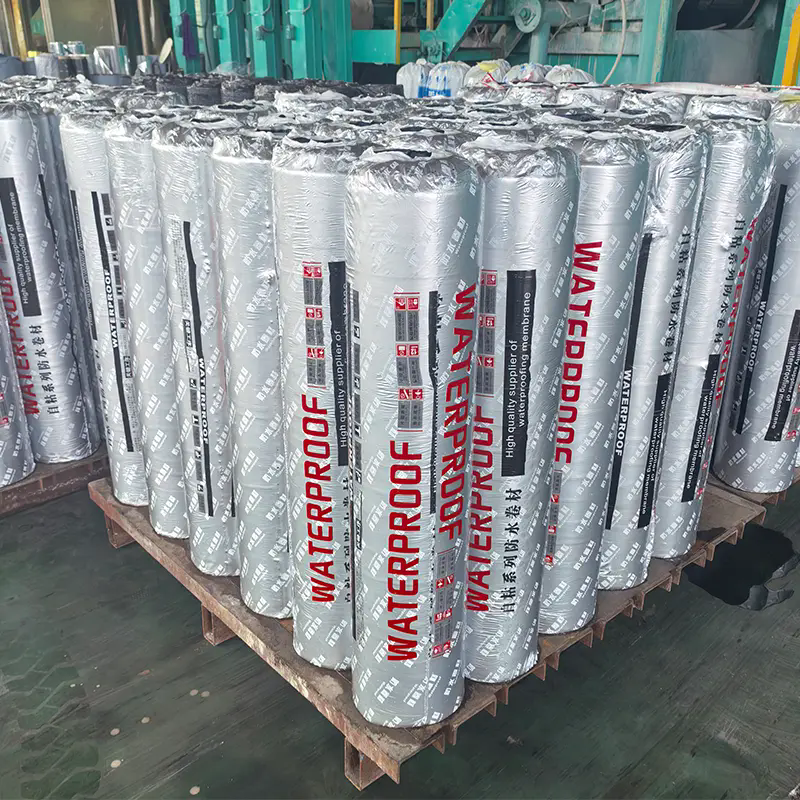
This article explains how self-adhesive waterproofing membranes work, their structural composition, installation advantages, performance characteristics, and common application scenarios. It also highlights practical considerations when selecting and installing the material to ensure durable waterproofing performance.
Table of Contents
- 1. Introduction to Self-adhesive Waterproofing Membrane
- 2. How Self-adhesive Waterproofing Membrane Works
- 3. Key Structural Components
- 4. Main Advantages Compared With Traditional Waterproofing Methods
- 5. Typical Application Areas
- 6. Installation Process and Best Practices
- 7. Product Parameters Overview
- 8. Frequently Asked Questions
- 9. Conclusion
Outline
- Understanding the role of waterproofing membranes in construction
- Working mechanism of self-adhesive membranes
- Material composition and protective layers
- Advantages for contractors and building owners
- Common engineering applications
- Installation guidelines and surface preparation
- Technical parameters and durability factors
- Common questions from project engineers
1. Introduction to Self-adhesive Waterproofing Membrane
Waterproofing systems are essential for maintaining the structural integrity of buildings. Moisture intrusion can cause concrete deterioration, steel corrosion, mold growth, and insulation damage. Among the various waterproofing materials available today, the Self-adhesive Waterproofing Membrane has gained widespread use because of its convenient installation and reliable sealing performance.
Unlike traditional torch-applied membranes, this material contains a pressure-sensitive adhesive layer that bonds directly to the substrate. This eliminates the need for open flame heating, making installation safer and faster. The membrane forms a seamless waterproof barrier once applied, effectively blocking water penetration in critical structural areas.
Manufacturers such as Shandong Haoyuan Waterproof Technology Group have developed advanced membrane formulations that improve flexibility, adhesion strength, and long-term durability even in challenging environments.
2. How Self-adhesive Waterproofing Membrane Works
The working principle of a self-adhesive waterproofing membrane is based on adhesive bonding and continuous barrier formation. The membrane consists of several layers that work together to prevent water infiltration.
When the protective release film is removed, the adhesive layer becomes exposed. The membrane is then pressed onto the prepared surface. Once installed, the adhesive layer bonds tightly to the substrate, creating a fully sealed waterproof layer.
The waterproofing performance is achieved through three primary mechanisms:
- Adhesive bonding that prevents water from traveling beneath the membrane.
- Polymer-modified bitumen layer that provides flexibility and waterproof resistance.
- Protective surface layer that shields the membrane from mechanical damage and environmental exposure.
Because the membrane adheres directly to the structure, water cannot migrate laterally between layers, which greatly reduces the risk of leakage.
3. Key Structural Components
A high-quality self-adhesive waterproofing membrane typically consists of multiple engineered layers. Each layer contributes to the overall waterproofing performance.
| Layer | Function |
| Protective surface film | Provides mechanical protection and resistance to weather exposure |
| Modified bitumen waterproof layer | Acts as the main barrier against water penetration |
| Reinforcement layer | Improves tensile strength and dimensional stability |
| Self-adhesive bonding layer | Ensures firm attachment to the substrate |
| Release liner | Protects the adhesive surface before installation |
The combination of these layers ensures durability, flexibility, and reliable waterproof protection in different construction environments.
4. Main Advantages Compared With Traditional Waterproofing Methods
Traditional waterproofing systems often require hot asphalt or torch-applied membranes. While effective, these methods involve safety risks and longer installation times. Self-adhesive waterproofing membranes provide several practical advantages.
- Flame-free installation improves construction safety.
- Fast application reduces labor time and project delays.
- Strong adhesion prevents water migration beneath the membrane.
- High flexibility adapts to structural movement and temperature changes.
- Consistent thickness ensures uniform waterproofing coverage.
These benefits make the material especially suitable for modern construction projects where efficiency and reliability are equally important.
5. Typical Application Areas
Self-adhesive waterproofing membranes are widely used across residential, commercial, and infrastructure construction projects. Their versatility allows them to protect multiple structural areas.
- Building foundations and basement walls
- Underground parking structures
- Concrete roofs and terraces
- Tunnels and underground engineering
- Bridge decks and municipal infrastructure
- Bathrooms and interior wet areas
These applications require durable waterproofing solutions capable of resisting hydrostatic pressure, environmental exposure, and structural movement.
6. Installation Process and Best Practices
Proper installation is essential for ensuring the effectiveness of a waterproofing membrane system. The following procedure outlines the typical installation workflow used in construction projects.
- Clean and prepare the substrate surface
- Ensure the surface is dry, smooth, and free from debris
- Apply primer if required for better adhesion
- Remove the release film from the membrane
- Align and place the membrane carefully on the surface
- Press firmly to remove trapped air
- Seal overlaps to maintain waterproof continuity
Careful surface preparation and proper overlap treatment are critical to achieving long-term waterproof performance.
7. Product Parameters Overview
The technical properties of self-adhesive waterproofing membranes may vary depending on the manufacturer and product design. The following table provides a general reference for common specifications.
| Parameter | Typical Value |
| Thickness | 1.2 mm – 2.0 mm |
| Tensile strength | ≥ 500 N / 50 mm |
| Elongation at break | ≥ 30% |
| Peel adhesion strength | ≥ 1.5 N / mm |
| Low temperature flexibility | -20°C without cracking |
| Water impermeability | 0.3 MPa pressure, no leakage |
Reliable technical performance ensures the membrane can withstand environmental stress and maintain waterproof integrity over time.
8. Frequently Asked Questions
Q1: Is self-adhesive waterproofing membrane suitable for cold climates?
Yes. Many modern membranes are engineered with polymer-modified bitumen that remains flexible in low temperatures. Proper installation conditions should still be followed to ensure optimal adhesion.
Q2: Can the membrane be applied to vertical surfaces?
Yes. The strong adhesive layer allows installation on vertical surfaces such as basement walls and retaining structures, provided the surface preparation is adequate.
Q3: How long does a self-adhesive waterproofing membrane last?
When properly installed and protected, high-quality membranes can maintain waterproof performance for several decades, depending on environmental exposure and maintenance conditions.
Q4: Does the membrane require special tools for installation?
Installation generally requires basic tools such as rollers, knives, and alignment guides. No heating equipment is necessary, which simplifies the construction process.
9. Conclusion
Waterproofing failures can lead to expensive structural repairs and long-term building damage. A well-designed Self-adhesive Waterproofing Membrane provides an efficient and reliable solution by forming a durable barrier against moisture infiltration. Its strong adhesion, flexible structure, and safe installation process make it a preferred waterproofing material in modern construction.
As a professional manufacturer, Shandong Haoyuan Waterproof Technology Group focuses on developing advanced waterproofing materials that meet the demands of large-scale engineering projects and long-term structural protection.
If you are planning a construction project or searching for reliable waterproofing materials, our team can provide technical support and product solutions tailored to your needs. Contact us today to learn more about our self-adhesive waterproofing membrane products and receive professional assistance for your project.