

How Does a Screw Chiller Solve Industrial and Commercial Cooling Challenges?
2026-01-26
Article Summary
Screw chillers play a pivotal role in commercial and industrial cooling systems by offering reliable performance, adaptable capacity, and stable temperature control across varied operational needs. These machines combine mechanical robustness with flexible control strategies to serve heavy-duty cooling tasks in manufacturing lines, HVAC applications, and process systems. This article outlines the operating principles, common industrial pain points addressed by screw chillers, practical selection guidelines, and configuration considerations for optimal system performance.
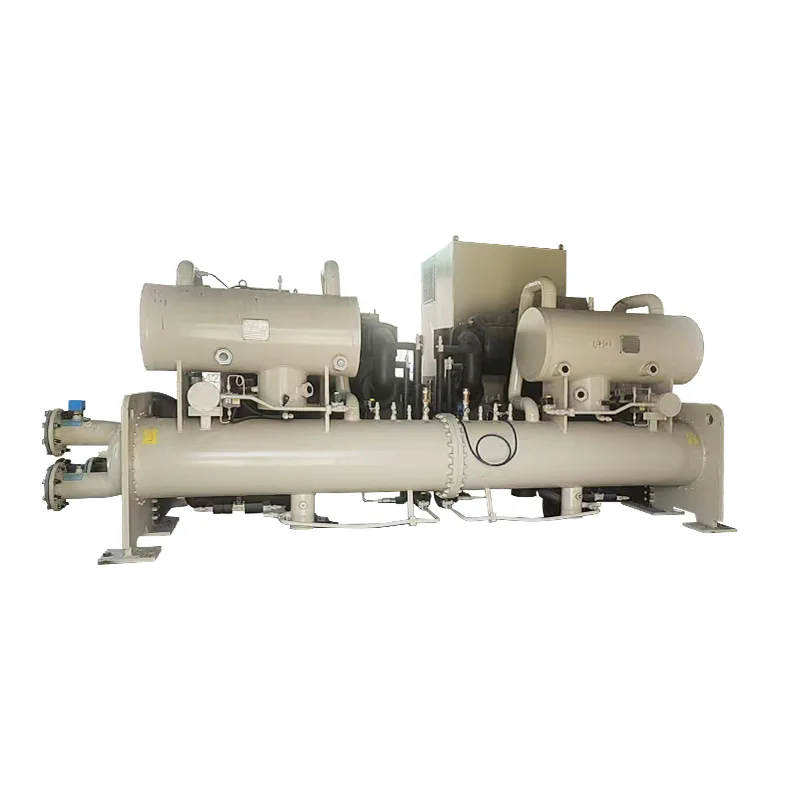
Table of Contents
- Overview: What Is a Screw Chiller?
- How Screw Chillers Work
- Cooling Pain Points Addressed
- Key Selection and Performance Factors
- Frequently Asked Questions
- Conclusion and Contact
Overview: What Is a Screw Chiller?
A screw chiller is a type of industrial refrigeration machine that uses a screw compressor to circulate refrigerant, absorb heat from a process or space, and reject that heat to air or water. Unlike compressors with reciprocating pistons, screw compressors achieve continuous compression via two interlocking helical rotors, resulting in smooth operation and high load capacity. These systems are widely used for process cooling in factories, data centers, large commercial HVAC systems, and manufacturing environments where precise temperature control is essential.
Because screw chillers accommodate large cooling capacities and offer stable output over extended duty cycles, they are often chosen for equipment-intensive operations that require 24/7 cooling without frequent cycling. Their design delivers a balance between performance, reliability, and serviceability, making them suitable for high-demand installations.
How Screw Chillers Work
- Compressor Action: The heart of a screw chiller is its screw compressor, which moves refrigerant through a continuous, low-vibration rotary process. This provides a steady compression flow and reduces mechanical stresses typical of piston-based compressors.
- Heat Exchange: Refrigerant releases heat through a condenser (air-cooled or water-cooled) and descends through an expansion valve before absorbing heat from chilled water or process fluid in the evaporator. This cycle repeats to maintain stable chilled fluid temperatures.
- Control and Capacity Modulation: Advanced chiller models incorporate variable frequency drives (VFDs) or slide valves to adjust compressor output according to real-time load requirements, improving efficiency and reducing energy spikes.
Cooling Pain Points Addressed by Screw Chillers
1. High Cooling Demand in Industrial Environments
Processes such as injection molding, chemical mixing, and metalworking generate substantial heat loads that require continuous removal to maintain quality and throughput. Screw chillers deliver large cooling capacities that match these demands and avoid performance degradation under heavy loads.
2. Fluctuating Load Conditions in Commercial HVAC
Office buildings, malls, and hotels experience varying cooling requirements throughout the day. Screw chillers with variable capacity control adjust output to match real-time demand, helping avoid inefficiency caused by repeated start-stop cycles.
3. Reliability and Maintenance Concerns
With fewer moving parts compared to traditional compressors, screw chillers require less frequent maintenance and are less prone to mechanical wear, minimizing downtime and service costs in continuous operations.
4. Noise and Vibration Constraints
Screw compressors produce smoother compression cycles with reduced vibration, resulting in lower noise levels. This characteristic makes screw chillers suitable for noise-sensitive environments like hospitals or office buildings.
Key Selection and Performance Factors
| Factor | Consideration |
|---|---|
| Cooling Capacity Range | Select units rated to handle peak load plus margin for future expansion |
| Condenser Type | Air-cooled for simplicity / Water-cooled for higher efficiency in hot climates |
| Control Strategy | Variable frequency drive (VFD) or slide valve for adaptable output |
| Refrigerant Compatibility | Modern low-GWP refrigerants for regulatory compliance |
| Service Accessibility | Modular, easy-access service panels facilitate maintenance |
Frequently Asked Questions
Q: What makes screw chillers suitable for 24/7 industrial use?
A: Screw chillers employ continuous rotary compression that minimizes thermal cycling, enabling stable performance for round-the-clock cooling demands and reducing the frequency of mechanical startups that can cause wear in other compressor types.
Q: Can a screw chiller operate efficiently under variable load conditions?
A: Yes, modern screw chillers with VFDs or slide valve modulation adjust compressor output to match cooling load variations, which improves part-load performance and reduces unnecessary energy consumption.
Q: How important is the choice between water-cooled and air-cooled screw chillers?
A: Water-cooled chillers typically offer higher heat rejection efficiency in extreme ambient conditions but require cooling tower infrastructure. Air-cooled chillers are easier to install but may experience reduced efficiency at high ambient temperatures. The choice depends on site conditions and infrastructure availability.
Conclusion and Contact
A screw chiller provides dependable, scalable cooling performance for both industrial processes and commercial HVAC systems. Its mechanical simplicity, capacity adaptability, and ability to manage heavy loads with low vibration and noise make it an effective solution to many cooling challenges faced by modern facilities.
For tailored screw chiller solutions, performance evaluation support, and system configuration guidance, explore the comprehensive product offerings and technical resources from Yuzhen. To discuss your specific cooling requirements and receive customized recommendations, please contact us today.