

How Does a Pipe Conveyor Belt Enhance Material Handling Efficiency?
2026-02-26
Article Summary
Pipe conveyor belts are specialized conveying systems designed to transport bulk materials efficiently, safely, and over long distances while minimizing spillage and environmental impact. This article explores the functionality, advantages, selection criteria, and maintenance practices for pipe conveyor belts. By understanding these aspects, industries can optimize material handling processes and reduce operational costs.
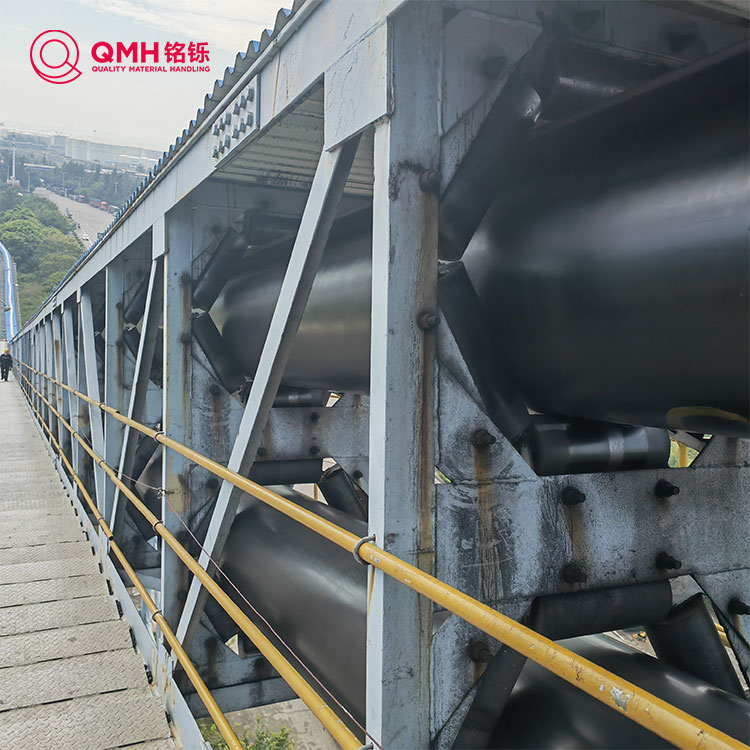
Table of Contents
- Overview of Pipe Conveyor Belts
- Common Customer Challenges
- Types and Design Variations
- How to Choose the Right Pipe Conveyor Belt
- Operational Factors Affecting Performance
- Pipe Conveyor Belt Comparison Table
- Maintenance and Longevity Tips
- Industry Applications
- Frequently Asked Questions
- Conclusion and Contact Us
Overview of Pipe Conveyor Belts
A pipe conveyor belt is a cylindrical, closed conveyor system designed to carry bulk materials in a continuous loop. Unlike traditional flat belt conveyors, the belt forms a tube around the transported material, preventing spillage and dust emission. This design is ideal for long-distance material transport, steep inclines, and complex routes requiring tight turns.
The structural integrity of the belt ensures stability, reduces material loss, and maintains consistent flow, making it an efficient solution for industries such as mining, cement, power generation, and ports. QMH specializes in high-quality pipe conveyor belts with customizable dimensions, material layers, and reinforcement for specific industrial needs.
Common Customer Challenges
Operators and plant managers often encounter operational issues with conveyor systems. Addressing these challenges is critical for uninterrupted production.
- Material spillage and dust generation
- Excessive belt wear and short lifespan
- Misalignment and tracking problems
- High maintenance costs and downtime
- Limited adaptability to inclined or curved routes
- Energy inefficiency due to poor belt design or tensioning
Choosing the correct pipe conveyor belt and following proper installation guidelines helps mitigate these challenges while ensuring consistent performance.
Types and Design Variations
Pipe conveyor belts are available in different designs depending on material type, transport distance, and environmental requirements.
- Single-Ply Pipe Conveyor Belts – Lightweight, flexible, suitable for moderate loads and short distances
- Multi-Ply Reinforced Belts – High strength, ideal for heavy loads and long-distance transport
- Rubber or PVC Surface Coating – Provides abrasion resistance and reduces material sticking
- Custom Diameter and Length – Designed for specialized routing, including sharp bends or inclines
How to Choose the Right Pipe Conveyor Belt
Selecting an optimal pipe conveyor belt requires consideration of material properties, operational environment, and production goals.
- Bulk material type (density, granularity, moisture content)
- Transport distance and elevation changes
- Operating temperature and environmental exposure
- Belt tensile strength and reinforcement layers
- Compatibility with existing pulley and support systems
- Maintenance accessibility and service life expectations
QMH provides expert consultation to match each conveyor belt specification with industrial requirements, ensuring durability, safety, and cost efficiency.
Operational Factors Affecting Performance
The efficiency and lifespan of a pipe conveyor belt depend on several operational factors:
- Proper belt tension and alignment to prevent slippage
- Optimal pulley and roller configuration to reduce friction
- Controlled loading to avoid overcapacity and belt deformation
- Monitoring of environmental conditions, including humidity and abrasive materials
- Regular inspection and maintenance to detect wear and tear early
Integrating these practices ensures smooth operation, reduces downtime, and improves overall material transport efficiency.
Pipe Conveyor Belt Comparison Table
| Belt Type | Material Suitability | Advantages | Typical Applications |
|---|---|---|---|
| Single-Ply | Light to medium bulk materials | Flexible, cost-effective | Short-distance transport, packaging plants |
| Multi-Ply Reinforced | Heavy and abrasive materials | High tensile strength, long service life | Mining, cement, bulk terminals |
| Rubber Coated | Abrasive or sticky materials | Improved abrasion resistance, reduced sticking | Quarrying, coal, fertilizer transport |
Maintenance and Longevity Tips
Proper maintenance is crucial to maximize belt lifespan and operational efficiency:
- Routine inspection for wear, cracks, and misalignment
- Regular cleaning to prevent material buildup
- Lubrication of moving components where applicable
- Replacement of worn rollers, pulleys, and support structures
- Monitoring belt tension and adjusting as needed
Following these guidelines reduces unplanned downtime and ensures safe operation for heavy-duty applications.
Industry Applications
Pipe conveyor belts are used across multiple industries for safe, efficient bulk material transport:
- Mining operations (coal, ore, aggregates)
- Cement and concrete plants
- Power generation and biomass transport
- Ports and shipping terminals
- Chemical and fertilizer plants
Frequently Asked Questions
How long can a pipe conveyor belt last?
Lifespan depends on material type, load conditions, and maintenance. Multi-ply reinforced belts typically last 7–10 years with proper care.
Can pipe conveyor belts handle steep inclines?
Yes, the cylindrical design allows transport over steep angles and tight curves without spillage.
Is customization available for unique plant layouts?
Absolutely. QMH provides custom diameter, length, and material options tailored to site-specific requirements.
How is energy efficiency improved?
Optimized belt tension, roller placement, and load distribution reduce friction, lowering energy consumption.
Conclusion and Contact Us
Pipe conveyor belts are a reliable, efficient, and versatile solution for transporting bulk materials in challenging environments. By selecting the right belt type, ensuring proper installation, and adhering to maintenance protocols, industries can enhance safety, reduce material loss, and improve operational efficiency.
QMH delivers high-quality pipe conveyor belts designed to meet diverse industrial needs. If you are looking to optimize your material handling systems and maximize efficiency, contact us today to discuss how QMH can provide a customized, durable, and high-performance solution for your operations.