

How Does a Hybrid Boiler Improve Industrial Energy Efficiency?
2026-03-04
Article Summary
A hybrid boiler is an advanced heating solution designed to combine multiple energy sources into a single, optimized system. For industrial users facing rising energy costs, unstable fuel prices, and stricter environmental requirements, hybrid boilers offer a practical and scalable alternative to traditional single-fuel boilers. This article explains how hybrid boilers work, what problems they solve, how to select the right system, and why they are increasingly adopted across manufacturing and process industries.
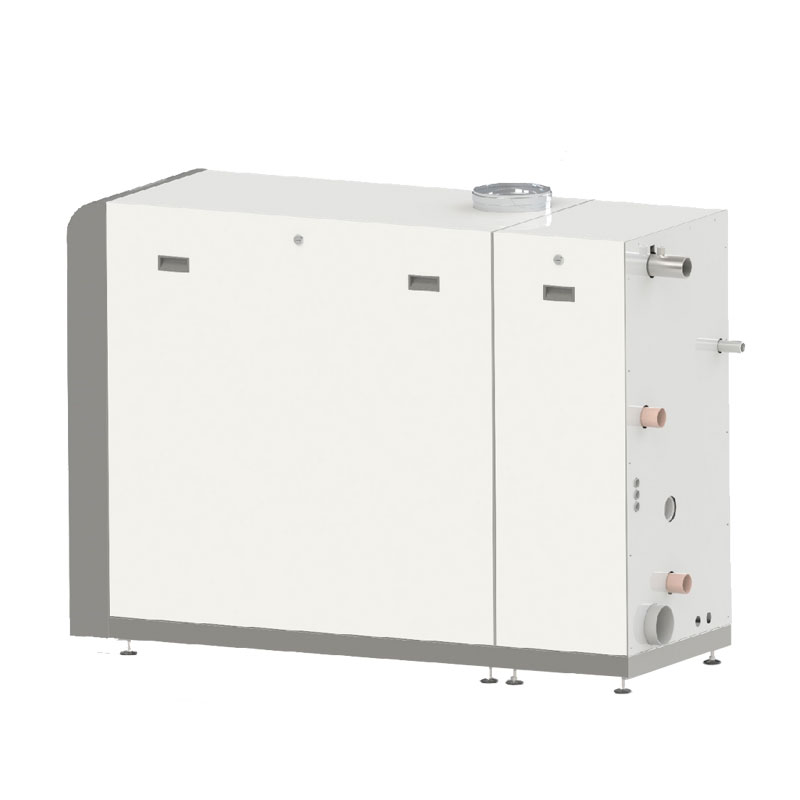
Table of Contents
- Hybrid Boiler Overview
- Key Challenges in Conventional Boiler Systems
- How a Hybrid Boiler Works
- Core Benefits of Hybrid Boilers
- How to Choose the Right Hybrid Boiler
- Hybrid Boiler vs Traditional Boiler
- Typical Industrial Applications
- Operation and Maintenance Considerations
- Frequently Asked Questions
- Conclusion and Contact Us
Hybrid Boiler Overview
A hybrid boiler is a heating system that integrates two or more energy inputs—such as gas, electricity, biomass, or waste heat—into a single coordinated unit. Instead of relying on one fuel source, the system dynamically selects or combines energy inputs based on availability, cost, and load demand.
This approach allows industrial facilities to maintain stable steam or hot water output while reducing operating costs and exposure to fuel market volatility. Zhejiang HEC Machinery designs hybrid boilers with modular architectures, enabling flexible configuration for different industrial environments.
Key Challenges in Conventional Boiler Systems
Traditional boilers often struggle to meet modern industrial demands. Customers frequently report the following issues:
- High fuel consumption and rising operating costs
- Dependence on a single energy source
- Limited adaptability to fluctuating load requirements
- Difficulty meeting emission and efficiency standards
- Low overall energy utilization efficiency
These challenges directly impact production stability, cost control, and long-term sustainability. Hybrid boilers are specifically engineered to address these limitations.
How a Hybrid Boiler Works
A hybrid boiler operates through an intelligent control system that manages multiple heat generation sources. Depending on system design, it may prioritize the most economical or environmentally favorable energy source at any given time.
For example, during periods of low electricity cost, the system can increase electric heating contribution. When waste heat from industrial processes is available, the boiler can recover and reuse it instead of consuming additional fuel. This coordinated operation significantly improves overall system efficiency.
Core Benefits of Hybrid Boilers
Hybrid boilers provide measurable advantages across technical, economic, and operational dimensions.
- Energy Cost Optimization: Reduced reliance on high-cost fuels
- Operational Flexibility: Adaptive response to load and energy availability
- Higher Efficiency: Improved total energy utilization
- Lower Emissions: Reduced fuel combustion and waste
- System Reliability: Backup energy sources enhance uptime
Zhejiang HEC Machinery focuses on balancing efficiency gains with system reliability, ensuring hybrid boilers remain stable under continuous industrial operation.
How to Choose the Right Hybrid Boiler
Selecting a hybrid boiler requires a comprehensive evaluation of operational requirements and site conditions. Key considerations include:
- Required steam or hot water capacity
- Available primary and secondary energy sources
- Fuel cost structure and price stability
- Space and installation constraints
- Automation and control system requirements
A properly configured hybrid boiler should align with both current production needs and future expansion plans.
Hybrid Boiler vs Traditional Boiler
| Aspect | Hybrid Boiler | Traditional Boiler |
|---|---|---|
| Energy Sources | Multiple, integrated | Single fuel |
| Efficiency | High, optimized | Moderate |
| Operational Flexibility | Strong adaptability | Limited |
| Energy Cost Control | Dynamic optimization | Fuel-dependent |
| Environmental Impact | Lower emissions | Higher emissions |
Typical Industrial Applications
Hybrid boilers are suitable for a wide range of industrial sectors where stable heat supply and efficiency are critical.
- Foundry and metal processing
- Chemical and pharmaceutical manufacturing
- Food and beverage processing
- Textile and dyeing plants
- District heating and utility systems
Operation and Maintenance Considerations
Although hybrid boilers are more sophisticated than conventional systems, modern automation significantly simplifies operation. Routine maintenance focuses on control system calibration, heat exchanger inspection, and fuel interface management.
With proper maintenance planning, hybrid boilers can achieve long service life and stable output, even under demanding industrial conditions.
Frequently Asked Questions
Is a hybrid boiler more complex to operate?
Modern hybrid boilers use automated control systems, making daily operation straightforward for trained personnel.
Can a hybrid boiler reduce energy costs?
Yes. By switching between energy sources, the system minimizes reliance on high-cost fuels.
Are hybrid boilers suitable for existing plants?
In many cases, hybrid boilers can be integrated into existing infrastructure with proper system design.
What is the typical lifespan of a hybrid boiler?
With proper maintenance, a hybrid boiler can operate reliably for many years.
Conclusion and Contact Us
Hybrid boilers represent a strategic upgrade for industrial heating systems, offering flexibility, efficiency, and long-term cost control. By intelligently combining multiple energy sources, these systems help manufacturers adapt to changing energy markets while maintaining stable production.
Zhejiang HEC Machinery provides engineered hybrid boiler solutions tailored to diverse industrial needs, with a focus on reliability, efficiency, and practical integration. If you are exploring ways to optimize your energy system or reduce operating costs, contact us today to learn how a hybrid boiler from Zhejiang HEC Machinery can support your project.