

Article Summary
Gravimetric blenders are essential equipment in modern plastic manufacturing, ensuring precise material dosing, reducing waste, and optimizing production efficiency. This article explores the working principle, key benefits, selection criteria, and common issues associated with gravimetric blenders, providing actionable insights for manufacturers.
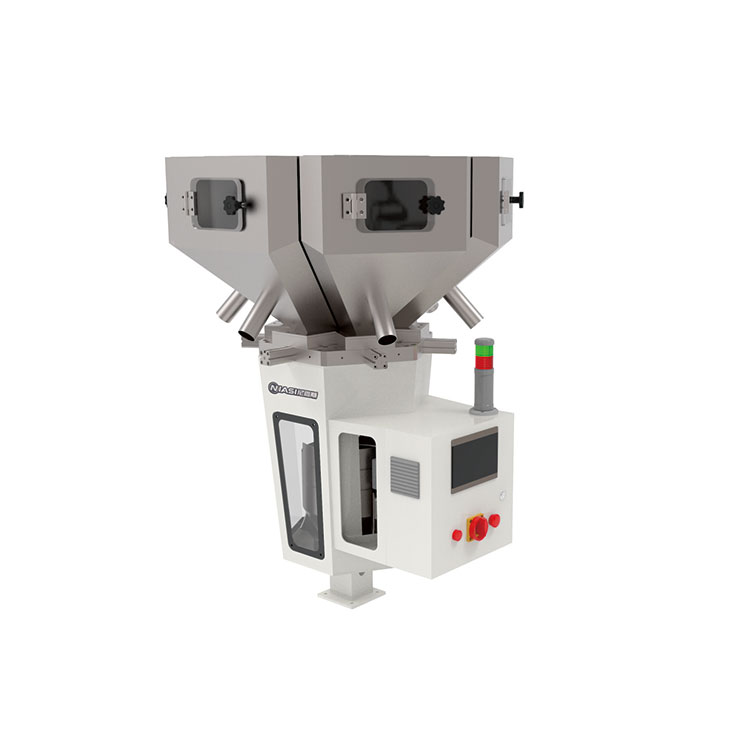
Table of Contents
Introduction to Gravimetric Blenders
A gravimetric blender is a precision dosing device used in plastic processing to mix different raw materials based on weight. Unlike volumetric blenders, gravimetric blenders measure materials by weight, ensuring accuracy even when material density changes. This precision minimizes production errors and material waste.
Modern gravimetric blenders are widely adopted in extrusion, injection molding, and compounding processes, helping manufacturers maintain consistent product quality.
Working Principle
The gravimetric blender operates by continuously weighing each component of the blend using highly sensitive load cells. The machine automatically adjusts the feed rate of each material to maintain the programmed ratio. This closed-loop control ensures precise mixing regardless of material fluctuations or changes in production speed.
- Material Feeding: Raw materials are fed into separate hoppers equipped with load cells.
- Weight Measurement: Load cells continuously monitor the weight of each material.
- Automatic Dosing: The system calculates the exact feed rate required for the target blend.
- Mixing: Materials are combined in a mixing chamber before entering the processing equipment.
This method ensures highly consistent material ratios, reducing off-spec products and improving overall efficiency.
Key Benefits for Plastic Manufacturers
Using a gravimetric blender brings measurable advantages to plastic production:
| Benefit | Description |
|---|---|
| High Accuracy | Maintains precise ratios even with varying material densities. |
| Reduced Material Waste | Eliminates overfeeding or underfeeding, saving raw materials. |
| Consistent Product Quality | Ensures uniform color, texture, and mechanical properties. |
| Labor Saving | Automated control reduces manual intervention and errors. |
| Data Tracking | Records production data for traceability and quality control. |
How to Select the Right Gravimetric Blender
Selecting a gravimetric blender depends on your production requirements and material types. Key factors include:
- Production Capacity: Match the blender capacity with the output of your extruder or injection machine.
- Number of Components: Choose a blender that can handle all required raw materials, including masterbatch, recycled materials, or additives.
- Accuracy Requirements: Determine if ±0.1% or ±0.5% precision is necessary based on product standards.
- Material Type: Ensure the blender is compatible with powders, pellets, or flakes.
- Maintenance and Support: Consider ease of cleaning and availability of spare parts.
Companies like Dongguan Niasi Plastic Machinery Co., Ltd. offer a wide range of gravimetric blenders with advanced control systems to suit diverse manufacturing needs.
Common Issues and Troubleshooting
Even the best gravimetric blenders can face operational challenges. Here are some common problems and solutions:
- Material Bridging: Materials stick inside the hopper. Solution: Install vibration devices or anti-bridging designs.
- Inconsistent Weight: Caused by dirty load cells. Solution: Regular cleaning and calibration.
- System Alarm: Often triggered by feed motor faults. Solution: Inspect and replace worn motors.
- Incorrect Ratio: Operator input errors or software issues. Solution: Verify settings and update software if necessary.
Proper maintenance and training can minimize downtime and maximize production efficiency.
FAQ
-
Q1: Can a gravimetric blender handle recycled materials?
Yes, it can accurately blend recycled pellets with virgin resin to achieve consistent product quality. -
Q2: How often should load cells be calibrated?
Calibration is recommended every 6-12 months depending on usage and accuracy requirements. -
Q3: Is it possible to integrate the blender with existing production lines?
Absolutely. Modern gravimetric blenders can be connected to extruders and injection machines with PLC or network control. -
Q4: What materials are compatible?
Gravimetric blenders can handle pellets, powders, masterbatches, and some flakes depending on the design.
Conclusion and Contact Information
Gravimetric blenders are indispensable for modern plastic production, offering precision, efficiency, and reliability. Manufacturers seeking to enhance product quality and reduce material waste should consider investing in a high-performance gravimetric blender.
Dongguan Niasi Plastic Machinery Co., Ltd. provides a full range of gravimetric blenders tailored to different production scales. For more details, visit our product page here or contact us directly to get personalized solutions for your manufacturing needs.