

How Does a Flocculant Dosing Device Improve Water Treatment Efficiency?
2026-04-01
Article Summary: This article provides a comprehensive guide to flocculant dosing devices, explaining how they function, why they are essential in modern water treatment systems, and how businesses can optimize their use to solve common operational challenges such as inconsistent dosing, high chemical costs, and poor water quality. Practical insights, structured guidance, and real-world considerations are included to support informed decision-making.
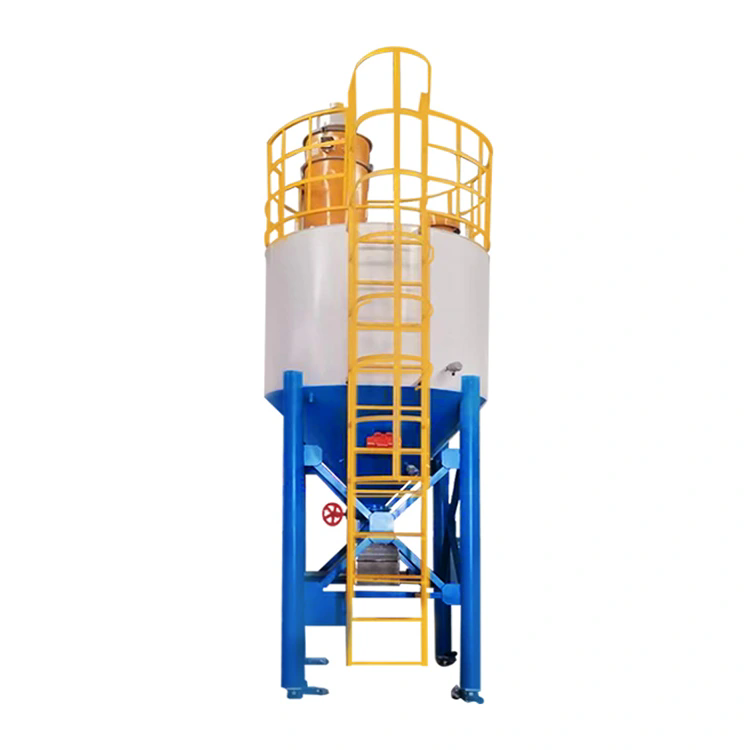
Table of Contents
- 1. Introduction to Flocculant Dosing Devices
- 2. How a Flocculant Dosing Device Works
- 3. Key Components and System Structure
- 4. Common Challenges in Dosing Applications
- 5. Benefits of Using a Flocculant Dosing Device
- 6. Selection Guide for the Right Equipment
- 7. Maintenance and Optimization Tips
- 8. Application Scenarios
- 9. FAQ
1. Introduction to Flocculant Dosing Devices
A flocculant dosing device is an automated system designed to accurately prepare and inject flocculants into water or wastewater streams. These chemicals promote the aggregation of suspended particles into larger flocs, making them easier to remove through sedimentation or filtration.
Industries such as municipal wastewater treatment, mining, chemical processing, and food production rely heavily on these systems to ensure consistent water quality while minimizing chemical waste.
2. How a Flocculant Dosing Device Works
The operational principle revolves around precise preparation and controlled injection. The system typically follows these steps:
- Preparation: Dry or liquid flocculant is mixed with water to form a solution.
- Maturation: The solution is aged to ensure optimal polymer activation.
- Dosing: Metering pumps inject the solution into the treatment pipeline.
- Mixing: The flocculant interacts with suspended particles, forming flocs.
Automation ensures that dosing levels remain stable even when flow rates fluctuate, addressing one of the most common inefficiencies in manual systems.
3. Key Components and System Structure
| Component | Function |
|---|---|
| Storage Hopper | Stores dry flocculant material |
| Mixing Tank | Ensures uniform dissolution of chemicals |
| Agitator | Maintains proper mixing conditions |
| Metering Pump | Controls precise dosing rates |
| Control Panel | Automates operation and monitors performance |
Advanced systems from manufacturers like Siyuan often integrate PLC controls and sensors for real-time adjustments.
4. Common Challenges in Dosing Applications
Many operators encounter recurring issues when managing flocculant dosing:
- Inconsistent dosing leading to poor water clarity
- Excessive chemical consumption increasing operational costs
- Clogging or scaling in pipelines
- Manual errors due to lack of automation
These problems often stem from outdated equipment or improper system design. A modern dosing device directly addresses these inefficiencies through precision engineering and automation.
5. Benefits of Using a Flocculant Dosing Device
Implementing a well-designed system delivers measurable improvements:
- Enhanced Treatment Efficiency: Stable dosing ensures optimal floc formation.
- Reduced Chemical Waste: Accurate metering minimizes overuse.
- Labor Savings: Automation reduces manual intervention.
- Improved Consistency: Reliable performance across varying conditions.
- Scalability: Easily adaptable for different capacities and industries.
6. Selection Guide for the Right Equipment
Choosing the appropriate dosing system requires careful evaluation of several parameters:
| Criteria | Consideration |
|---|---|
| Flow Rate | Match system capacity with treatment volume |
| Chemical Type | Ensure compatibility with flocculant properties |
| Automation Level | Select manual, semi-automatic, or fully automatic |
| Installation Space | Compact designs for limited areas |
| Maintenance Requirements | Ease of cleaning and part replacement |
Systems provided by Siyuan are engineered to accommodate diverse operational demands, offering modular configurations for flexibility.
7. Maintenance and Optimization Tips
To ensure long-term performance, consider the following best practices:
- Regularly clean mixing tanks to prevent residue buildup
- Inspect pumps and valves for wear and tear
- Calibrate dosing rates periodically
- Monitor solution concentration levels
- Use high-quality flocculants to reduce system strain
Preventive maintenance not only extends equipment lifespan but also maintains consistent treatment quality.
8. Application Scenarios
Flocculant dosing devices are widely used across multiple sectors:
- Municipal wastewater treatment plants
- Industrial effluent management
- Mining and mineral processing
- Papermaking and textile industries
- Food and beverage production
Each application benefits from tailored dosing strategies to meet specific regulatory and operational requirements.
9. FAQ
Q1: What is the optimal dosing concentration?
It depends on water characteristics and flocculant type. Laboratory testing is recommended for precise calibration.
Q2: Can the system handle different types of flocculants?
Yes, most modern systems are compatible with both powder and liquid flocculants, provided proper configuration.
Q3: How often should maintenance be performed?
Routine inspections should be conducted weekly, with deeper maintenance performed monthly or as needed.
Q4: Is automation necessary?
While not mandatory, automation significantly improves accuracy and reduces operational risks.
Q5: What factors affect dosing accuracy?
Pump calibration, solution concentration, and flow rate fluctuations are key factors.
Conclusion
A flocculant dosing device is a critical component in achieving efficient and reliable water treatment. By ensuring precise chemical dosing, reducing waste, and improving operational consistency, these systems provide a strong return on investment for various industries.
If you are looking for a dependable solution tailored to your operational needs, Siyuan offers advanced flocculant dosing systems designed for performance and durability. Explore your options today and contact us to discover how we can help optimize your water treatment process.