

How Does a Feed Ultrafine Pulverizer Improve Your Production Efficiency?
2026-06-09
Abstract: In modern feed processing, achieving uniform particle size is essential for improving animal digestion, feed conversion, and overall production efficiency. A feed ultrafine pulverizer plays a crucial role in this process, offering precise grinding, high output, and consistent quality. This article explores how these machines work, their advantages, applications, maintenance tips, and how to choose the right model for your facility.
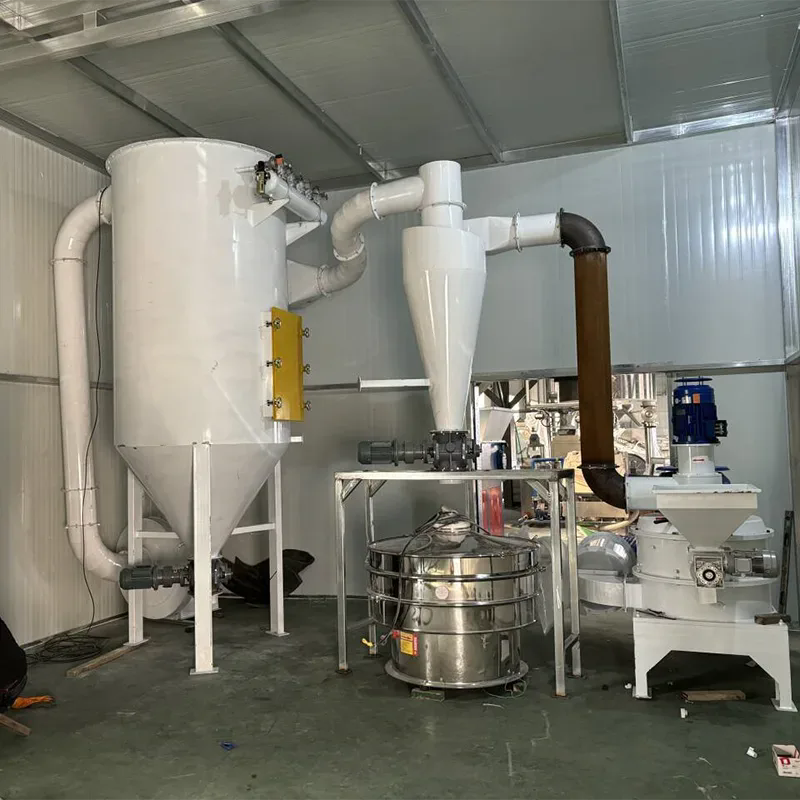
Table of Contents
- Introduction
- Working Principle of a Feed Ultrafine Pulverizer
- Key Advantages
- Applications in Feed Industry
- Guide to Choosing the Right Pulverizer
- Maintenance and Troubleshooting
- Frequently Asked Questions (FAQ)
- Conclusion
Introduction
Feed quality directly impacts livestock growth, health, and production efficiency. One of the most effective methods to enhance feed quality is by reducing particle size to ultrafine levels. A feed ultrafine pulverizer enables manufacturers to achieve precise grinding, improving nutrient absorption and feed digestibility. Unlike traditional grinders, ultrafine pulverizers provide consistent particle size distribution, reducing feed waste and enhancing overall efficiency.
Working Principle of a Feed Ultrafine Pulverizer
A feed ultrafine pulverizer utilizes advanced mechanical and airflow systems to achieve fine and uniform grinding. Here’s a breakdown of its core components and operation:
- Feeding System: Raw materials are fed into the pulverizer through a hopper equipped with a controlled feeding mechanism to ensure consistent input.
- Grinding Chamber: The material enters a high-speed rotor or hammer system, where it is crushed into fine particles through impact and shear forces.
- Air Classification: Fineness is controlled using an internal airflow classifier, separating fine particles from oversized ones for recirculation.
- Discharge System: Fine particles are collected in a cyclone separator or bag filter, ready for further processing or packaging.
This combination of mechanical crushing and air classification ensures uniform particle size and minimizes overheating, preserving nutrient quality.
Key Advantages
Using a feed ultrafine pulverizer offers multiple benefits that address common pain points in feed production:
| Advantage | Benefit |
|---|---|
| Uniform Particle Size | Improves feed digestibility and nutrient absorption for livestock. |
| High Efficiency | Processes large volumes of feed in a short time, reducing labor and energy costs. |
| Energy Saving | Advanced rotor design minimizes power consumption compared to traditional grinders. |
| Low Heat Generation | Prevents nutrient loss caused by excessive friction during grinding. |
| Easy Maintenance | Modular design allows fast replacement of wear parts, minimizing downtime. |
Applications in Feed Industry
Feed ultrafine pulverizers are widely used across various segments of the feed industry, including:
- Poultry Feed: Enhances nutrient absorption for chickens and turkeys, promoting uniform growth.
- Swine Feed: Improves feed conversion ratio and reduces wastage in pig farms.
- Aquaculture Feed: Produces ultrafine powder suitable for fish, shrimp, and other aquatic animals.
- Pet Food: Ensures uniformity in kibble or powder feed for pets.
Additionally, these machines are suitable for grinding raw materials such as corn, wheat, soybean meal, and various other grains.
Guide to Choosing the Right Pulverizer
Selecting the right feed ultrafine pulverizer depends on your production needs and budget. Here are the key factors to consider:
- Production Capacity: Estimate daily or hourly feed requirements to choose a model that meets demand.
- Material Type: Consider hardness, moisture content, and particle size of raw materials.
- Fineness Requirement: Determine the target particle size for your feed to ensure proper classification and grinding performance.
- Energy Efficiency: Look for models with low power consumption without compromising output quality.
- Maintenance & Support: Check the availability of spare parts and local service support for quick troubleshooting.
Maintenance and Troubleshooting
Proper maintenance ensures longevity and stable performance of a feed ultrafine pulverizer. Key maintenance tips include:
- Regularly check wear parts such as hammers, screens, and rotor components.
- Clean dust and feed residues to prevent blockages and reduce wear.
- Monitor airflow and adjust classifiers to maintain particle size consistency.
- Lubricate bearings and moving parts according to manufacturer recommendations.
- Schedule periodic inspections to detect early signs of damage or misalignment.
Common troubleshooting includes addressing uneven particle size, excessive noise, and reduced throughput, often solved by replacing worn parts or recalibrating the classifier.
Frequently Asked Questions (FAQ)
-
Q1: Can a feed ultrafine pulverizer handle wet materials?
A1: Most models are designed for dry materials. Wet materials may require pre-drying before grinding to prevent clogging. -
Q2: What is the typical fineness range achievable?
A2: Depending on the model, particle sizes can range from 50 to 300 mesh, meeting various feed specifications. -
Q3: How often should maintenance be performed?
A3: Daily cleaning and weekly inspections are recommended, with monthly lubrication and part checks for optimal performance. -
Q4: Is it energy-efficient compared to traditional grinders?
A4: Yes, advanced rotor designs and air classification systems significantly reduce power consumption while maintaining high output.
Conclusion
Investing in a feed ultrafine pulverizer can transform feed production efficiency, ensuring uniform particle size, enhanced nutrient absorption, and reduced waste. By understanding its working principles, advantages, applications, and maintenance requirements, feed manufacturers can make informed decisions to maximize productivity and profitability.
For reliable, high-performance feed ultrafine pulverizers, trust Xingshengwei. Explore our product range and contact us today to find the perfect solution for your feed processing needs.