

How Does a Column Box Former Improve Packaging Efficiency?
2026-03-18
Article Summary: A Column Box Former is a critical piece of packaging machinery designed to automate the forming of column-style cartons with precision and consistency. This article explores how it works, its structural components, operational advantages, and how businesses can select the right model to solve common production bottlenecks. Detailed tables, structured sections, and practical insights are included to support informed decision-making.
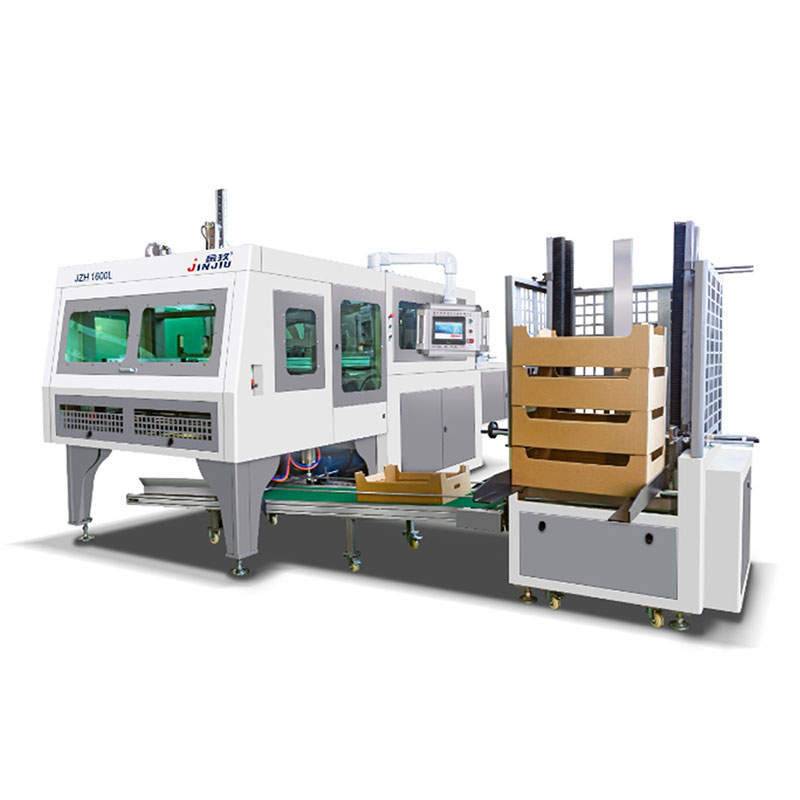
Table of Contents
- 1. What Is a Column Box Former?
- 2. How Does a Column Box Former Work?
- 3. Key Components and Structure
- 4. Benefits for Industrial Packaging
- 5. Common Customer Pain Points and Solutions
- 6. Technical Parameters Overview
- 7. How to Choose the Right Column Box Former
- 8. FAQ
- 9. Conclusion
1. What Is a Column Box Former?
A Column Box Former is an automated machine designed to convert flat cardboard sheets into rigid, column-structured boxes. These boxes are widely used in logistics, retail packaging, and industrial product containment where structural integrity and uniformity are essential.
Unlike manual forming processes, this equipment ensures high-speed, repeatable output while minimizing labor costs and material waste. It is especially suitable for industries that require high-volume packaging with consistent quality standards.
2. How Does a Column Box Former Work?
The working principle of a Column Box Former involves a sequence of automated steps controlled by a programmable system:
- Feeding: Flat cardboard sheets are loaded into the feeding system.
- Positioning: Sensors align the material precisely before forming.
- Folding: Mechanical arms or plates fold the cardboard into a column shape.
- Sealing: Adhesive or locking mechanisms secure the structure.
- Output: Finished boxes are discharged for further packing operations.
This streamlined workflow reduces human intervention and ensures consistent dimensional accuracy across batches.
3. Key Components and Structure
Understanding the internal structure helps evaluate performance and maintenance requirements. Below are the main components:
- Frame Structure: Provides mechanical stability and vibration resistance.
- Feeding Unit: Ensures smooth and continuous material supply.
- Folding Mechanism: Responsible for shaping the column box.
- Control System: Typically PLC-based for precise automation control.
- Adhesive/Locking Unit: Secures box structure using glue or mechanical locks.
- Conveyor System: Transfers finished boxes to the next stage.
4. Benefits for Industrial Packaging
Investing in a Column Box Former delivers measurable operational advantages:
- Improved Efficiency: High-speed production reduces cycle time.
- Labor Cost Reduction: Automation minimizes manual work.
- Consistency: Uniform box dimensions improve stacking and transport.
- Material Optimization: Reduced waste through precise forming.
- Scalability: Suitable for both medium and large-scale production lines.
5. Common Customer Pain Points and Solutions
Many manufacturers face challenges in packaging operations. A Column Box Former addresses these effectively:
| Pain Point | Impact | Solution Provided |
| Inconsistent box quality | Product damage during transport | Automated forming ensures uniformity |
| High labor dependency | Increased operational costs | Fully automated process reduces workforce needs |
| Low production speed | Delayed order fulfillment | High-speed forming boosts throughput |
| Material waste | Increased packaging costs | Precision folding minimizes waste |
6. Technical Parameters Overview
The following table outlines typical technical specifications:
| Parameter | Specification |
| Production Speed | 10–30 boxes/min |
| Box Size Range | Customizable based on requirements |
| Power Supply | 220V / 380V, 50Hz |
| Control System | PLC with touchscreen interface |
| Material Compatibility | Corrugated cardboard, kraft paper |
| Machine Weight | Approx. 800–1500 kg |
7. How to Choose the Right Column Box Former
Selecting the right machine requires a structured evaluation of operational needs:
- Production Volume: Choose a model that matches daily output requirements.
- Box Specifications: Ensure compatibility with required dimensions and designs.
- Automation Level: Consider integration with existing production lines.
- Maintenance Requirements: Opt for machines with accessible components.
- Supplier Reliability: Partner with experienced manufacturers like Jinjiu for consistent quality and support.
Jinjiu offers advanced Column Box Former solutions designed for durability, efficiency, and seamless integration into modern packaging systems.
8. FAQ
Q1: What industries use Column Box Formers?
A: These machines are widely used in logistics, e-commerce, food packaging, electronics, and manufacturing sectors.
Q2: Can the machine handle different box sizes?
A: Yes, most models support adjustable settings or custom configurations for various box dimensions.
Q3: Is it difficult to operate a Column Box Former?
A: No, modern machines feature user-friendly interfaces with PLC control systems, making operation straightforward after basic training.
Q4: What maintenance is required?
A: Regular lubrication, cleaning, and inspection of moving parts ensure optimal performance and longevity.
9. Conclusion
A Column Box Former is a strategic investment for businesses seeking to enhance packaging efficiency, reduce costs, and maintain consistent product quality. By automating the box-forming process, companies can significantly improve operational productivity while minimizing errors and waste.
Jinjiu provides reliable and high-performance machinery tailored to meet diverse industrial requirements. With a focus on innovation and durability, their solutions are designed to support long-term production goals.
Contact us to learn more about how a Column Box Former can transform your packaging line and deliver measurable business value.