

How Does a Closed Eccentric Gear Press Work in Modern Metal Stamping?
2026-03-11
Article Summary
Closed eccentric gear presses are widely used in modern manufacturing for high-precision metal stamping, forming, punching, and forging. These machines convert rotary motion from an electric motor into powerful vertical pressing force through an eccentric gear transmission system. Their rigid closed-frame structure ensures high stability, accuracy, and durability during heavy industrial operations. This article explains how a closed eccentric gear press works, its key components, technical advantages, common applications, and how manufacturers select the right machine for production needs.
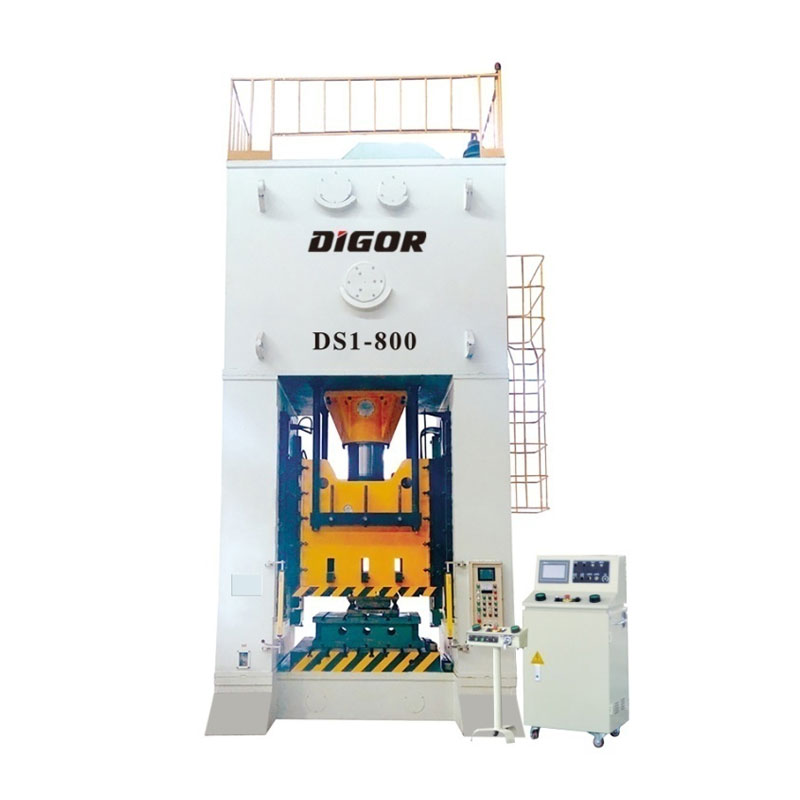
Table of Contents
- Overview of Closed Eccentric Gear Press
- How a Closed Eccentric Gear Press Works
- Key Components of a Closed Eccentric Gear Press
- Advantages of Closed Eccentric Gear Press Machines
- Typical Industrial Applications
- Typical Technical Parameters
- How to Choose the Right Closed Eccentric Gear Press
- Frequently Asked Questions
Overview of Closed Eccentric Gear Press
A closed eccentric gear press is a type of mechanical stamping machine designed for heavy-duty metal forming operations. Unlike open-frame presses, the closed-frame structure forms a rigid box-like body that provides higher strength, stability, and resistance to deformation during high-tonnage operations.
This machine uses an eccentric gear mechanism to convert rotary motion from a motor into linear motion of a slide or ram. When the slide moves downward, it presses the workpiece between an upper die and a lower die, shaping the material according to the die design. This mechanism allows the press to deliver consistent force and precise motion for industrial stamping tasks.
Mechanical presses operate by storing energy in a flywheel connected to the motor. When activated, the stored rotational energy drives the eccentric gear system, which converts circular motion into vertical movement of the slide to perform pressing operations. :contentReference[oaicite:0]{index=0}
How a Closed Eccentric Gear Press Works
Understanding the working principle of a closed eccentric gear press helps manufacturers optimize production efficiency and maintain consistent product quality.
The working process typically follows these steps:
-
Motor drives the flywheel
An electric motor rotates the flywheel through belts or gears, storing kinetic energy for the pressing operation. -
Eccentric gear transmission
The flywheel transfers rotational power to the eccentric gear system, which rotates around a central shaft. -
Conversion of motion
As the eccentric gear rotates, its offset center acts like a crank, driving a connecting rod mechanism. -
Slider movement
The connecting rod pushes the press slide up and down in a reciprocating motion. -
Material forming
The upper die attached to the slide compresses the workpiece against the lower die mounted on the press table, completing stamping, punching, or forming operations.
The eccentric gear essentially performs the same function as a crankshaft: converting rotary motion into linear movement that drives the press slide vertically. :contentReference[oaicite:1]{index=1}
Key Components of a Closed Eccentric Gear Press
A modern closed eccentric gear press consists of multiple precision-engineered components that ensure reliable operation and high output efficiency.
- Closed Frame Body – Provides structural rigidity and reduces deformation during high-pressure operations.
- Eccentric Gear System – Converts rotational motion into reciprocating slide movement.
- Flywheel – Stores mechanical energy to maintain stable pressing force.
- Connecting Rod – Transfers motion from the eccentric gear to the slide.
- Slide (Ram) – Moves vertically to apply force on the material.
- Die Set – Includes upper and lower molds used to shape the workpiece.
- Clutch and Brake System – Controls engagement and stopping of the press.
- Lubrication System – Ensures smooth operation of mechanical components.
Many advanced machines also include hydraulic overload protection, programmable control systems, and precision guiding mechanisms for improved safety and accuracy.
Advantages of Closed Eccentric Gear Press Machines
Compared with traditional crank presses or open-frame presses, closed eccentric gear presses provide several operational advantages.
- Higher structural rigidity – The closed frame design minimizes deflection during heavy stamping.
- Improved precision – Multi-surface slide guides enhance movement accuracy.
- Greater tonnage capacity – Suitable for large dies and heavy sheet metal forming.
- Smooth and stable operation – Helical or herringbone gears reduce vibration and noise.
- Enhanced safety – Overload protection systems prevent equipment damage.
- High production efficiency – Ideal for continuous industrial manufacturing.
Because of these advantages, closed eccentric gear presses are commonly used in industries requiring high-volume production with consistent quality.
Typical Industrial Applications
Closed eccentric gear presses are widely used in manufacturing sectors where high-strength metal forming is required.
Common applications include:
- Automotive body panels and structural parts
- Household appliance components
- Electrical equipment housings
- Hardware and metal fittings
- Precision sheet metal parts
- Large stamping dies and progressive die production
These presses are particularly suitable for progressive die stamping lines and automated transfer systems used in modern production environments.
Typical Technical Parameters
Although specifications vary depending on model and manufacturer, the following table shows typical technical parameters for a closed eccentric gear press.
| Parameter | Typical Range |
|---|---|
| Nominal Capacity | 1250 kN – 8000 kN |
| Slide Stroke Length | 130 – 400 mm |
| Strokes Per Minute | 10 – 30 SPM |
| Die Height | 600 – 1200 mm |
| Slide Adjustment | 200 – 500 mm |
| Applications | Blanking, bending, punching, forming |
Large industrial models can reach extremely high tonnage levels, enabling the production of heavy automotive and structural components.
How to Choose the Right Closed Eccentric Gear Press
Selecting the correct press machine is critical for achieving optimal productivity and cost efficiency. Manufacturers typically evaluate several technical factors before purchasing a machine.
Important considerations include:
- Required stamping tonnage
- Material thickness and type
- Die size and structure
- Production speed requirements
- Automation compatibility
- Safety and control systems
High-quality manufacturers such as Digor provide customized press solutions that match specific production requirements, ensuring reliability and long-term performance in industrial stamping lines.
Frequently Asked Questions
1. What is the difference between a crank press and an eccentric gear press?
A crank press uses a crankshaft mechanism to drive the slide, while an eccentric gear press uses an offset gear system to convert rotational motion into vertical movement. The eccentric gear structure typically provides higher rigidity and is suitable for larger presses.
2. Why is a closed frame press more stable?
The closed frame forms a rigid box-like structure that distributes load evenly across the machine body. This reduces deformation during high-pressure stamping operations and improves overall precision.
3. What materials can be processed with a closed eccentric gear press?
These machines can process a wide range of materials including steel sheets, stainless steel, aluminum, copper alloys, and other metal plates used in industrial manufacturing.
4. What industries use eccentric gear presses the most?
Automotive manufacturing, appliance production, metal hardware manufacturing, and electronics industries frequently rely on these presses for high-volume stamping operations.
Conclusion
Closed eccentric gear presses play a critical role in modern metal forming and stamping industries. By converting rotational energy into controlled vertical pressing force, these machines deliver the power, accuracy, and efficiency required for large-scale production. Their closed-frame structure ensures excellent rigidity, while the eccentric gear transmission provides smooth and reliable motion.
As manufacturing demands continue to increase, advanced press solutions from companies like Digor help businesses improve productivity, maintain consistent product quality, and handle complex forming operations with confidence.
If you are looking for a reliable solution for high-performance stamping equipment, contact us today to learn how Digor can support your production line with advanced closed eccentric gear press technology and professional engineering support.