

How Does a Box Fan Improve Indoor Comfort and Air Circulation?
2026-02-25
Article Abstract
A Box Fan is often considered a simple household appliance, yet its role in improving indoor comfort, air circulation, and energy efficiency is frequently underestimated. Many users struggle with uneven airflow, rising indoor temperatures, or high cooling costs, especially in residential, commercial, and light industrial environments. This article provides a comprehensive explanation of how a Box Fan works, why it is effective, and how it can be selected and used correctly to address real-world pain points. From airflow principles to practical usage scenarios, this guide aims to help buyers make informed decisions while maximizing performance and value.
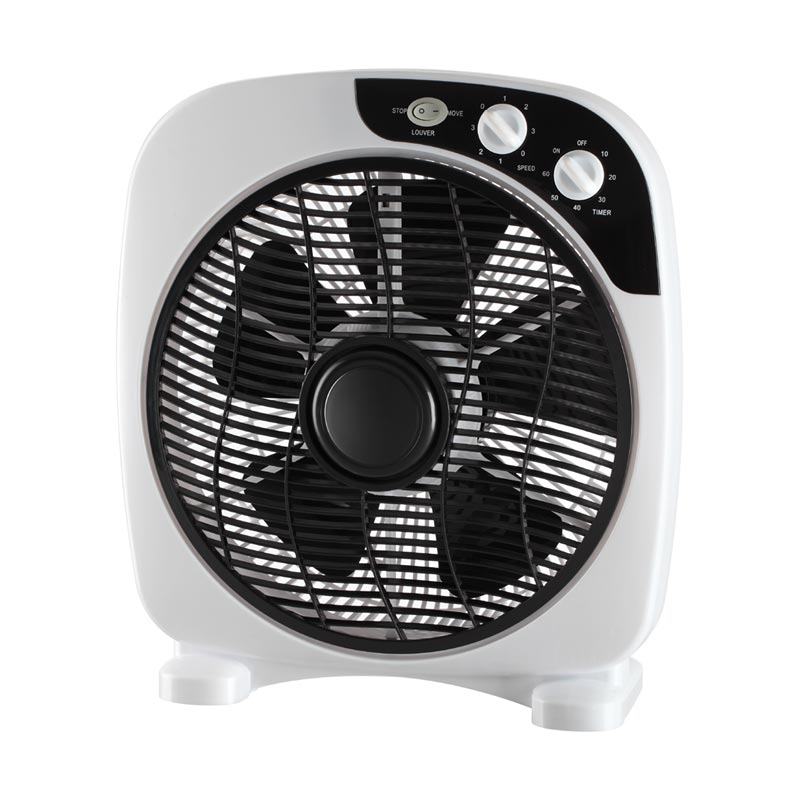
Table of Contents
- Understanding the Core Function of a Box Fan
- Common Problems Users Face with Indoor Airflow
- How a Box Fan Solves Air Circulation Challenges
- Key Features That Define a High-Quality Box Fan
- Box Fan vs. Other Cooling Solutions
- Typical Application Scenarios
- Selection Guide: Choosing the Right Box Fan
- Maintenance and Safety Considerations
- Frequently Asked Questions
- Conclusion and Business Cooperation
Understanding the Core Function of a Box Fan
A Box Fan is a square-shaped axial fan designed to move large volumes of air efficiently across indoor spaces. Unlike oscillating or tower fans that focus on directional cooling, a Box Fan emphasizes consistent airflow distribution. Its flat, wide design allows it to be positioned near windows, doors, or open spaces to either draw in fresh air or expel stale air.
The fundamental working principle lies in pressure differential. When the fan operates, it creates a low-pressure zone behind the blades, pulling air through the intake side and pushing it forward. This continuous air movement improves ventilation and helps regulate indoor temperature without relying solely on air-conditioning systems.
Common Problems Users Face with Indoor Airflow
Many indoor environments suffer from airflow inefficiencies that directly affect comfort and productivity. Typical challenges include:
- Hot air accumulation in confined or poorly ventilated rooms
- Uneven temperature distribution across large spaces
- Stale air buildup causing discomfort and odors
- Rising energy costs due to overreliance on air conditioning
These issues are especially common in apartments, workshops, classrooms, warehouses, and temporary workspaces. Without proper airflow management, even powerful cooling systems fail to deliver consistent comfort.
How a Box Fan Solves Air Circulation Challenges
A Box Fan addresses these problems by acting as an airflow enhancer rather than a standalone cooling source. When placed strategically, it accelerates air exchange and balances temperature differences.
For example, positioning a Box Fan near a window can push hot indoor air outside, allowing cooler outdoor air to enter naturally. In air-conditioned spaces, it helps distribute cooled air evenly, reducing hot spots and improving overall efficiency.
By promoting continuous air movement, a Box Fan also supports healthier indoor environments by minimizing stagnant air zones.
Key Features That Define a High-Quality Box Fan
Not all Box Fans deliver the same performance. A well-designed unit should incorporate the following characteristics:
| Feature | Practical Benefit |
|---|---|
| High Airflow Capacity | Ensures effective ventilation across larger spaces |
| Durable Motor | Supports long operating hours with stable performance |
| Multiple Speed Settings | Allows flexible airflow control based on demand |
| Protective Grille Design | Improves safety during operation |
| Lightweight Structure | Enhances portability and ease of installation |
Box Fan vs. Other Cooling Solutions
Compared with air conditioners, a Box Fan consumes significantly less electricity and requires minimal maintenance. While it does not lower air temperature directly, it enhances thermal comfort by improving airflow and evaporation.
In contrast to pedestal or tower fans, Box Fans cover wider areas and are better suited for ventilation tasks. Their square frame also makes them ideal for window installation, a function that many other fan types cannot perform efficiently.
Typical Application Scenarios
Box Fans are widely used across different environments due to their versatility:
- Residential living rooms and bedrooms for daily airflow improvement
- Offices and classrooms to maintain fresh air circulation
- Workshops and warehouses to reduce heat buildup
- Temporary construction sites or event spaces
Manufacturers such as Moxie Tech Co., Ltd. focus on designing Box Fans that adapt to these diverse use cases while maintaining reliability and efficiency.
Selection Guide: Choosing the Right Box Fan
When selecting a Box Fan, buyers should evaluate both environmental conditions and usage goals. Consider room size, noise tolerance, operating duration, and placement flexibility. For commercial or industrial settings, airflow capacity and motor durability become critical factors.
It is also important to assess build quality and safety standards to ensure long-term stability. A carefully chosen Box Fan can serve as a cost-effective solution for improving indoor comfort year-round.
Maintenance and Safety Considerations
Regular maintenance helps extend the service life of a Box Fan. Dust accumulation on blades and grilles can reduce airflow efficiency, so periodic cleaning is recommended. Always disconnect power before maintenance to ensure safety.
Placing the fan on a stable surface and avoiding obstruction of airflow pathways further enhances performance and reduces operational risks.
Frequently Asked Questions
-
Can a Box Fan replace an air conditioner?
A Box Fan cannot replace an air conditioner in extreme heat, but it significantly improves airflow and reduces perceived temperature. -
Is a Box Fan suitable for continuous operation?
High-quality models are designed for extended use, especially when equipped with durable motors. -
Where should a Box Fan be placed for best results?
Placement near windows or airflow entry points delivers optimal ventilation performance.
Conclusion and Business Cooperation
A Box Fan is a practical, energy-efficient solution for enhancing indoor comfort, improving air circulation, and addressing common ventilation challenges. With proper selection and usage, it delivers consistent value across residential and commercial environments.
If you are looking for reliable Box Fan solutions or customized manufacturing support, Moxie Tech Co., Ltd. offers professional expertise and stable production capabilities. Contact us today to explore cooperation opportunities and find the right solution for your market needs.