

How Do Rapid Tool Change Gantry Machining Centers Compare to Traditional Models
2026-03-19
In the high-stakes world of precision manufacturing, the debate between upgrading to modern solutions versus sticking with legacy equipment is constant. For large-scale part production, the introduction of the Rapid Tool Change Gantry Machining Center has shifted the paradigm. But how exactly does this advanced technology stack up against the traditional models that have been shop floor staples for decades? At Bodiao, we specialize in bridging this gap with innovation, and understanding these differences is key to making a smart capital investment.
Traditionally, gantry machines are revered for their rigidity and ability to handle massive workpieces. However, standard models often rely on manual tool setups or slower automatic tool changers (ATC) that were designed for a different era of production. The Rapid Tool Change Gantry Machining Center redefines this dynamic by integrating high-speed servo mechanisms and smarter tool management software, directly impacting your bottom line.
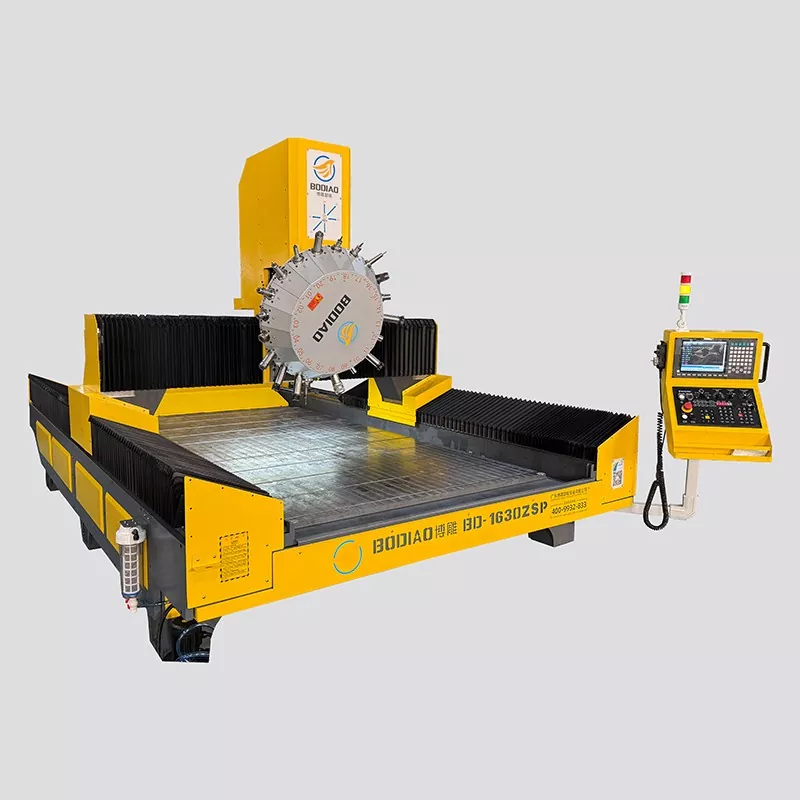
Key Differences at a Glance
To truly understand the operational shift, we must look at the technical specifics. Below is a comparison of how a Rapid Tool Change Gantry Machining Center performs against a traditional gantry model in critical manufacturing categories.
| Feature | Traditional Gantry Model | Rapid Tool Change Gantry Machining Center (by Bodiao) |
|---|---|---|
| Tool Change Speed | Average 15–25 seconds (chip-to-chip) | Average 3–8 seconds (chip-to-chip) |
| Spindle Uptime | Frequently idle during tool swaps | Maximized spindle utilization |
| Labor Requirement | Often requires manual intervention for setup changes | Fully automated; reduces operator fatigue |
| Ideal Production Type | Long-run, single-part production | High-mix, low-volume, or just-in-time manufacturing |
| Error Potential | Higher risk of human error during manual setups | Minimized via automated tool measurement and verification |
The Operational Advantages
When comparing these two types of machinery, the differences extend beyond just speed. The engineering philosophy behind a Rapid Tool Change Gantry Machining Center is holistic efficiency.
1. Throughput and Cycle Times
In a traditional model, the machining process is frequently interrupted. The spindle stops, the head moves to a magazine, swaps tools, and returns. These seconds add up to hours of lost production weekly. With the technology offered by Bodiao, the tool change mechanism is synchronized with the machining path. This overlap means that while one tool is finishing a pass, the next is already queued, drastically reducing non-cut time.
2. Flexibility in Manufacturing
Traditional gantries are beasts of burden—excellent at hogging out material but cumbersome to adapt for complex parts requiring multiple operations (drilling, tapping, milling, finishing). A Rapid Tool Change Gantry Machining Center allows manufacturers to run complex aerospace or energy sector components in a single setup. This eliminates the need to move a massive part to multiple machines, preserving tolerance integrity.
3. Cost of Operation
While the initial investment in a high-speed machine might be higher, the Total Cost of Ownership (TCO) tells a different story. Traditional models consume more power per part produced because they run longer to compensate for idle time. Furthermore, the precision engineering in Bodiao’s rapid change systems reduces tool wear. Tools are engaged with the material more consistently and changed before excessive wear occurs, rather than running until failure.
Adapting to Modern Manufacturing Needs
The manufacturing landscape is shifting toward mass customization. Traditional gantry systems struggle to keep up with the demand for "batch sizes of one." The agility of the Rapid Tool Change Gantry Machining Center makes it the superior choice for job shops and dedicated production lines alike. It allows for lights-out manufacturing, where the machine can run unturned, swapping between different tools for different parts without human intervention.
Rapid Tool Change Gantry Machining Center FAQ
To further clarify the technical and financial implications, here are answers to the most common questions regarding this technology.
Q: How does a Rapid Tool Change Gantry Machining Center maintain precision with such high-speed movements?
A: This is a common concern, but modern engineering has solved it. At Bodiao, our Rapid Tool Change Gantry Machining Center utilizes rigid clamping mechanisms and adaptive control software. The speed is applied to the tool change arm and magazine, not the cutting process itself. The machine ensures that the spindle reaches a complete and stable lock before the cutting program resumes, often using sensors to verify drawbar force and tool orientation, ensuring that speed does not come at the expense of micron-level accuracy.
Q: Can I retrofit a rapid tool change system to my existing traditional gantry machine?
A: While possible in very limited scenarios, a full retrofit is rarely cost-effective or mechanically sound. Traditional gantries were designed with specific weight and balance parameters. Adding a high-speed magazine and arm can introduce vibration and require a complete overhaul of the CNC control logic. It is almost always more economical and reliable to invest in a dedicated Rapid Tool Change Gantry Machining Center from a manufacturer like Bodiao, where the structure is engineered from the ground up to handle the dynamic loads of rapid swapping.
Q: What maintenance is required for rapid tool change systems compared to traditional ones?
A: Interestingly, a well-designed Rapid Tool Change Gantry Machining Center often requires less maintenance related to tool change than traditional hydraulic or mechanical cam-driven systems. Traditional models rely on limit switches and hydraulic cylinders that are prone to leaks and misalignment. Modern systems, like those engineered by Bodiao, utilize servo-electric motors with regenerative braking. They have fewer wearing parts and include self-diagnostic features that alert operators to potential issues before a breakdown occurs, shifting the strategy from reactive repairs to predictive maintenance.
Conclusion
The comparison is clear: while traditional gantry machining centers built the modern world, the Rapid Tool Change Gantry Machining Center is building the future. It offers the flexibility required for complex parts, the speed necessary for profitability, and the precision demanded by industries like aerospace and automotive.
If you are ready to upgrade your production capabilities and reduce your cycle times, the experts at Bodiao are here to help.
Contact us today for a personalized consultation and discover how our Rapid Tool Change Gantry Machining Center can transform your manufacturing floor.