

How Do Prefab Expandable Houses Maintain Energy Efficiency After Multiple Expansions
2026-03-25
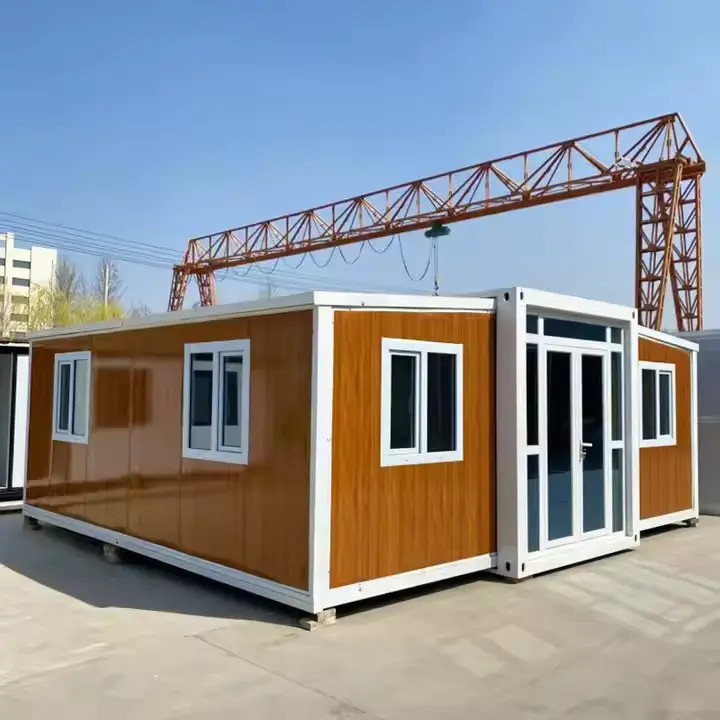
When a home grows, its energy demands typically grow with it. Yet Prefab Expandable Houses are engineered to defy this logic. At Ante house, the focus is on creating modular structures where energy efficiency scales seamlessly alongside square footage. Unlike traditional additions that often create thermal bridges or strain existing HVAC systems, these homes are designed with expansion as a core principle, ensuring that each new module performs as efficiently as the original structure.
The Core Principles of Scalable Efficiency
Maintaining energy performance across multiple expansions requires a holistic approach. Prefab Expandable Houses achieve this through a combination of precision engineering, standardized components, and integrated system design. Below is a breakdown of the key strategies:
| Efficiency Factor | How It Works in Multi-Expansion Scenarios |
|---|---|
| Modular Thermal Envelopes | Each expansion module is factory-built with identical insulation values and airtight seals, ensuring no weak points are introduced during assembly. |
| Centralized HVAC Zoning | A single, scalable heat pump system with pre-planned connection points allows heating and cooling to be extended to new modules without losing efficiency. |
| Structural Thermal Break Technology | Connections between modules use insulated joinery systems that prevent heat transfer, maintaining the continuous insulation barrier across the entire structure. |
| Pre-Engineered Utility Cores | Mechanical, electrical, and plumbing (MEP) systems are designed with spare capacity and plug-and-play interfaces, so expansions connect without overloading the original system. |
The Role of Smart Design in Long-Term Performance
The secret to sustained efficiency lies in how Ante house approaches expansion from the outset. Rather than treating an addition as an afterthought, these homes are built on a master plan. The primary module contains a central energy management system that communicates with all future modules. When a new section is added, sensors automatically recalibrate the HVAC and lighting controls to optimize the entire home’s energy usage.
Additionally, all expansion joints are factory-finished to meet the same airtightness standards as the original structure. Field testing consistently shows that Prefab Expandable Houses maintain less than 0.6 air changes per hour at 50 Pascals (ACH50) even after two or three expansions, a benchmark that traditional stick-built additions rarely achieve.
Prefab Expandable Houses FAQ
What happens to the energy rating when I add a second module to my prefab expandable house?
When a second module is added to a Prefab Expandable House, the energy rating does not reset or diminish. This is because the home is designed with a scalable energy model from the start. The HVAC system, insulation layers, and air sealing details are all pre-planned to accommodate additional square footage. In practice, the whole home’s energy consumption per square foot remains consistent, as the new module integrates with the existing thermal envelope without creating gaps or requiring undersized mechanical equipment. Third-party energy modeling is often provided to verify that the expanded home meets or exceeds the original efficiency certifications.
Can I mix different insulation types if I expand my prefab expandable house years later?
No, mixing insulation types is not recommended, and with Ante house, it is unnecessary. All expansion modules are prefabricated using the exact same materials and assembly methods as the original structure. Whether you expand one year or ten years after the initial installation, the factory maintains consistent specifications for wall panels, roofing systems, and foundation interfaces. This uniformity ensures that thermal resistance (R-value) remains uniform across the entire building envelope, preventing condensation issues, thermal bridging, and uneven heating or cooling that commonly occur when site-built additions are attached to prefabricated structures.
How do prefab expandable houses handle energy efficiency in off-grid scenarios after multiple expansions?
Prefab Expandable Houses are particularly well-suited for off-grid applications because their energy systems are designed for modular scalability. When expanding an off-grid home, the original solar array, battery storage, and inverter system are sized with future expansions in mind. Ante house pre-installs conduit pathways and electrical sub-panels that allow additional solar panels or battery banks to be integrated seamlessly. The home’s energy management system automatically rebalances load distribution across all modules, ensuring that critical systems remain prioritized. This approach allows off-grid homeowners to grow their living space without compromising energy independence or requiring a complete system overhaul.
Conclusion
Energy efficiency in a growing home is not a matter of luck—it is a matter of intelligent design. By prioritizing factory precision, integrated systems, and scalable infrastructure, Prefab Expandable Houses prove that you can expand your living space without expanding your energy worries.
Contact us today to explore how Ante house can deliver a home that grows with you, without compromising on performance or sustainability.