

How Do Automatic Sorting Scales Improve Efficiency in Your Business?
2026-04-08
Summary: Automatic sorting scales have revolutionized the way industries handle products and materials, providing faster, more accurate, and cost-effective solutions. This article explores how these systems work, their advantages, key considerations, and common questions, helping businesses choose the right equipment for their operations.
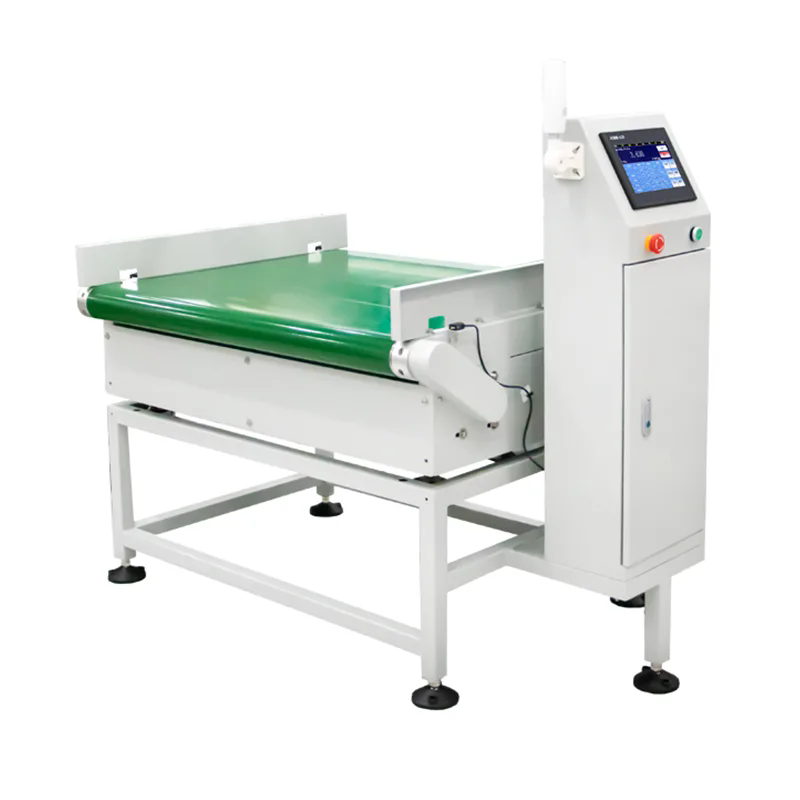
Table of Contents
- 1. Introduction to Automatic Sorting Scales
- 2. How Automatic Sorting Scales Work
- 3. Key Benefits of Automatic Sorting Scales
- 4. Important Considerations Before Buying
- 5. Frequently Asked Questions
- 6. Conclusion & Contact
1. Introduction to Automatic Sorting Scales
In modern industries, speed and accuracy are critical. Automatic sorting scales are essential tools for businesses in food processing, logistics, pharmaceuticals, and manufacturing. They combine precise weighing technology with automated sorting mechanisms to categorize products efficiently.
Companies like J-sky have developed advanced systems that minimize manual labor, reduce errors, and streamline operations.
2. How Automatic Sorting Scales Work
Automatic sorting scales use sensors and software to measure the weight of items as they pass through a conveyor system. Once weighed, items are sorted into different categories based on predefined weight ranges. Here is a simplified breakdown:
- Step 1: Item enters the weighing platform.
- Step 2: Load cells measure the weight with high precision.
- Step 3: Data is sent to the control system.
- Step 4: Actuators or pushers direct the item into the correct sorting bin.
- Step 5: System logs the item’s data for inventory and quality control.
Below is a visual comparison of sorting by manual vs automatic systems:
| Feature | Manual Sorting | Automatic Sorting Scales |
|---|---|---|
| Speed | Slow | High-speed |
| Accuracy | Variable | ±0.1g precision |
| Labor | High | Minimal |
3. Key Benefits of Automatic Sorting Scales
Investing in automatic sorting scales offers tangible advantages for businesses. Key benefits include:
- Increased Productivity: Continuous operation without breaks enhances throughput.
- Enhanced Accuracy: Consistent weight measurement ensures quality control and compliance.
- Cost Reduction: Reduces labor costs and product waste due to fewer sorting errors.
- Real-time Data Tracking: Advanced systems provide analytics for inventory and process optimization.
- Scalability: Easily adjustable for different product sizes, shapes, and weights.
4. Important Considerations Before Buying
Choosing the right automatic sorting scale requires careful evaluation. Consider the following:
- Product Type: Determine if the system can handle your product’s size, shape, and weight range.
- Throughput Requirements: Match the system speed to your production needs.
- Integration: Ensure compatibility with existing conveyors, ERP systems, and packaging lines.
- Maintenance: Look for systems with easy access for cleaning and servicing.
- Vendor Support: Companies like J-sky offer installation, training, and technical assistance.
5. Frequently Asked Questions
Q1: Can automatic sorting scales handle fragile products?
A1: Yes, many systems are designed with gentle pushers and adjustable speeds to protect delicate items.
Q2: What is the typical accuracy range?
A2: Most high-quality systems, including those from J-sky, achieve ±0.1g to ±0.5g accuracy.
Q3: Are these scales customizable?
A3: Absolutely. Systems can be tailored for specific weight ranges, conveyor types, and product dimensions.
Q4: How difficult is the installation?
A4: Professional vendors provide full installation, calibration, and training to ensure smooth operation.
6. Conclusion & Contact
Automatic sorting scales are a game-changer for industries aiming to improve efficiency, accuracy, and profitability. By investing in reliable systems from trusted manufacturers like J-sky, businesses can reduce manual labor, minimize errors, and gain actionable insights from real-time data.
For more information, personalized solutions, or to request a quote, contact us today and start optimizing your business!