

How Concrete Block Moulds Design Impacts Block Manufacturing Efficiency?
2026-04-08
What Role Does Concrete Block Moulds Design Play in Modern Block Production Systems?
In modern concrete block production lines, mould design directly determines production stability, shaping accuracy, and cycle efficiency. A well-optimized system of Concrete Block Moulds ensures consistent compaction, uniform density distribution, and reduced vibration loss during forming cycles. In our factory, engineers focus on precision machining tolerances to minimize dimensional deviation and improve interlocking performance of finished blocks. This directly enhances production output while reducing waste rates.
Quangong Machinery Co., Ltd. has continuously invested in structural optimization research to ensure mould compatibility with different block machines. Our engineering team evaluates steel hardness, welding integrity, and wear resistance to extend service life. The performance of Concrete Block Moulds is not only about shape accuracy but also about how efficiently energy is transferred during compaction. In real production environments, our systems are designed to maintain stable output even under continuous high-frequency operation.
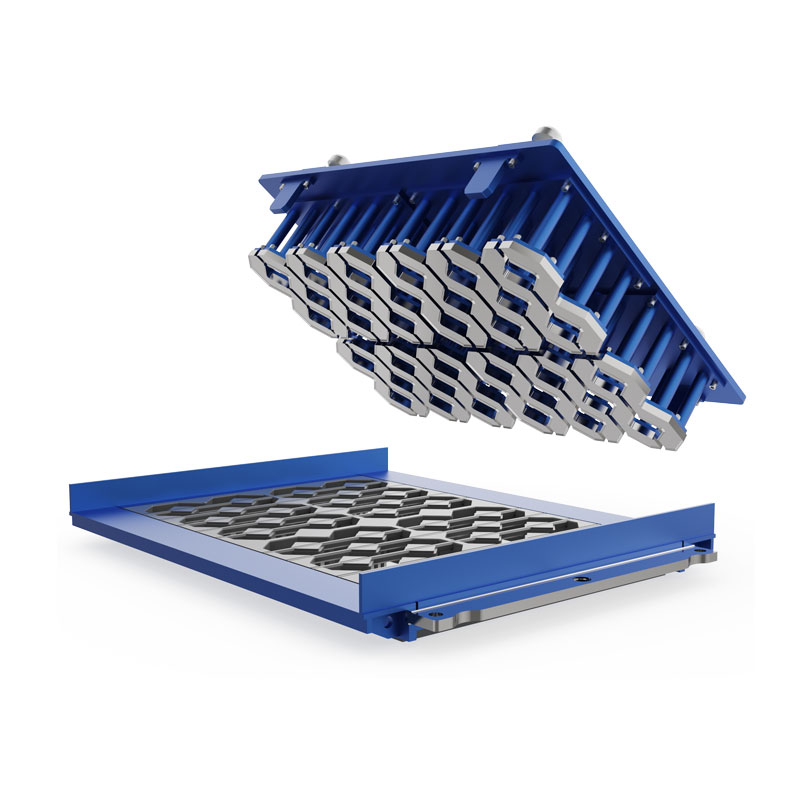
How Does Structural Design of Moulds Improve Production Speed and Stability?
The structural configuration of Concrete Block Moulds influences demoulding speed, vibration efficiency, and block integrity. A scientifically designed cavity layout reduces air entrapment and ensures uniform material flow. Our factory applies advanced CAD simulation to optimize internal geometry and reinforcement layout, which significantly improves production cycle time. In addition, our engineers adjust clearance tolerances to balance wear resistance and release performance.
Efficiency in block manufacturing depends on synchronization between press systems and mould structure. Our design approach prioritizes reduced friction surfaces and reinforced sidewalls to prevent deformation under high pressure. Quangong Machinery Co., Ltd. integrates heat-treated steel plates to improve fatigue resistance. With optimized Concrete Block Moulds, production lines can achieve higher daily output with reduced downtime. Our technical department continuously refines structural configurations based on field data feedback.
Which Material and Precision Parameters Determine Long-Term Durability?
The durability of Concrete Block Moulds depends on material selection, heat treatment processes, and machining precision. High-carbon alloy steel is commonly used to ensure wear resistance and structural stability. Our factory implements CNC machining technology with micron-level accuracy to guarantee consistent cavity dimensions. This ensures that each block maintains identical geometry, which is critical for construction quality standards.
Our engineers focus on surface hardness optimization to reduce abrasion caused by high-frequency vibration. In addition, our quality control system ensures every mould undergoes strict inspection before delivery. Quangong Machinery Co., Ltd. applies multi-stage heat treatment to improve toughness and reduce cracking risks under long-term operation. In actual production environments, Concrete Block Moulds must withstand continuous pressure cycles, and our design philosophy prioritizes both durability and precision consistency.
| Design Parameter | Technical Requirement | Impact on Efficiency |
| Steel Hardness | HRC 55-60 after heat treatment | Improves wear resistance and extends service life |
| Machining Accuracy | CNC tolerance within 0.02mm | Ensures uniform block size and reduces rejection rate |
| Surface Treatment | Polishing and anti-rust coating | Reduces friction and improves demoulding speed |
How Can Maintenance Strategy Extend Mould Service Life and Efficiency?
Proper maintenance of Concrete Block Moulds is essential for maintaining long-term production efficiency. Regular cleaning, lubrication, and inspection prevent material buildup and structural wear. Our maintenance guidelines are designed based on real factory operating conditions to ensure minimal downtime. In our factory, preventive maintenance schedules are integrated into daily production management systems.
Our technicians recommend periodic inspection of welding joints and cavity surfaces to detect early signs of fatigue. In addition, our maintenance system emphasizes proper storage conditions to avoid corrosion. Quangong Machinery Co., Ltd. provides technical support to global clients to ensure optimal usage of mould systems. With well-maintained Concrete Block Moulds, production consistency can be significantly improved, reducing unexpected machine stoppages.
What Selection Principles Ensure Maximum Production Efficiency in Block Manufacturing?
Choosing the right Concrete Block Moulds requires evaluation of machine compatibility, production volume, and block type requirements. Our factory provides customized solutions based on different hydraulic press systems and customer specifications. Our engineering team analyzes load distribution and vibration frequency to ensure optimal performance matching between mould and machine.
We also focus on modular design concepts to allow flexible replacement of wear parts. This reduces maintenance costs and improves operational flexibility. ZENITH supports global customers with tailored solutions that match regional construction standards. In addition, our design strategy ensures that Concrete Block Moulds maintain stability even in high-output continuous production environments.
Our technical team also evaluates long-term ROI factors such as replacement cycle, material consumption, and energy efficiency. By optimizing these parameters, our factory ensures that customers achieve maximum productivity with minimal operational cost. In large-scale production, our systems help maintain consistent quality while reducing manpower dependency.
Frequently Asked Questions
Q1: How does Concrete Block Moulds design affect block density and strength?
The internal cavity design directly controls material compaction uniformity, ensuring consistent density distribution and higher compressive strength in final blocks.
Q2: What factors should be considered when selecting Concrete Block Moulds for high-volume production?
Key factors include steel grade, heat treatment process, machine compatibility, and wear resistance to ensure stable long-term operation under continuous production cycles.
Q3: How often should Concrete Block Moulds be maintained for optimal performance?
Maintenance should be performed regularly after production cycles, including cleaning, lubrication, and surface inspection to prevent wear accumulation and ensure production stability.
Conclusion and Industrial Application Overview
Efficient block production depends heavily on precision engineering, material science, and structural optimization. A well-designed mould system improves cycle speed, reduces waste, and ensures consistent product quality. In our factory, continuous innovation in structural design and manufacturing processes ensures that production systems remain competitive in global markets.
Quangong Machinery Co., Ltd. remains committed to delivering high-performance solutions that support modern construction demands. Our engineering philosophy focuses on durability, efficiency, and precision integration. With advanced manufacturing capabilities and strict quality control, our factory ensures long-term operational stability for industrial partners worldwide.
By adopting optimized Concrete Block Moulds, manufacturers can significantly enhance production efficiency, reduce operational costs, and achieve stable long-term output. For customized solutions and technical consultation, contact our engineering team to explore tailored configurations that match your production requirements.