

How Can Hopper Loaders Transform Industrial Material Handling?
2025-12-29
Abstract: Hopper Loaders are a critical solution for industrial material handling, designed to improve efficiency, reduce manual labor, and maintain precision in bulk material transfer. This article explores Hopper Loader specifications, operational benefits, common questions, and practical applications, offering an in-depth understanding for engineers, plant managers, and industry professionals.
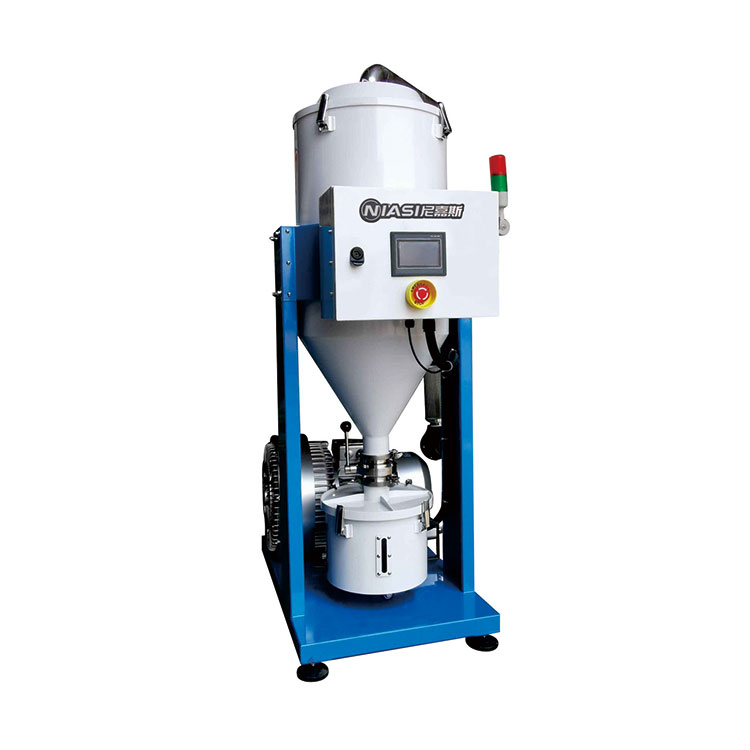
Table of Contents
1. Introduction to Hopper Loaders 2. Hopper Loader Specifications and Operational Overview 3. Common Questions About Hopper Loaders 4. Industry Applications and Selecting the Right Hopper Loader Conclusion and Brand Information1. Introduction to Hopper Loaders
Hopper Loaders are specialized equipment designed for transferring bulk materials efficiently from one point to another in industrial settings. They are widely used in sectors such as chemical, pharmaceutical, food processing, and plastics manufacturing. Their primary purpose is to reduce manual labor, improve safety, and increase operational throughput. Hopper Loaders are particularly valued for their ability to handle powders, granules, and other bulk materials while maintaining consistent flow and preventing contamination.
This article examines the functional specifications of Hopper Loaders, their operational advantages, and addresses frequently asked questions to guide potential buyers and operators in making informed decisions.
2. Hopper Loader Specifications and Operational Overview
Hopper Loaders are designed to meet the diverse needs of industrial material handling. Below is a summary of standard parameters commonly found in professional-grade Hopper Loaders:
| Parameter | Specification |
|---|---|
| Material Type | Plastic granules, powders, chemicals, pharmaceutical ingredients |
| Capacity | 100kg – 1000kg per batch |
| Loading Speed | Up to 20 tons per hour depending on model |
| Power Supply | 220V/380V, 50/60Hz |
| Control System | PLC with touchscreen interface, automatic feeding control |
| Filtration | HEPA filters and dust collection system |
| Material Contact Surface | Stainless steel 304/316 for contamination-free handling |
| Mobility | Mobile casters or stationary installation options |
Hopper Loaders are designed to integrate with existing production lines, offering smooth, continuous feeding into processing machinery such as extruders, blenders, and mixers. The automatic feeding system is programmable, allowing precise material handling according to production requirements, reducing waste and preventing downtime.
3. Common Questions About Hopper Loaders
Q1: How does a Hopper Loader maintain consistent material flow?
A1: Hopper Loaders use automated vacuum or pneumatic systems to transfer materials from the hopper to downstream equipment. Flow sensors and PLC controls monitor the material level and adjust suction or conveyance speed, ensuring a consistent feed and preventing blockages or spillage.
Q2: What maintenance is required for Hopper Loaders?
A2: Routine maintenance includes checking filters, cleaning the material contact surfaces, inspecting the vacuum system for leaks, and lubricating moving parts. Periodic checks of the PLC control and sensor calibration are also recommended to ensure optimal performance and extend the equipment's lifespan.
Q3: Can Hopper Loaders handle multiple material types simultaneously?
A3: Certain Hopper Loader models are equipped with multi-hopper systems, allowing sequential or simultaneous handling of different materials. Proper system configuration and cleaning protocols are essential to avoid cross-contamination, especially when switching between materials with varying properties.
4. Industry Applications and Selecting the Right Hopper Loader
Hopper Loaders are widely applicable in industries that require precise and efficient bulk material handling:
- Plastics Manufacturing: For feeding plastic pellets into injection molding machines or extruders.
- Food Processing: For transferring powders, grains, or additives while maintaining hygiene standards.
- Chemicals: For handling powders or granular chemicals safely and efficiently, reducing operator exposure.
- Pharmaceuticals: For handling sensitive powders with contamination control through HEPA filtration and stainless-steel contact surfaces.
When selecting a Hopper Loader, consider factors such as material type, batch capacity, integration requirements, and automation features. The correct choice can significantly enhance production efficiency, reduce labor costs, and improve product quality.
Conclusion and Brand Information
Hopper Loaders represent a strategic investment for industrial operations seeking optimized material handling solutions. By integrating automation, precise flow control, and hygienic design, Hopper Loaders enable industries to improve efficiency, reduce contamination risk, and streamline production processes.
Niasi Factory offers a range of Hopper Loaders tailored to various industrial applications, ensuring high-quality, reliable, and customizable solutions. For more information on selecting the right Hopper Loader for your operations, contact us today to discuss your requirements with our experts.