

How Can a Sand Casting Part Improve Manufacturing Efficiency and Reduce Costs?
2026-03-20
Article Summary:
Sand casting parts are widely used across industries due to their flexibility, cost-effectiveness, and ability to produce complex geometries. This article explains how sand casting works, why it is an optimal solution for many manufacturing challenges, and how businesses can select the right supplier and specifications to improve efficiency, reduce defects, and control costs.
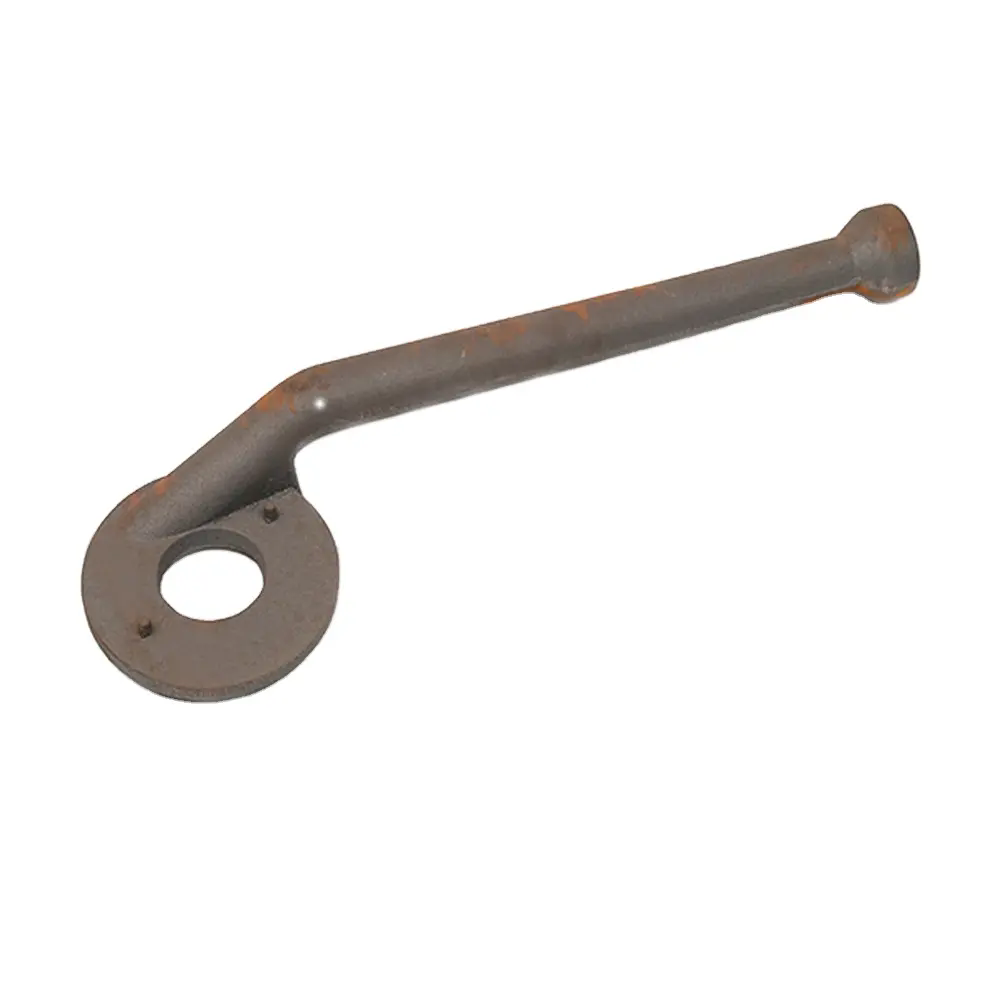
Table of Contents
- 1. Article Outline
- 2. What Is a Sand Casting Part
- 3. How Sand Casting Works
- 4. Key Advantages of Sand Casting Parts
- 5. Technical Parameters
- 6. Solving Common Customer Pain Points
- 7. How to Choose the Right Supplier
- 8. Typical Applications
- 9. Frequently Asked Questions
1. Article Outline
- Definition and importance of sand casting parts
- Manufacturing process and working principle
- Advantages and limitations
- Technical specifications and performance indicators
- Buyer decision-making guide
- Application scenarios and FAQs
2. What Is a Sand Casting Part
A sand casting part is a metal component produced by pouring molten metal into a sand mold, allowing it to solidify, and then removing the mold to obtain the desired shape. This traditional yet highly adaptable manufacturing process is widely used for producing both simple and complex components.
Companies such as Jinggang provide customized sand casting solutions that meet the needs of industries requiring durability, scalability, and cost control. Sand casting remains one of the most versatile production methods due to its compatibility with a wide range of metals and design flexibility.
One of the most notable features of sand casting is its ability to produce parts ranging from small components to large industrial structures with minimal tooling investment. :contentReference[oaicite:0]{index=0}
3. How Sand Casting Works
The sand casting process involves several key steps:
- Pattern Creation: A replica of the final part is made using wood, plastic, or metal.
- Mold Preparation: Sand is packed around the pattern to create a mold cavity.
- Core Placement: Sand cores are inserted to form internal structures if required.
- Metal Pouring: Molten metal is poured into the mold.
- Cooling and Solidification: The metal cools and takes shape.
- Shakeout and Finishing: The mold is broken, and the casting is cleaned and finished.
This process allows manufacturers to produce intricate geometries that would be difficult or impossible with machining alone. :contentReference[oaicite:1]{index=1}
4. Key Advantages of Sand Casting Parts
Sand casting addresses several manufacturing challenges effectively:
- Low Tooling Cost: Sand molds are inexpensive compared to permanent molds, reducing initial investment :contentReference[oaicite:2]{index=2}
- Wide Material Compatibility: Suitable for ferrous and non-ferrous metals :contentReference[oaicite:3]{index=3}
- Design Flexibility: Enables production of complex shapes and internal cavities :contentReference[oaicite:4]{index=4}
- Scalability: Works for both small batches and mass production :contentReference[oaicite:5]{index=5}
- Large Size Capability: Can produce parts from grams to several tons :contentReference[oaicite:6]{index=6}
- Short Lead Time: Faster mold preparation compared to other casting methods :contentReference[oaicite:7]{index=7}
These advantages make sand casting an ideal solution for industries requiring cost efficiency and customization.
5. Technical Parameters
| Parameter | Typical Range |
|---|---|
| Material Options | Cast iron, steel, aluminum, bronze |
| Weight Range | 0.1 kg – several tons |
| Dimensional Tolerance | ±0.8 mm – ±3.2 mm |
| Surface Finish | Rough (requires post-processing) |
| Production Volume | Prototype to mass production |
| Lead Time | Short to medium |
Actual specifications depend on design complexity and production conditions.
6. Solving Common Customer Pain Points
1. High Manufacturing Costs
Sand casting reduces tooling and production costs, making it suitable for budget-sensitive projects.
2. Complex Part Design
The use of cores allows internal cavities and intricate geometries without additional machining.
3. Limited Material Choices
Supports a wide range of alloys, enabling flexibility in product design.
4. Long Lead Times
Quick mold preparation accelerates production cycles.
5. Scalability Issues
Adaptable to both low-volume prototypes and large-scale production.
However, challenges such as rough surface finish and lower dimensional accuracy may require secondary processing. :contentReference[oaicite:8]{index=8}
7. How to Choose the Right Supplier
Choosing a reliable manufacturer is critical to ensuring quality and performance:
- Production Capability: Ability to handle different sizes and materials
- Quality Control: Inspection systems to reduce defects
- Customization: Support for tailored designs
- Experience: Proven track record in casting solutions
- Post-processing Services: Machining, coating, and finishing options
Working with an experienced supplier like Jinggang ensures consistent quality and reliable delivery.
8. Typical Applications
- Automotive components (engine blocks, housings)
- Construction machinery parts
- Industrial equipment components
- Agricultural machinery
- Valve bodies and pump housings
Sand casting is widely used in industries that require strong, durable, and cost-effective metal parts.
9. Frequently Asked Questions
Q1: What metals can be used in sand casting?
A: Sand casting supports a wide range of metals, including iron, steel, aluminum, and copper alloys.
Q2: Is sand casting suitable for high-volume production?
A: Yes, it can be used for both small and large production runs depending on the setup.
Q3: Why is surface finish rough?
A: The granular nature of sand molds results in a rough surface that may require machining. :contentReference[oaicite:9]{index=9}
Q4: How to improve casting quality?
A: Proper mold design, high-quality sand, and controlled pouring conditions are essential.
Q5: Is sand casting environmentally friendly?
A: Sand can often be recycled, reducing waste and material costs. :contentReference[oaicite:10]{index=10}
Conclusion
Sand casting parts provide an efficient and flexible solution for manufacturing complex metal components. Their low cost, adaptability, and scalability make them a preferred choice across industries.
By partnering with a professional manufacturer like Jinggang, businesses can achieve optimized production efficiency, reduced costs, and reliable product quality.
If you are looking for high-quality custom sand casting parts, contact us today to get expert support, tailored solutions, and competitive pricing for your project.