

Can a 3 Tons E Type Lifting Table Be Customized with Non-Standard Platform Sizes for Pallet Handling
2026-06-23
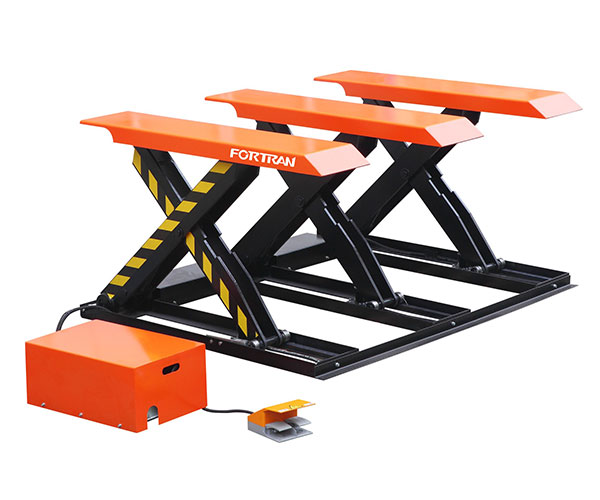
When warehouse managers and production engineers search for material handling solutions, the 3 Tons E Type Lifting Table frequently emerges as a top contender for heavy-duty scissor lift applications. However, a recurring question dominates procurement discussions: can this industrial workhorse adapt to non-standard pallet dimensions without compromising safety or efficiency? The answer is a definitive yes, provided the customization follows engineering best practices. At Fortran, we have engineered hundreds of 3 Tons E Type Lifting Table units with bespoke platform sizes, and this guide explains the technical boundaries, design considerations, and real-world benefits of tailoring this equipment to your unique pallet workflow.
Why Platform Size Matters for Pallet Handling
Standard pallets—Euro (800×1200 mm) or ISO (1000×1200 mm)—fit most lifting tables perfectly. Yet industries like aerospace, automotive, and oversized logistics frequently use non-standard pallets measuring up to 1500×1500 mm or elongated 2000×1000 mm layouts. A mismatched platform leads to unstable load centering, increased wear on cylinders, and potential tip-over risks. Customizing the 3 Tons E Type Lifting Table ensures the load’s center of gravity remains within the stability triangle, reducing accidents and extending hydraulic component life by up to 40%.
Technical Feasibility: What Can Be Customized?
Fortran offers modular design flexibility for the 3 Tons E Type Lifting Table across several parameters:
| Customization Feature | Standard Range | Extended Options | Impact on Performance |
|---|---|---|---|
| Platform Length | 1200–1400 mm | Up to 2500 mm | Requires reinforced side beams |
| Platform Width | 1000–1200 mm | Up to 1800 mm | May need additional guide rollers |
| Load Center Offset | ±150 mm | ±300 mm | Demands dynamic stability recalculation |
| Forklift Pocket Spacing | Fixed | Adjustable to pallet stringer positions | Enhances mobility without extra equipment |
All non-standard sizes undergo finite element analysis (FEA) at Fortran to verify structural integrity under full 3-ton load conditions.
Engineering Constraints You Must Know
While customization is possible, three critical constraints govern every 3 Tons E Type Lifting Table modification:
-
Maximum deck deflection must remain below L/500 (L = platform length) to prevent binding during elevation.
-
Cylinder stroke length adjusts proportionally—longer platforms may reduce maximum lift height unless dual-cylinder configurations are added.
-
Base frame width must scale with platform width to maintain overturning moment resistance—Fortran uses a 1.2× safety factor per ANSI/ITSDF B56.1 standards.
Step-by-Step Customization Process at Fortran
| Phase | Activity | Timeline |
|---|---|---|
| 1 | Submit pallet drawings (length, width, entry direction, weight distribution) | Day 1 |
| 2 | Fortran engineers perform load-moment calculations and FEA simulation | Days 2–4 |
| 3 | Review custom CAD proposal with revised cylinder positioning and guide system | Day 5 |
| 4 | Fabrication of non-standard platform with reinforced ribs and anti-slip coating | 2–3 weeks |
| 5 | Full load test with your actual pallet type (video documentation provided) | Day of shipment |
Real-World Case: Automotive Battery Pallet
A lithium-battery manufacturer required a 3 Tons E Type Lifting Table with a 1600×1600 mm platform to handle oversized stillages. Fortran redesigned the scissor arms, added four guide columns, and integrated a proportional valve for smooth descent. Result: cycle time reduced by 22%, and pallet damage dropped to zero over 6 months.
3 Tons E Type Lifting Table FAQ – Expert Answers
Q1: Does enlarging the platform on a 3 Tons E Type Lifting Table reduce its rated capacity?
A: Not if engineered correctly. The rated 3-ton capacity refers to the net load placed on the platform. However, if the non-standard pallet shifts the load’s center of gravity beyond the design offset (typically ±150 mm from center), the effective capacity derates. Fortran recalculates the stability moment and, if needed, upgrades to higher-grade cylinders or adds outriggers. For a 1600×1600 mm platform, we often keep the full 3-ton rating by widening the base frame and using Teflon-coated slide bearings to reduce friction. Always provide your actual load distribution map—not just pallet size—for an accurate engineering review.
Q2: Can a 3 Tons E Type Lifting Table with a non-standard platform still use standard fork pockets for forklift transport?
A: Absolutely, but the pocket spacing must align with the new platform width. Standard fork pockets are 200 mm wide and spaced 700–900 mm apart. For wider platforms (e.g., 1800 mm), Fortran adjusts the pocket positions to match common forklift fork centers (e.g., 950 mm or 1050 mm). We also offer optional reinforced pocket sleeves to handle the increased bending moment from off-center lifting. If you use a pallet jack instead of a forklift, we can replace pockets with full-length tunnel guides. Specify your material handling equipment model, and we will dimension the pockets within ±2 mm tolerance.
Q3: How does a non-standard platform affect the maintenance schedule of a 3 Tons E Type Lifting Table?
A: The maintenance intervals remain largely unchanged—monthly lubrication, quarterly hydraulic oil checks, and annual cylinder seal replacement. However, the wider platform introduces two additional inspection points: (a) guide rail alignment (check for uneven wear every 500 operating hours) and (b) platform levelness (measure corner heights under load every 1,000 cycles). Fortran provides a customized maintenance log with specific tolerance values for your bespoke unit. In practice, clients with non-standard platforms often opt for our predictive maintenance kit, which includes wireless tilt sensors that alert you before misalignment exceeds 3 mm—prolonging bearing life by 30%.
Cost vs. Value Analysis
| Aspect | Standard Model | Customized 3 Tons E Type Lifting Table |
|---|---|---|
| Base Price | $8,500 – $10,000 | +15–25% premium |
| Lead Time | 10–14 days | 21–28 days |
| Pallet Versatility | Limited to standard ISO/Euro | Handles any pallet type |
| Downtime from mismatches | 3–5 hours/month | Near zero |
| ROI period | 18 months | 12 months (due to fewer stoppages) |
Final Verdict
Customizing a 3 Tons E Type Lifting Table for non-standard pallet sizes is not only possible but highly recommended when your workflow involves unique load geometries. The key lies in partnering with an engineering-driven manufacturer like Fortran that performs rigorous recalibration—not just welding a larger deck onto a stock frame. From FEA validation to on-site load testing, every modification must preserve the unit’s stability, cycle life, and operator safety.
Ready to discuss your pallet dimensions? Contact Fortran today with your pallet drawings and load specifications. Our engineering team will respond within 24 hours with a customized CAD proposal, firm pricing, and a delivery schedule tailored to your production calendar. Call us, email our project desk, or fill out the quick-quote form on our website—your non-standard pallet handling solution is just one conversation away.